

When choosing solar panels, one of the most common questions is: Monocrystalline vs polycrystalline — which is better? Both types are widely used, but they differ in efficiency, cost, appearance, and performance. In this guide, we’ll break down the key differences, real-world performance, and which one you should choose for your home.
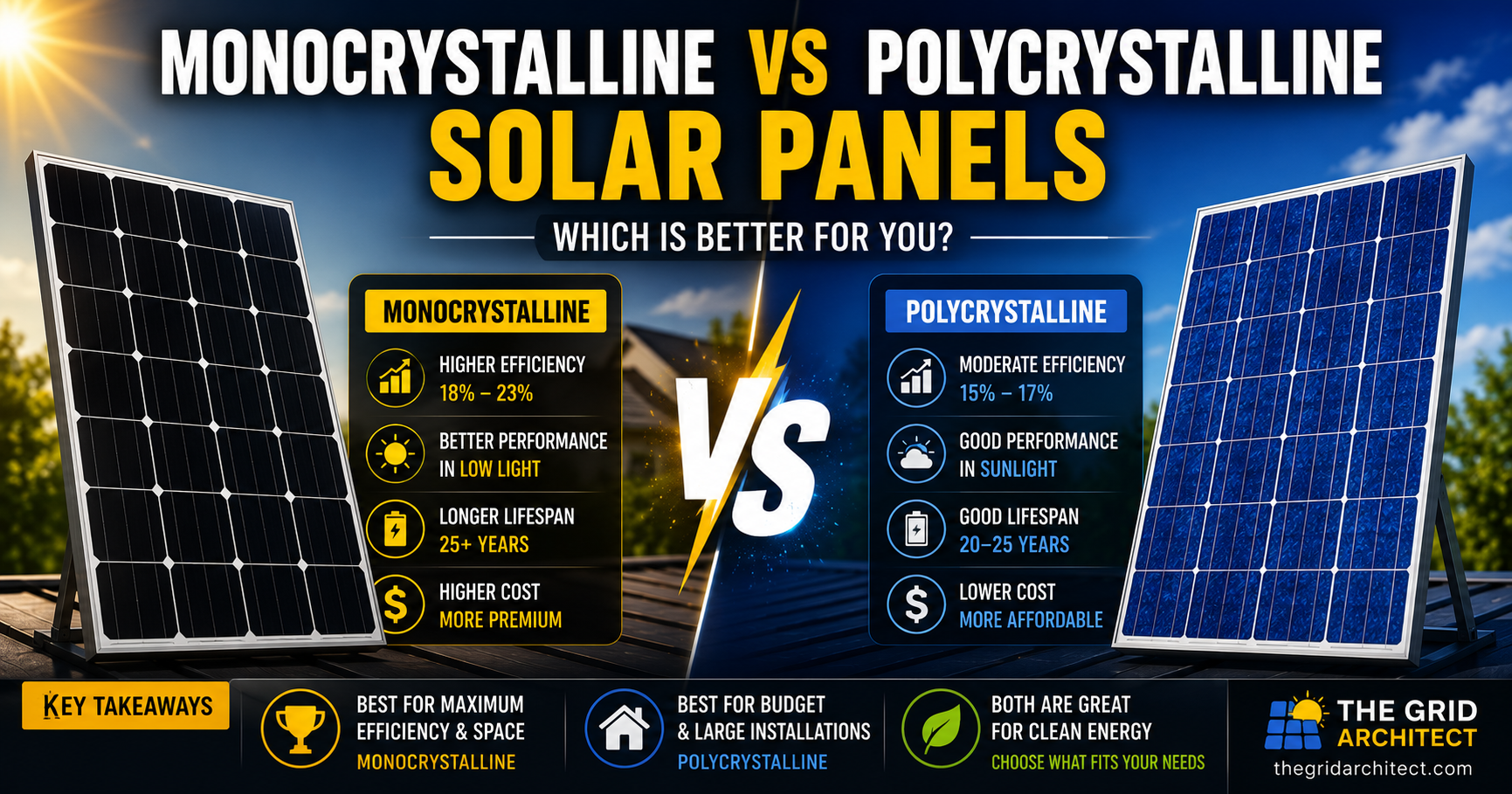
Monocrystalline solar panels are more efficient (18–22%) and space-saving, while polycrystalline panels are more affordable but slightly less efficient (15–17%).
Quick Answer
Monocrystalline panels are generally better because they:
- Have higher efficiency (18%–22%)
- Require less space
- Perform better in low-light conditions
Polycrystalline panels are:
- More affordable
- Slightly less efficient (15%–17%)
- Suitable for larger roof spaces
What Are Monocrystalline Solar Panels?
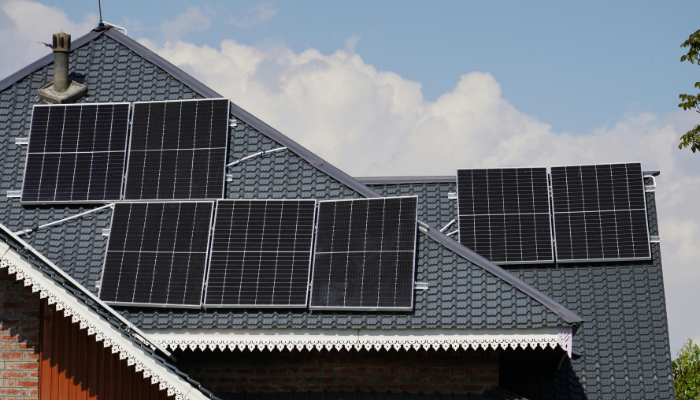
Monocrystalline panels are made from a single crystal silicon structure.
👉 Key characteristics:
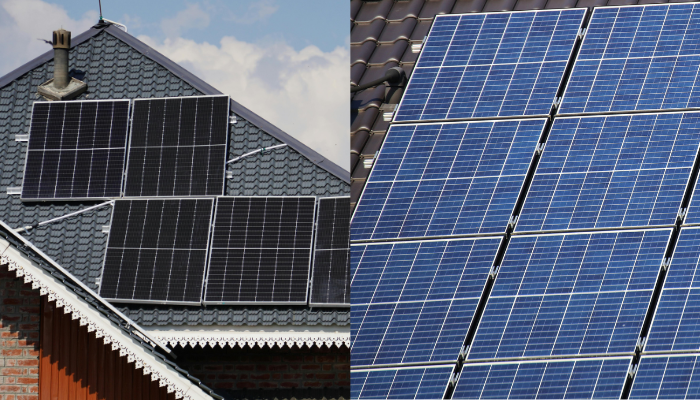
- Black color (uniform look)
- Higher efficiency
- Longer lifespan
👉 These panels are considered premium solar panels
What Are Polycrystalline Solar Panels?
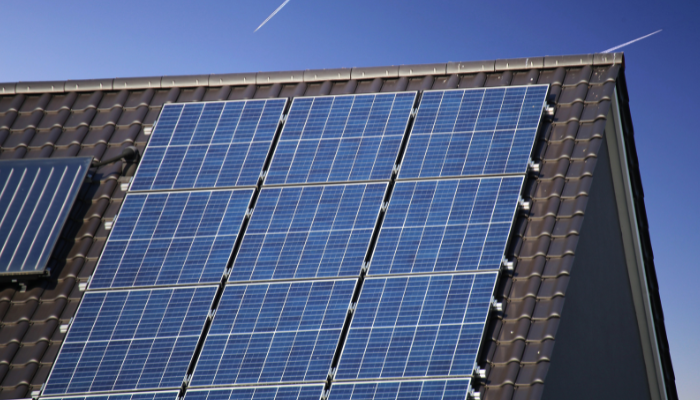
Polycrystalline panels are made from multiple silicon fragments melted together.
👉 Key characteristics:
- Blue color (grainy appearance)
- Lower efficiency
- More affordable
👉 These panels are budget-friendly options
Monocrystalline vs Polycrystalline (Key Differences)
| Feature | Monocrystalline | Polycrystalline |
|---|---|---|
| Efficiency | 18%–22% | 15%–17% |
| Cost | Higher | Lower |
| Lifespan | 25–30 years | 25–30 years |
| Space Required | Less | More |
| Appearance | Black | Blue |
| Performance | Better | Moderate |
Monocrystalline vs Polycrystalline – Which One Performs Better?
👉 Monocrystalline panels perform better in:
- Low sunlight conditions
- High temperatures
- Limited space installations
👉 Polycrystalline panels perform well when:
- Space is not a limitation
- Budget is a priority
Cost Difference Explained
👉 Monocrystalline panels cost more because:
- Higher manufacturing precision
- Better efficiency
👉 Polycrystalline panels are cheaper because:
- Easier manufacturing process
- Slightly lower efficiency
👉 Learn more about pricing: How much does solar costs?
Which Requires More Panels?
👉 Polycrystalline panels require more panels for the same output.
👉 Example:
- 5kW system with mono → ~12 panels
- 5kW system with poly → ~14–16 panels
👉 Calculate your requirement: How many solar panels do you need?
Efficiency Impact on Real Savings
Higher efficiency panels:
- Generate more electricity
- Reduce number of panels
- Improve long-term savings
👉 Learn more: Solar Panel Efficiency
How Monocrystalline and Polycrystalline Panels Are Made
Understanding manufacturing helps explain performance differences.
Monocrystalline Panels
Monocrystalline panels are made from a single silicon crystal.
👉 Process:
- Pure silicon is formed into a single crystal (Czochralski process)
- Cut into wafers
- Cells are highly uniform
👉 Result:
- Higher efficiency
- Better electron movement
- Premium performance
Polycrystalline Panels
Polycrystalline panels are made by melting multiple silicon fragments.
👉 Process:
- Silicon is melted and poured into molds
- Forms multiple crystals
- Less uniform structure
👉 Result:
- Lower efficiency
- Slight energy loss
- More affordable
Performance in Different Weather Conditions
Solar panels behave differently depending on climate.
☀️ Hot Weather Performance
👉 Monocrystalline panels:
- Better heat tolerance
- Lower efficiency loss
👉 Polycrystalline panels:
- Slightly higher performance drop
🌥 Low Light Conditions
👉 Monocrystalline panels:
- Perform better in cloudy or shaded conditions
👉 Polycrystalline panels:
- Require stronger sunlight for optimal output
👉 This makes mono panels more suitable for urban and variable climates.
Monocrystalline vs Polycrystalline – Degradation Rate Comparison
Both panel types degrade over time, but not equally.
| Panel Type | Degradation Rate | Output After 25 Years |
|---|---|---|
| Monocrystalline | ~0.4% per year | ~85–88% |
| Polycrystalline | ~0.5% per year | ~80–85% |
👉 Monocrystalline panels retain slightly more power over time.
👉 Learn more: Solar Panel Warranty
Space Efficiency Comparison
One of the biggest real-world differences:
👉 Monocrystalline panels:
- Produce more power per sq ft
- Need fewer panels
👉 Polycrystalline panels:
- Need more space for same output
Example:
For a 5kW system:
- Mono → ~12 panels
- Poly → ~14–16 panels
Monocrystalline vs Polycrystalline – Long-Term Cost vs Value
Initial cost is only part of the story.
Monocrystalline Panels
- Higher upfront cost
- Higher efficiency
- Better long-term savings
Polycrystalline Panels
- Lower upfront cost
- Lower efficiency
- Slightly lower long-term output
👉 Over 25 years, mono panels often deliver better ROI.
Aesthetics and Design Impact
This is often overlooked.
👉 Monocrystalline:
- Sleek black design
- Premium look
- Preferred for modern homes
👉 Polycrystalline:
- Blue, grainy appearance
- Less uniform
👉 For visible rooftops, mono panels are usually preferred.
Which Panels Are Used Today?
👉 Market trend:
- Monocrystalline dominates modern installations
- Polycrystalline usage is declining
👉 Why?
- Falling cost of mono panels
- Higher efficiency demand
- Better long-term performance
Real-World Use Cases
🏢 Urban Homes
👉 Best choice: Monocrystalline
- Limited space
- Need higher efficiency
🏠 Suburban Homes
👉 Best choice: Either
- Depends on budget
🏭 Large Installations
👉 Best choice: Polycrystalline or budget panels
- Space available
- Cost optimization
Lifespan Comparison
Both panel types last long, but there are slight differences:
- Monocrystalline → 25–30+ years
- Polycrystalline → 20–30 years
👉 In many cases, monocrystalline panels last slightly longer and degrade slower.
Real-World Performance Comparison
In practical terms:
👉 A monocrystalline system can generate more electricity from the same roof space compared to a polycrystalline system.
For example:
- 4kW mono system → higher annual output
- 4kW poly system → slightly lower output
👉 This difference becomes significant over 20–25 years.
Monocrystalline vs Polycrystalline – Which One Should You Choose?
👉 Choose Monocrystalline if:
- You have limited roof space
- You want higher efficiency
- You prefer premium systems
👉 Choose Polycrystalline if:
- You have large roof space
- You want lower upfront cost
- You’re okay with slightly lower efficiency
Real-World Insight
From real installations:
- Most modern homes use monocrystalline panels
- Polycrystalline panels are becoming less common
- Efficiency matters more in urban setups
Common Mistakes to Avoid
❌ Choosing only based on price
Cheaper panels may reduce long-term savings
❌ Ignoring roof space
Low efficiency panels need more space
❌ Ignoring efficiency vs space
More panels = more installation cost
❌ Not planning future usage
EVs and appliances increase demand
❌ Not calculating system size
👉 Use our Solar calculator to determine the size.
Are Polycrystalline Panels Still Worth It?
Yes — in certain cases.
👉 Choose poly panels if:
- Budget is tight
- Roof space is large
- Efficiency is not a major concern
👉 Otherwise, mono panels are generally better.
Expert Insight
From real installations:
- Most homeowners choose monocrystalline panels
- Poly panels are mostly used in cost-sensitive projects
- Efficiency matters more in modern solar systems
Future of Solar Panels
Solar technology is evolving:
- Mono panels becoming cheaper
- New technologies like TOPCon and HJT improving efficiency
- Poly panels gradually declining
👉 The future is clearly leaning toward high-efficiency panels.
FAQs
Which is better: mono or poly solar panels?
Monocrystalline panels are generally better due to higher efficiency.
Do polycrystalline panels last less?
No — both types have similar lifespan (~25 years).
Are mono panels worth the extra cost?
Yes, especially if space is limited.
Which panels are used most today?
Monocrystalline panels dominate modern installations.
Final Thoughts
Both monocrystalline and polycrystalline panels are reliable options.
- Monocrystalline → higher efficiency, premium choice
- Polycrystalline → lower cost, budget-friendly
👉 The right choice depends on your budget, space, and energy needs.
Before choosing panels:
👉 Use our solar calculator to estimate your system size and savings.
