
Solar Battery Sizing Calculator
If you’re planning to install a solar battery, one of the most important questions you’ll face is: “What size battery do I need?”. Choosing the correct battery size can make the difference between having reliable backup power and running out of stored energy when you need it most. A battery that is too small may not provide enough backup, while an oversized battery can significantly increase your project cost without providing additional value. To help homeowners and solar enthusiasts make informed decisions, we’ve created a free Solar Battery Sizing Calculator that estimates the battery capacity required based on your energy usage, backup requirements, battery type, and system efficiency.
What Is Solar Battery Sizing?
Solar battery sizing is the process of determining how much energy storage your home requires.
Battery capacity is typically measured in kilowatt-hours (kWh), which represents the amount of electricity a battery can store. The goal is to ensure that your battery can supply enough power during periods when your solar panels are not generating electricity.
Common situations where battery storage becomes important include:
- Nighttime energy usage
- Power outages
- Cloudy weather conditions
- Peak utility pricing periods
- Off-grid solar installations
The ideal battery size depends on your daily electricity consumption and how long you want your battery to provide backup power.
Use Our Solar Battery Sizing Calculator
Enter your daily energy consumption, backup duration, battery type, and system efficiency to estimate the ideal battery capacity for your home.
Solar Battery Sizing Calculator
Calculate the battery capacity required for your solar power system.
Planning a complete solar system? After calculating your battery requirements, try our Solar Calculator to estimate the solar panel capacity needed for your home. Using both calculators together can help you design a more efficient and cost-effective solar energy system.
Why Battery Capacity Matters
Battery capacity directly impacts how long your home can operate without solar production or grid electricity.
For example:
- A small battery may power essential loads for only a few hours.
- A medium-sized battery can provide overnight backup for many homes.
- A larger battery bank may support an entire household during extended outages.
When sizing a battery system, several factors must be considered:
Daily Energy Consumption
The amount of electricity your household uses each day is the biggest factor in determining battery size.
For example:
| Daily Usage | Typical Battery Requirement |
|---|---|
| 5 kWh/day | 6–8 kWh Battery |
| 10 kWh/day | 12–15 kWh Battery |
| 20 kWh/day | 25–30 kWh Battery |
The more electricity you consume, the more energy storage you’ll need.
Backup Duration
Some homeowners only want overnight backup, while others want protection during multi-day outages.
For example:
- 1 day of backup requires less storage.
- 2–3 days of backup requires significantly larger battery banks.
System Efficiency
Solar batteries and inverters are not 100% efficient. Some energy is lost during charging and discharging cycles.
Most modern systems operate between:
- 85%–95% efficiency
Accounting for these losses is essential when calculating battery capacity.
Lithium vs Lead-Acid Batteries
The type of battery you choose can significantly affect your required storage capacity.
Lithium Batteries
Lithium batteries are currently the most popular option for residential solar systems.
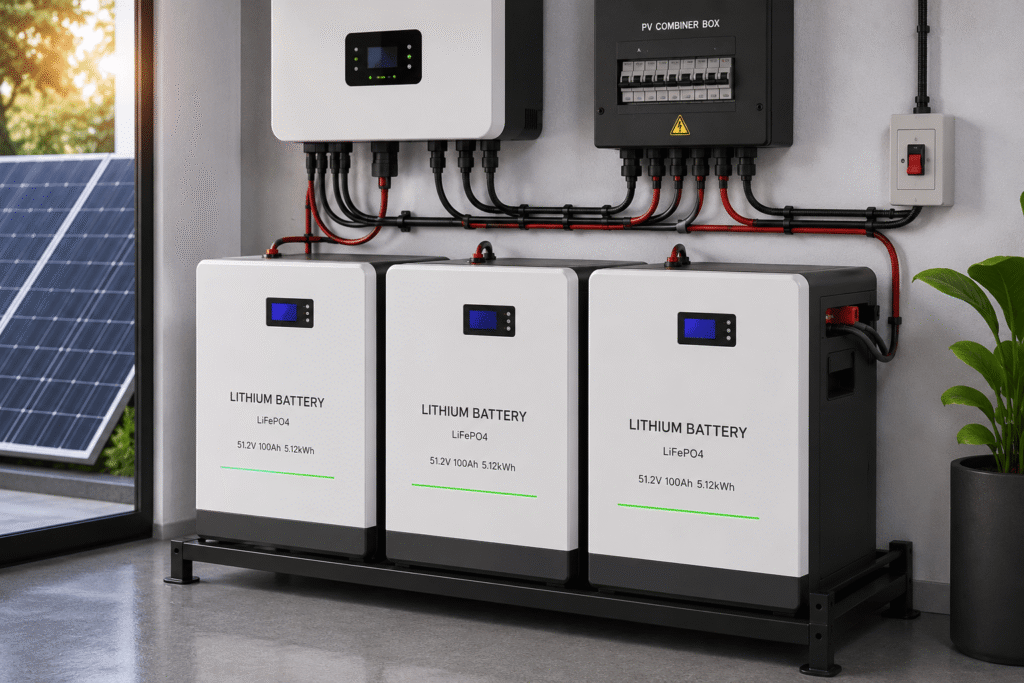
Advantages
- High efficiency
- Long lifespan
- Minimal maintenance
- Smaller footprint
- Higher usable capacity
Typical Depth of Discharge
Most lithium batteries allow:
80%–95% usable capacity
This means you can safely use most of the stored energy.
Lead-Acid Batteries
Lead-acid batteries remain common in some off-grid and budget-conscious installations.
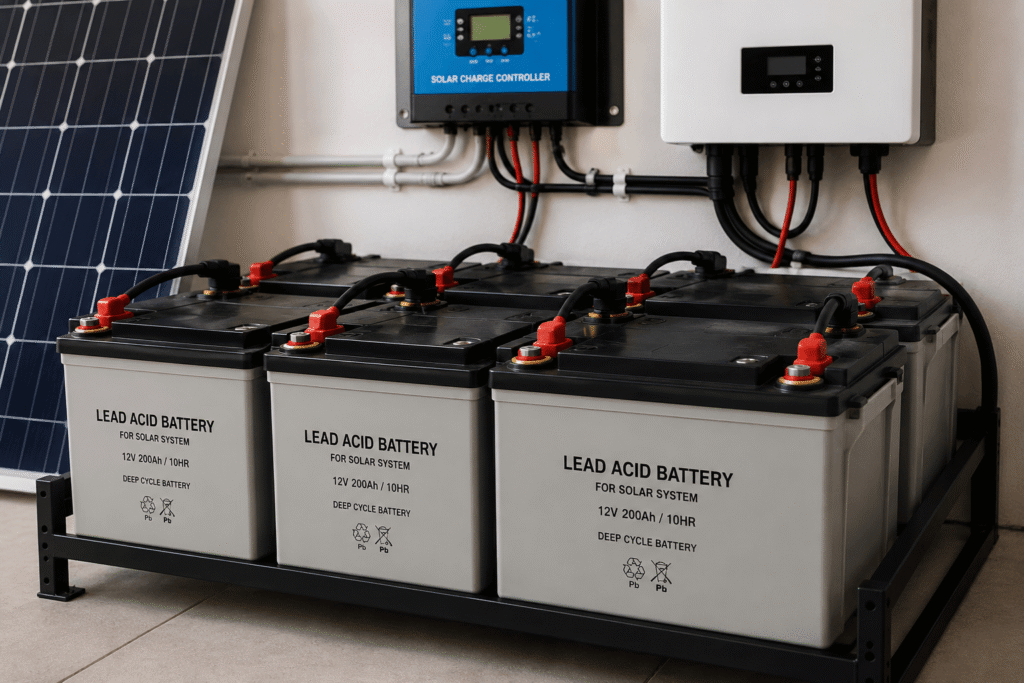
Advantages
- Lower upfront cost
- Proven technology
Disadvantages
- Shorter lifespan
- Larger size
- More maintenance
- Lower usable capacity
Typical Depth of Discharge
Most lead-acid batteries should only be discharged to:
50% of their rated capacity
As a result, larger battery banks are often required to achieve the same usable energy storage.
How Many kWh Does an Average Home Need?
Household electricity consumption varies widely depending on location, family size, appliances, and lifestyle.
Here are some general estimates:
| Home Size | Daily Energy Consumption |
|---|---|
| Small Apartment | 4–8 kWh |
| Small House | 8–15 kWh |
| Medium Family Home | 15–25 kWh |
| Large Home | 25–40+ kWh |
Small Home Example
A small home consuming 8 kWh daily may require approximately:
- 10–12 kWh lithium battery storage
for one day of backup.
Medium Home Example
A family home using 18 kWh daily may require:
- 20–25 kWh of battery storage
depending on efficiency and backup duration.
Large Home Example
A large home consuming 30 kWh daily could require:
- 35–45 kWh of storage
for reliable backup power.
Example Solar Battery Sizing Calculation
Let’s look at a practical example.
Assumptions
A homeowner has:
- Daily electricity usage: 12 kWh
- Backup duration: 1 day
- Battery type: Lithium
- Battery DoD: 90%
- System efficiency: 85%
Step 1: Calculate Required Storage
Required Storage = Daily Usage ÷ (DoD × Efficiency)
Required Storage = 12 ÷ (0.90 × 0.85)
Required Storage = 15.69 kWh
Step 2: Convert Storage to Amp-Hours
For a 48V battery system:
Battery Capacity = (15.69 × 1000) ÷ 48
Battery Capacity = 327 Ah
Final Result
Recommended battery size:
- 15.7 kWh battery storage
- 327 Ah at 48V
This could be achieved using:
- 1 × 16 kWh battery
- 2 × 8 kWh batteries
- 3 × 5 kWh batteries
Common Solar Battery Sizing Mistakes
Ignoring Future Energy Consumption
Many homeowners eventually add:
- Electric vehicles
- Additional air conditioners
- Heat pumps
- Home office equipment
Future electricity demand should be considered when sizing a battery system.
Forgetting Usable Capacity
A battery’s rated capacity and usable capacity are not always the same.
For example:
- 10 kWh lithium battery → approximately 9 kWh usable
- 10 kWh lead-acid battery → approximately 5 kWh usable
Always consider Depth of Discharge when comparing batteries.
Not Accounting for System Losses
Ignoring inverter and battery losses often results in undersized systems.
Including efficiency factors provides a more realistic estimate.
Choosing Based Only on Price
The cheapest battery is not always the most economical option over its lifetime.
Battery lifespan, warranty, efficiency, and usable capacity should all be evaluated before making a purchase decision.
Frequently Asked Questions
What size battery do I need for a 10 kWh per day home?
A home consuming 10 kWh daily typically requires approximately 12–15 kWh of battery storage for one day of backup, depending on battery type and efficiency.
Is a 5 kWh battery enough for a house?
A 5 kWh battery may be sufficient for essential loads such as lighting, fans, Wi-Fi, and refrigeration, but may not support an entire household overnight.
Are lithium batteries better than lead-acid batteries?
For most residential solar systems, lithium batteries offer higher efficiency, longer lifespan, greater usable capacity, and lower maintenance requirements.
How many days of battery backup should I choose?
Most grid-connected homeowners select one day of backup, while off-grid systems often require two to three days of storage to handle poor weather conditions.
Final Thoughts
Selecting the right battery size is one of the most important decisions when designing a solar energy system. Proper battery sizing ensures reliable backup power, better energy independence, and optimal return on investment.
Use our Solar Battery Sizing Calculator above to estimate the ideal battery capacity for your home. By entering your daily energy usage, backup duration, battery type, and system efficiency, you can quickly determine the battery storage required for your specific needs.
Whether you’re planning a grid-tied solar system with backup power or a completely off-grid setup, accurate battery sizing is the first step toward a reliable and efficient solar energy solution.