
Choosing the right solar inverter is one of the most important decisions when setting up a home solar system. While solar panels generate electricity, it’s the inverter that makes that energy usable in your home. A poor inverter choice can lead to inefficiencies, system issues, and long-term losses — even if your panels are high quality. In this guide, we’ll break down everything you need to know on how to choose solar inverter based on your home, usage, and future needs.
Quick Answer
The right solar inverter depends on your system size, budget, battery requirements, and installation conditions. For most homes, a high-quality string inverter or hybrid inverter offers the best balance between cost, efficiency, and flexibility.
What Does a Solar Inverter Do?
A solar inverter converts the DC electricity generated by solar panels into AC electricity that your home can use.
It also:
- Manages energy flow
- Monitors system performance
- Ensures safety through built-in protections
👉 Without a properly functioning inverter, your solar system cannot operate effectively.
Types of Solar Inverters (And Which One You Need)
1. String Inverters (Most Common)
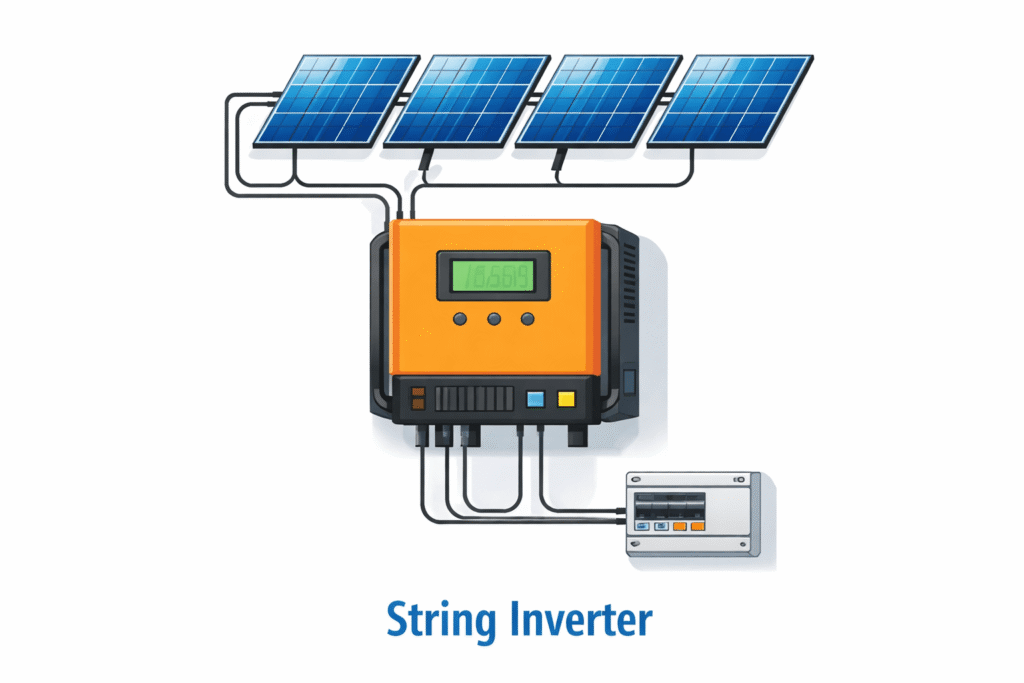
- Panels connected in a series (string)
- Central inverter handles conversion
✅ Best for:
- Homes with minimal shading
- Budget-friendly systems
❌ Limitation:
- One panel underperforming affects entire system
2. Microinverters
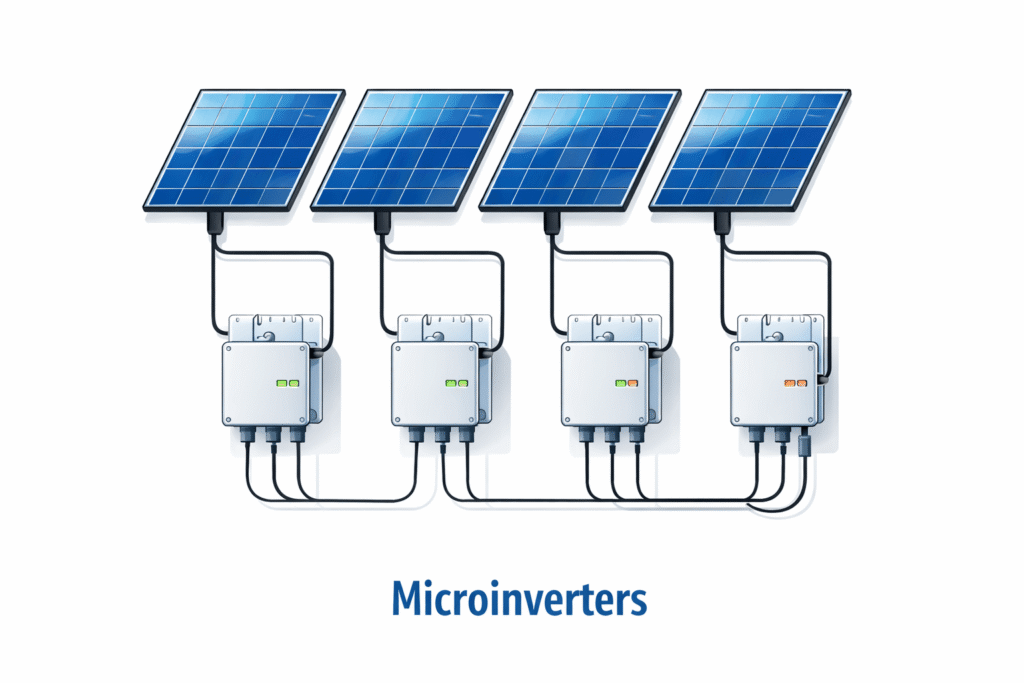
- Installed on each panel
- Each panel works independently
✅ Best for:
- Roofs with shading
- Complex layouts
❌ Limitation:
- Higher cost
3. Hybrid Inverters
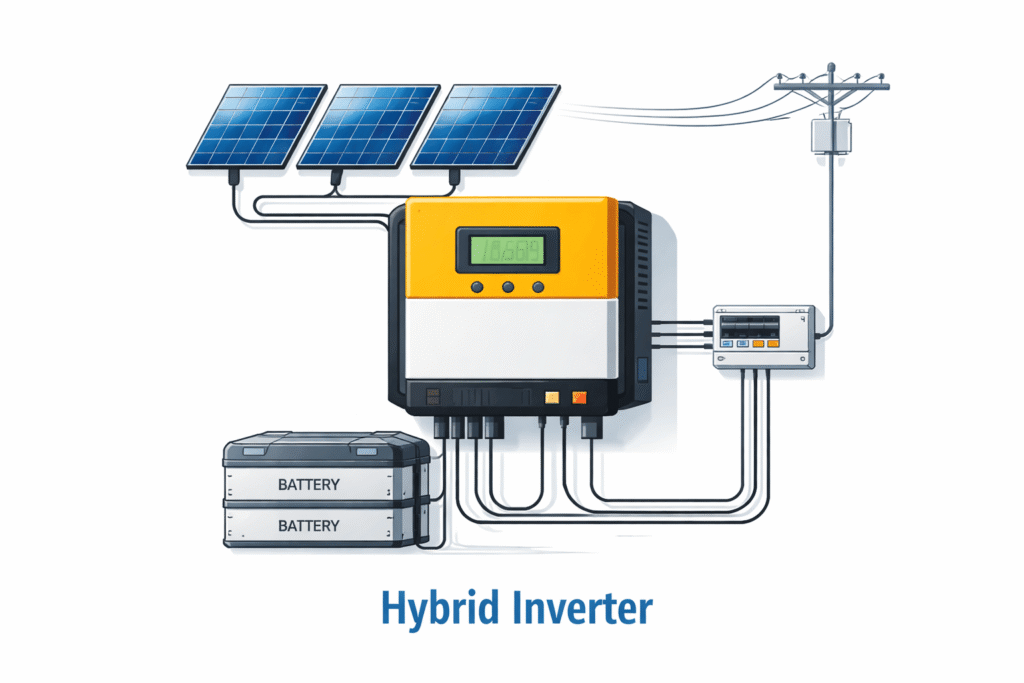
- Supports solar + battery systems
- Manages storage and grid interaction
✅ Best for:
- Homes planning battery storage
- Future-ready systems
👉 This is becoming the most popular choice.
4. Off-Grid Inverters
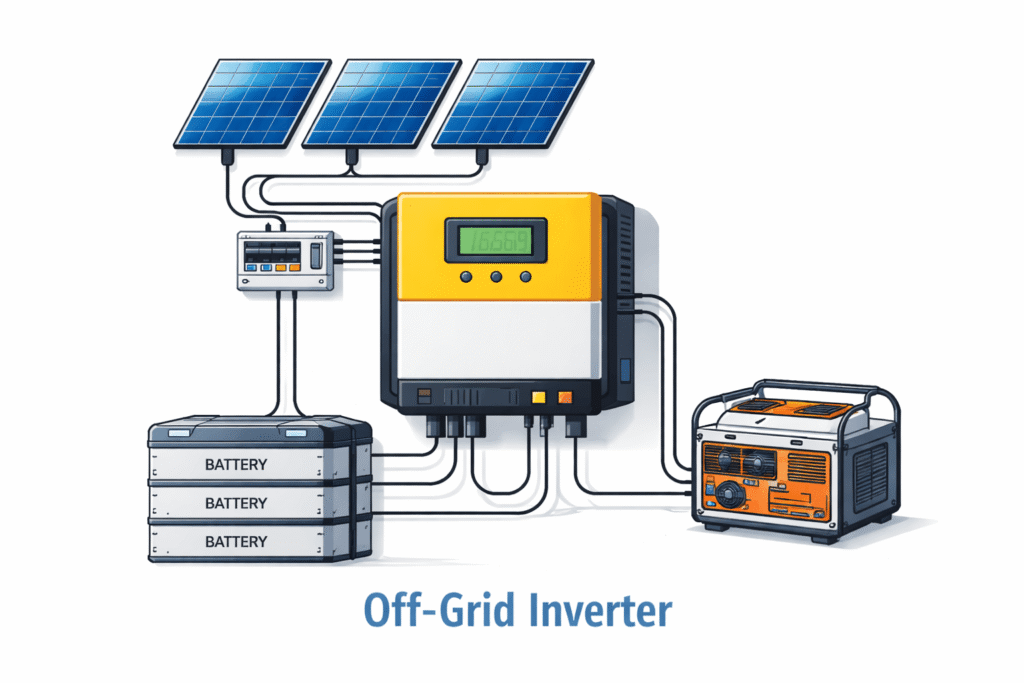
- Used in systems not connected to the grid
✅ Best for:
- Remote locations
- Complete energy independence
Solar Inverter Comparison
| Type | Best For | Cost | Efficiency | Key Limitation |
|---|---|---|---|---|
| String Inverter | Simple roofs | Low | Good | Affects entire system if one panel underperforms |
| Microinverter | Shaded roofs | High | Very High | Expensive |
| Hybrid Inverter | Battery systems | Medium-High | High | Higher upfront cost |
| Off-Grid Inverter | Remote areas | Medium | High | No grid support |
How to Choose Solar Inverter – Key Factors
1. System Size Compatibility
Your inverter must match your system size.
👉 Example:
- 5 kW solar system → ~5 kW inverter
Undersized or oversized inverters can reduce efficiency.
👉 Use our solar calculator to estimate the right system size for your home.
2. Efficiency Rating
Look for inverters with:
- 95%–98% efficiency
Higher efficiency = more usable energy.
3. Battery Compatibility
If you plan to add a battery:
👉 Choose a hybrid inverter
This avoids costly upgrades later.
4. Warranty and Lifespan
Typical inverter lifespan:
- 8–12 years
Look for:
- 5–10 year warranty (minimum)
5. Monitoring Features
Modern inverters offer:
- Mobile apps
- Real-time tracking
- Performance alerts
👉 Helps detect issues early.
6. Installation Conditions
Consider:
- Roof orientation
- Shading
- Temperature
👉 These factors influence inverter choice.
Which Solar Inverter Should You Choose?
- Choose a string inverter if your roof has no shading and you want a budget system
- Choose microinverters if your roof has shading or multiple angles
- Choose a hybrid inverter if you plan to add battery storage
- Choose an off-grid inverter if you are not connected to the grid
Note: String inverters are typically 30–35% cheaper than microinverters, making them a cost-effective choice for simple installations.
👉 For most homeowners, a hybrid inverter offers the best long-term flexibility.
Before selecting an inverter, use our solar calculator to determine your system size and energy needs accurately.
Why Choosing the Right Inverter Matters
The inverter directly impacts:
- System efficiency
- Energy output
- Monitoring capabilities
- Long-term reliability
Choosing the wrong inverter can reduce your system’s performance and increase maintenance costs over time.
Common Mistakes to Avoid
❌ Choosing based only on price
Cheap inverters often lead to:
- Noise issues
- Lower efficiency
- Shorter lifespan
👉 You can read more here: Solar Inverter Making Noise
❌ Ignoring system design
Improper sizing can cause:
- Low output
- System inefficiencies
👉 Learn more: Solar System Not Producing Expected Power
❌ Not planning for battery
If you add battery later:
- You may need to replace inverter
👉 Plan ahead.
Real-World Insight
From an engineering perspective, inverter selection is not just about power rating — it’s about how the system behaves under real conditions.
For example:
- A slightly undersized inverter may operate efficiently at peak loads
- Poor-quality inverters may introduce harmonic distortion and noise
👉 These factors directly affect performance and user experience.
When Should You Upgrade Your Inverter?
Consider upgrading if:
- Your inverter is over 10 years old
- You’re adding a battery
- You experience frequent issues
- Efficiency has dropped
Recommended Setup for Most Homes
For most homeowners:
👉 Hybrid inverter + properly sized system
This gives:
- Flexibility
- Future battery support
- Better long-term value
Final Thoughts
Choosing the right solar inverter is critical to the success of your solar system. It affects efficiency, reliability, and long-term performance.
Instead of focusing only on cost, consider your current needs, future plans, and system design.
👉 A well-chosen inverter ensures your solar system runs efficiently and reliably for years.
