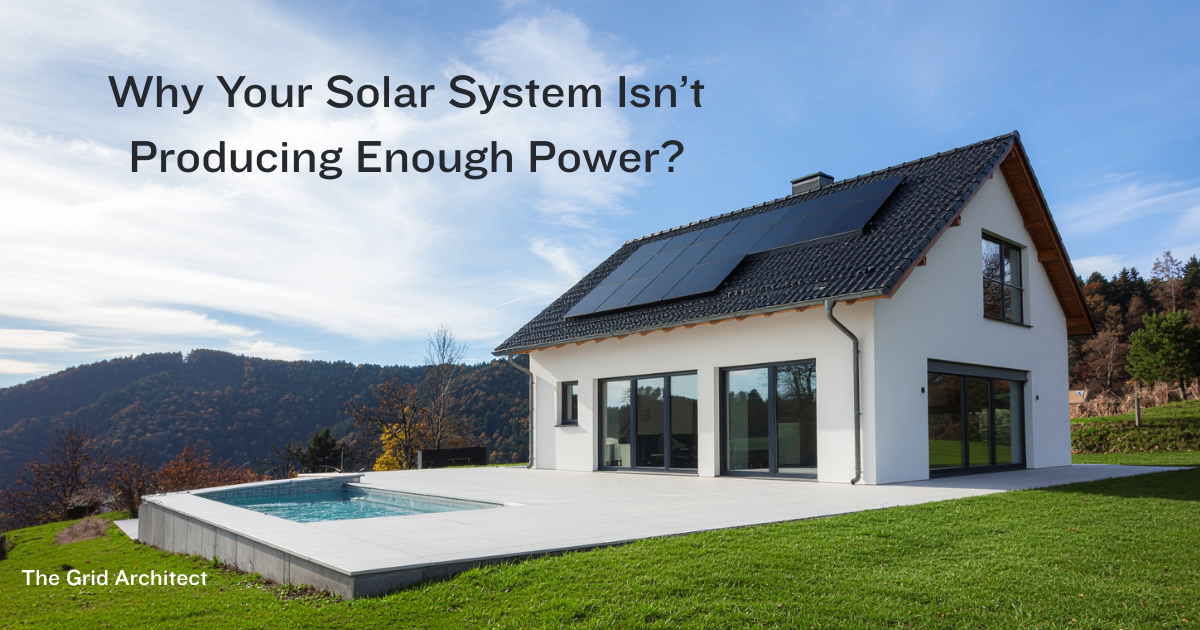

If the solar system not producing enough power, you’re not alone. Many homeowners notice a gap between estimated output and actual performance — and it can be frustrating, especially after a significant investment.
The reality is: solar systems rarely operate at their theoretical maximum. But if the drop is significant, there’s usually a reason behind it.
In this guide, we’ll break down the most common causes of low solar output — and how to fix them.
Quick Answer
A solar system may produce less power due to factors like dirt on panels, shading, inverter inefficiencies, poor installation, wiring losses, or incorrect system sizing. Identifying the root cause is key to restoring performance.
What Is “Expected Power” in a Solar System?
Before diagnosing the issue, it’s important to understand what “expected power” actually means.
Solar installers typically estimate output based on:
- Location and sunlight availability
- Panel efficiency
- System size (kW)
- Ideal conditions
However, real-world conditions introduce losses — typically around 10% to 25%.
👉 If your system is underperforming beyond this range, it’s worth investigating.
How Much Solar Production Loss Is Normal?
Not every drop in solar production indicates a problem. Solar output naturally changes because of:
- Weather conditions
- Seasonal sunlight variation
- Temperature changes
- Daylight duration
For example:
- Winter production is usually lower than summer
- Cloudy days produce less electricity than sunny days
👉 Compare solar production with the same month from the previous year rather than comparing winter output to peak summer performance.
Solar System Not Producing Enough Power: 10 Real Causes
If your solar system not producing enough power, the below are the important possible causes.
1. Dirt and Dust on Solar Panels
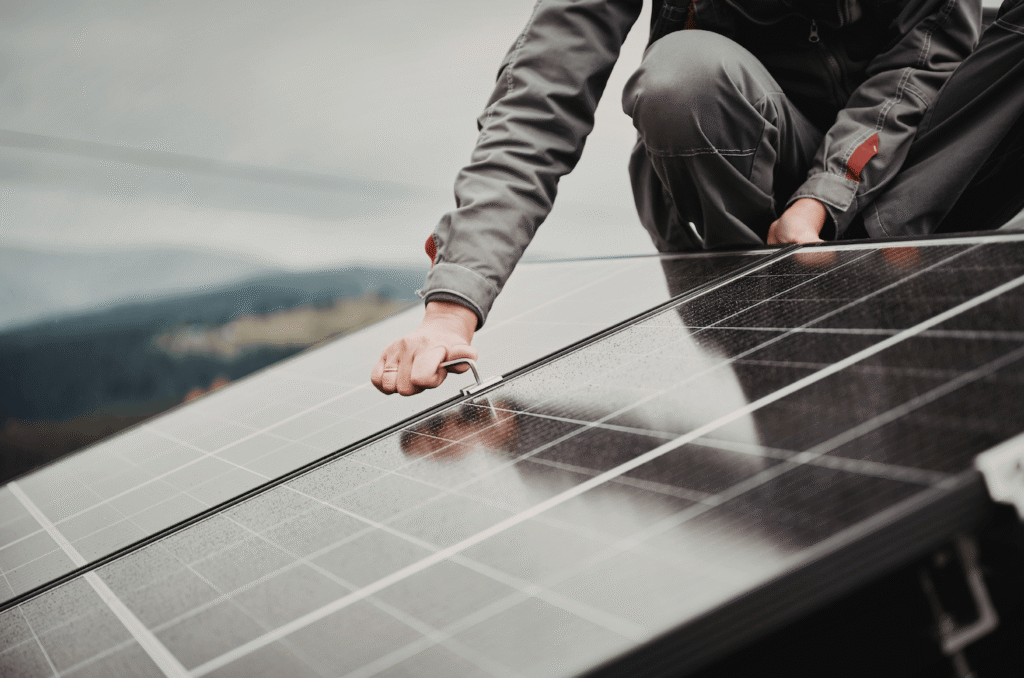
Dust, bird droppings, and pollution can reduce panel efficiency significantly.
- Even a thin layer can block sunlight
- Common in urban and dry regions
✅ Fix: Clean panels periodically using water or professional services.
2. Partial Shading
Shadows from trees, buildings, or even small obstructions can impact output.
- A single shaded panel can affect the entire string (in string inverter systems)
✅ Fix: Trim obstructions or consider optimizers/microinverters.
3. Inverter Efficiency Issues
The inverter plays a crucial role in converting DC to AC power.
- Low-quality inverters may have higher losses
- Aging inverters may degrade over time
👉 If you’re hearing unusual sounds from your inverter, it may also indicate performance issues.
4. Incorrect System Sizing
If your system was not properly designed:
- It may not meet your actual energy needs
- Expectations may have been unrealistic
From an engineering perspective, load calculation is often overlooked during installation.
✅ Fix: Re-evaluate your energy usage and system capacity.
5. High Temperature Losses
Solar panels become less efficient at higher temperatures.
- Efficiency drops as panel temperature rises
- Common in hot climates
👉 This is a natural limitation, not a fault.
6. Wiring and Connection Losses
Poor wiring or loose connections can cause energy losses.
- Voltage drops
- Energy dissipation as heat
✅ Fix: Inspect wiring and ensure proper installation standards.
7. Panel Degradation Over Time
Solar panels degrade gradually.
- Typical degradation: ~0.5% per year
- Older systems produce less power
👉 This is expected but usually minimal in early years.
8. Faulty Components
Defective panels, connectors, or inverter parts can reduce output.
- May not always be visible
- Often requires testing
✅ Fix: Get system checked by a professional.
9. Monitoring System Errors
Sometimes the issue isn’t actual performance — but incorrect data.
- Faulty monitoring apps
- Incorrect readings
👉 Always verify with actual meter readings.
10. Weather and Seasonal Variations
Solar output varies naturally based on:
- Cloud cover
- Rain
- Seasonal sunlight changes
👉 Winter and monsoon periods often show reduced output.
If you’re unsure whether your system is generating normally, compare your production with our guide on average solar panel output per day.
Quick Check
If your solar system is underperforming:
- Panels look dirty → clean them
- Output dropped suddenly → check inverter
- Gradual decline → likely dust or degradation
- Only low during certain times → shading issue
Signs Your Solar System Is Underperforming
Common warning signs include:
- Electricity bills increasing unexpectedly
- Lower daily solar generation
- Battery not charging fully
- Inverter warning lights
- Reduced backup duration
- Monitoring app showing lower production
A sudden increase in electricity bills is often one of the earliest signs of solar system performance issues.
How to Diagnose the Problem
Here’s a simple way to identify the issue:
- Compare current output with previous months
- Check for visible dirt or shading
- Monitor inverter performance
- Review electricity bills
- Look for sudden drops in production
👉 Consistent tracking helps identify patterns.
In real-world conditions, most solar systems operate at around 75–85% of their rated capacity due to temperature, wiring, and inverter losses.
How to Improve Solar System Performance
Practical steps you can take:
- Clean panels regularly
- Ensure proper airflow around panels
- Upgrade to better inverter if needed
- Fix wiring and grounding issues
- Optimize system layout
👉 Small improvements can lead to noticeable gains.
When Should You Be Concerned?
Take action if:
- Output drops suddenly
- System produces significantly less than expected
- Inverter shows errors
- Panels appear damaged
👉 These may indicate serious issues requiring professional inspection.
How Much Power Loss Is Normal?
Most solar systems do not operate at 100% efficiency. In real-world conditions, a performance loss of around 10% to 25% is considered normal.
This includes losses due to temperature, wiring, inverter efficiency, and environmental factors.
If your system is performing significantly below this range, it may indicate an underlying issue that needs attention.
For example, a 5 kW solar system that typically generates around 20 kWh per day dropping to 14 kWh indicates a 30% reduction in output — significantly above normal operating losses and likely pointing to an underlying issue.
Dirty Solar Panels Can Reduce Output Significantly
Dust, dirt, pollen, pollution residue, and bird droppings are among the most common causes of reduced solar production.
In dusty environments: Output losses can sometimes reach 15–25% without regular cleaning.
Regular solar panel cleaning is one of the easiest ways to improve solar production and prevent unnecessary power loss.
How to Track Your Solar Performance?
To understand whether your system is underperforming, it’s important to track its output regularly.
You can do this by:
- Checking your inverter display or mobile app
- Comparing daily and monthly energy generation
- Monitoring trends over time
Consistent tracking helps you identify performance drops early and take corrective action.
Even Small Shade Can Cause Major Power Loss
Many homeowners underestimate the impact of partial shading.
Even:
- Tree branches
- Water tanks
- Nearby buildings
- Bird droppings
can significantly reduce system output.
In string-based systems, a small shadow on one panel may reduce production across the entire string.
Related guide: Monocrystalline vs Polycrystalline Solar Panels
Real Example: Tree Growth Reduced Solar Production
A homeowner noticed: Production dropping every year
Cause: Nearby trees gradually growing taller
Result: Afternoon shading increased significantly
Solution: Tree trimming
Solar panel output per day improved immediately. Tree growth is a surprisingly common long-term cause of declining solar production.
Can Battery Problems Reduce Solar Performance?
Indirectly, yes. If the battery:
- Fails to charge properly (Example: Solar Panels Working but Battery Not Charging)
- Has communication issues
- Is heavily degraded
the overall solar system may appear to underperform.
Modern hybrid solar systems rely heavily on battery coordination for optimal energy management.
Some homeowners mistake battery problems for solar production problems because both can reduce available backup power.
Inverter Problems Can Reduce Solar Output
The inverter converts solar electricity into usable household power.
Common inverter-related causes include:
- Overheating
- Internal faults
- Incorrect settings
- Communication errors
- Grid synchronization issues
Since inverters often have shorter lifespans than panels, they are among the most common solar system failure points.
Why Solar Panels Produce Less Power During Hot Weather
Many people assume solar panels perform best in extreme heat.
Actually: Very high temperatures reduce panel efficiency.
For many crystalline solar panels:
- Power output decreases as panel temperature rises
Hot summer rooftops may therefore generate less power than expected despite strong sunlight.
Improper Installation Can Reduce Solar Production
Installation quality matters significantly. Common installation mistakes include:
- Wrong tilt angle
- Incorrect orientation
- Loose wiring
- Shading oversight
- Undersized inverter
Even minor installation errors can reduce long-term energy production.
How to Check If Your Solar System Is Producing Normally
You can monitor performance using:
- Inverter display
- Solar monitoring app
- Daily production logs
- Monthly electricity bills
Warning signs include:
- Sudden production drops
- Frequent inverter errors
- Unusual battery behavior
Monitoring tools help detect performance issues before they become major failures.
Real-World Insight
In many real installations, underperformance is not due to a single issue — but a combination of small inefficiencies.
For example:
- Slight dust buildup
- Minor shading
- Moderate inverter losses
👉 Together, these can significantly reduce output.
Fixing even one or two factors can improve performance noticeably.
You can also use our solar calculator to estimate your system size.
Real Example
A homeowner noticed solar production falling gradually over several months.
Cause:
- Dust accumulation on rooftop panels
Solution:
- Professional panel cleaning
👉 Result: Production increased noticeably within days.
Routine maintenance helps identify performance issues before they reduce long-term energy generation.
Solar Panel Aging and Degradation
Solar panels slowly lose efficiency over time.
Typical degradation rates:
- Around 0.4–0.8% per year
This gradual decline is normal and covered under most performance warranties.
Frequently Asked Questions
Why is my solar system producing less power than before?
Solar systems may produce less power due to:
- Dirty solar panels
- Shading from trees or buildings
- Inverter problems
- High panel temperatures
- Aging solar panels
- Battery or wiring issues
Comparing current production with previous months can help identify abnormal performance drops.
Is it normal for solar production to decrease in winter?
Yes. Solar production is usually lower during winter because:
- Days are shorter
- Sunlight intensity is lower
- Weather is often cloudier
A moderate seasonal reduction in output is completely normal.
Can dirty solar panels reduce power output?
Yes. Dust, dirt, bird droppings, and pollen can block sunlight from reaching solar cells.
In some areas, dirty panels may reduce production by 10–25% or more if left uncleaned for long periods.
Can a faulty inverter reduce solar production?
Absolutely. The inverter converts solar electricity into usable household power.
If the inverter develops faults, overheats, or shuts down unexpectedly, solar production can drop significantly.
How do I know if my solar panels are underperforming?
Common signs include:
- Higher electricity bills
- Lower daily energy generation
- Reduced battery charging
- Frequent inverter warnings
- Lower backup duration
Monitoring apps and inverter displays can help identify performance issues early.
Can shading from one panel affect the entire system?
Yes. In many string inverter systems, shading on a single panel can reduce production from the entire string.
Even small shadows from trees, antennas, or water tanks can have a noticeable impact.
Do solar panels lose efficiency over time?
Yes. Most solar panels slowly degrade over time.
Typical degradation rates are:
- Around 0.4% to 0.8% per year
However, quality solar panels can still produce electricity effectively for 25–30 years or longer.
Why do my solar panels produce less power on hot days?
Many homeowners assume hotter weather means higher production. In reality, excessive heat reduces solar panel efficiency.
Solar panels generally perform best in cool, sunny conditions rather than extremely hot weather.
Can battery problems make it seem like my solar system is underperforming?
Yes. If the battery is:
- Not charging properly
- Battery Draining too quickly
- Experiencing communication issues
the entire system may appear to generate less usable energy even when the panels are functioning correctly.
When should I call a solar technician?
You should consider professional inspection if:
- Production suddenly drops significantly
- Inverter shows repeated fault codes
- Wiring damage is visible
- Battery overheats
- Cleaning and basic troubleshooting do not solve the problem
Early diagnosis can prevent larger and more expensive system failures.
How much power should my solar system produce per day?
The answer depends on:
- System size
- Location
- Weather conditions
- Solar Panel efficiency
- Installation angle
For example:
- A 5 kW solar system may produce approximately 18–25 kWh per day under good conditions.
Final Thoughts
A solar system not producing expected power is a common issue — but in most cases, it’s fixable.
Understanding the root cause is the key. Whether it’s environmental factors, system design, or component quality, identifying the problem early helps maintain efficiency and long-term performance.
👉 A well-maintained solar system should operate reliably and efficiently for years.
