
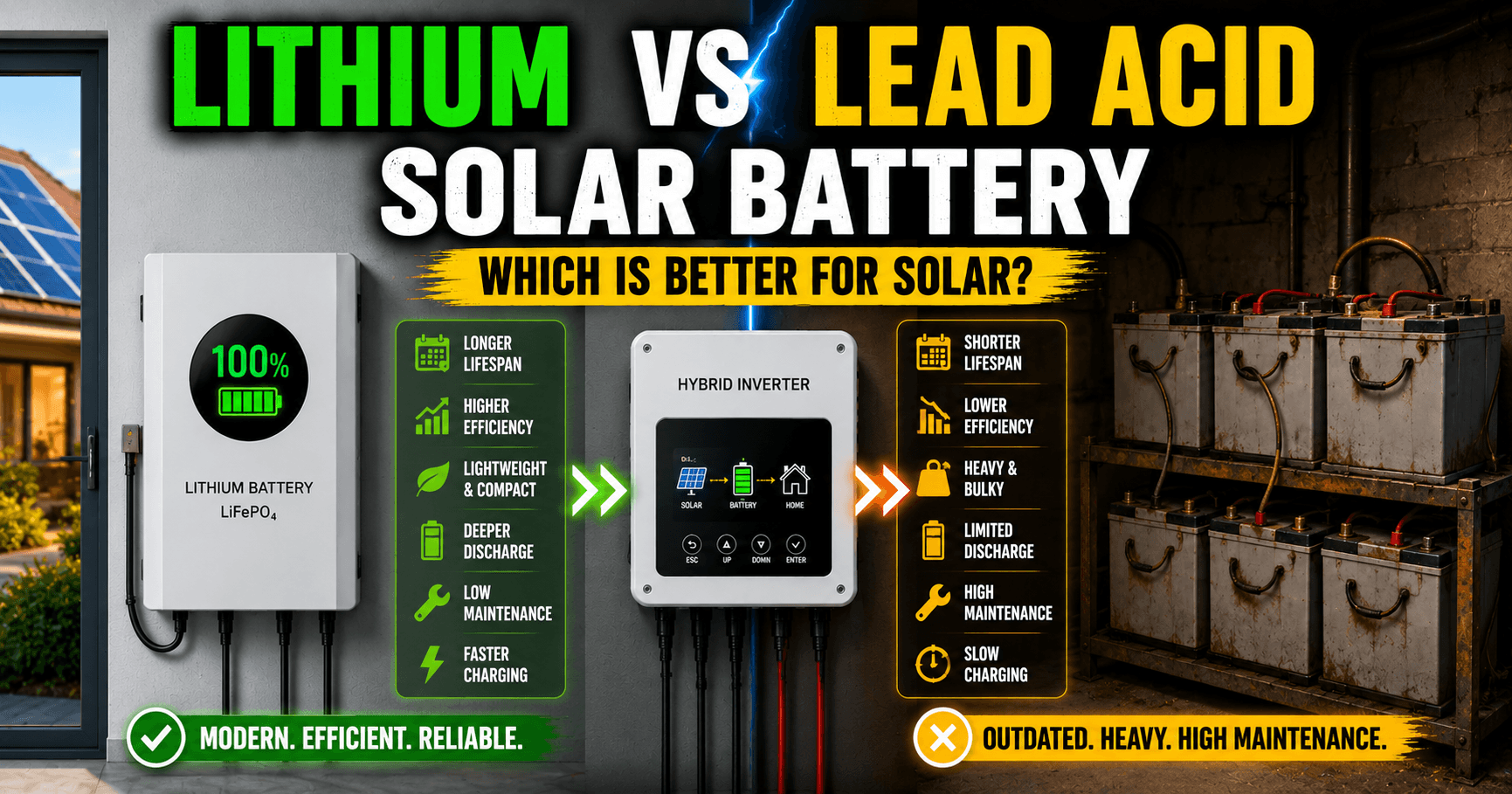

Choosing the right battery is one of the most important decisions when building a solar energy system. For years, lead-acid batteries dominated the solar industry. However, lithium batteries have become increasingly popular due to their longer lifespan, higher efficiency, and lower maintenance requirements. So which battery is better for your solar system? The answer depends on your budget, backup requirements, and long-term energy goals. In this guide about lithium vs lead acid solar battery, we’ll compare in terms of:
- Cost
- Lifespan
- Efficiency
- Maintenance
- Performance
- Safety
- Long-term value
By the end, you’ll know which battery technology is best for your home.
Quick Answer
For most modern residential solar systems: Lithium batteries are usually the better long-term investment.
They offer:
- Longer lifespan
- Higher efficiency
- More usable capacity
- Faster charging
- Lower maintenance
Lead-acid batteries may still be suitable for budget-conscious homeowners or occasional backup applications.
Lithium vs Lead Acid Solar Battery
What Is a Lithium Solar Battery?
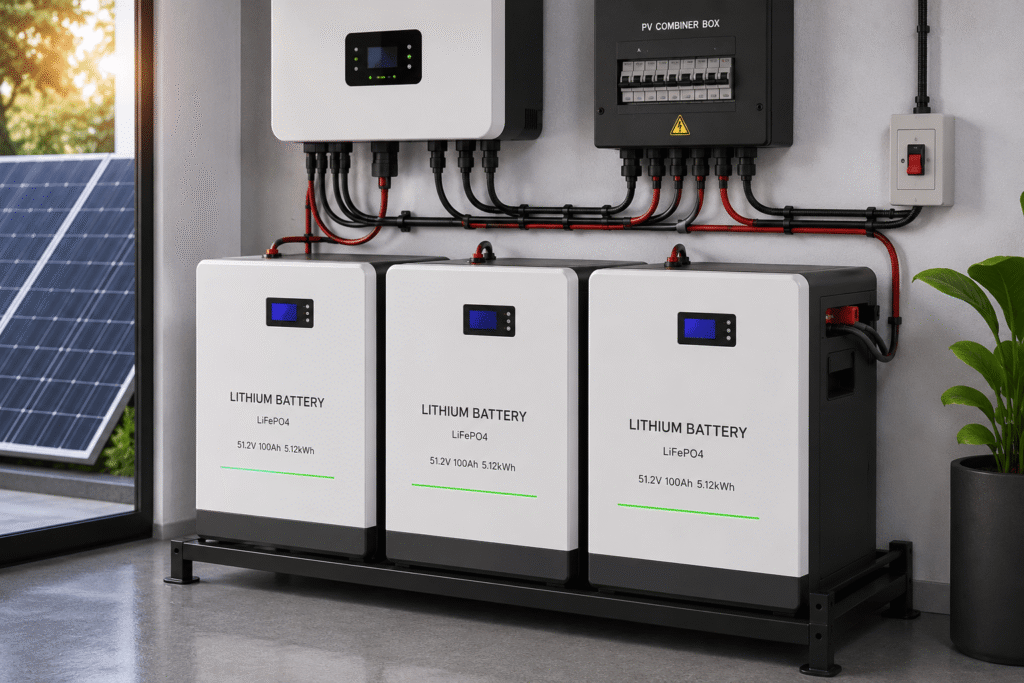
Lithium batteries store energy using lithium-based chemistry.
Common solar battery types include:
- Lithium-ion
- LiFePO4 (Lithium Iron Phosphate)
Modern residential solar systems increasingly use LiFePO4 batteries because of their safety and longevity.
What Is a Lead-Acid Solar Battery?
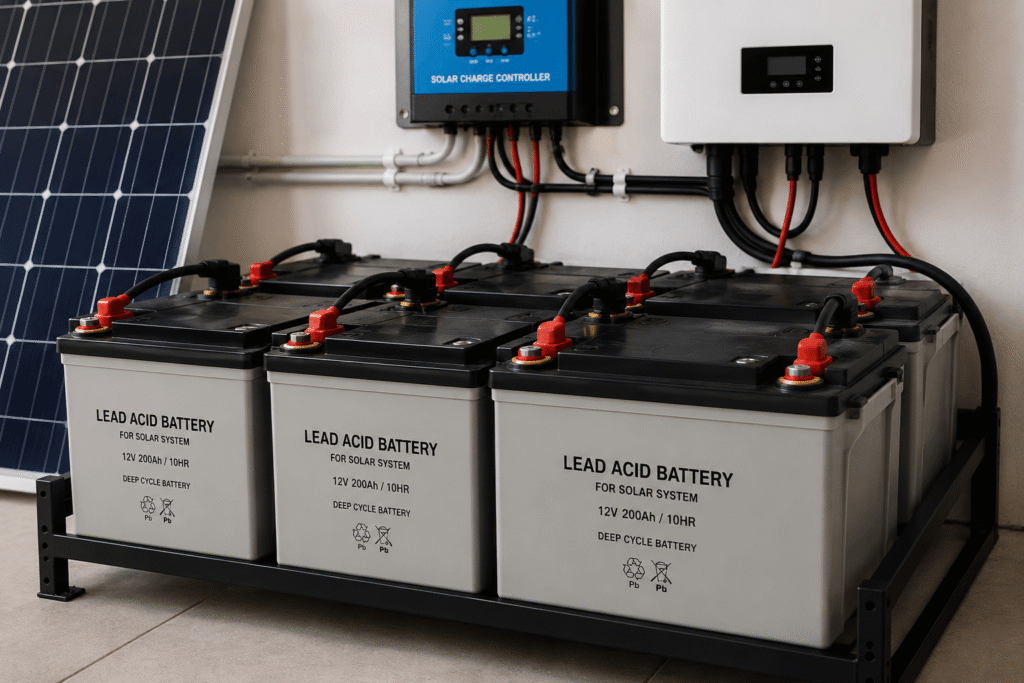
Lead-acid batteries have been used for decades.
Common types include:
- Flooded lead-acid
- AGM batteries
- Gel batteries
Lead-acid systems remain popular because of their lower upfront cost.
Lithium vs Lead Acid Solar Battery Comparison Table
| Feature | Lithium Battery | Lead-Acid Battery |
|---|---|---|
| Lifespan | 10–20 Years | 3–7 Years |
| Efficiency | 90–98% | 70–85% |
| Maintenance | Very Low | Moderate to High |
| Depth of Discharge | 80–100% | 50% Recommended |
| Weight | Lighter | Heavier |
| Charging Speed | Faster | Slower |
| Upfront Cost | Higher | Lower |
| Long-Term Value | Excellent | Moderate |
Lithium vs Lead Acid Solar Battery – Lifespan Comparison
One of the biggest differences is longevity.
Lead-Acid Battery Lifespan
Typical lifespan:
- 3–7 years
Heavy cycling and deep discharge can shorten lifespan further.
Lithium Battery Lifespan
Typical lifespan:
- 10–15 years
Premium LiFePO4 systems:
- 10–20 years
Real Example
Homeowner A: Lead-acid battery replaced after 5 years.
Homeowner B: LiFePO4 battery still operating effectively after 12 years.
Related Guide: How Long Does a Solar Battery Last?
Efficiency Comparison
Efficiency determines how much stored energy you can actually use.
Lithium Battery
Typical efficiency: 90–98%
Lead-Acid Battery
Typical efficiency:
70–85%
Example
Solar energy stored: 10 kWh
Lithium usable output: Approximately 9–9.8 kWh
Lead-acid usable output: Approximately 7–8.5 kWh
Result: Lithium wastes less energy.
Depth of Discharge (DoD)
Depth of discharge refers to how much battery capacity can safely be used.
Lead-Acid
Recommended: 50%
Example: 10 kWh battery
Usable energy: 5 kWh
Lithium
Typical: 80–100%
Example: 10 kWh battery
Usable energy: 8–10 kWh
This means a smaller lithium battery can often provide the same usable energy as a much larger lead-acid system.
Lithium vs Lead Acid Solar Battery – Upfront Cost Comparison
Lead-acid batteries generally cost less initially.
Lead-Acid
Advantages:
- Lower purchase price
- Widely available
Lithium
Advantages:
- Longer lifespan
- Lower maintenance
- Better efficiency
Although lithium batteries cost more upfront, many homeowners recover the difference through longer service life and fewer replacements.
Maintenance Requirements
Lead-Acid Batteries
May require:
- Regular inspections
- Terminal cleaning
- Water level checks (flooded batteries)
Lithium Batteries
Typically require:
- Minimal maintenance
- Basic monitoring
This makes lithium batteries attractive for homeowners seeking a low-maintenance solution.
Charging Speed Comparison
Lithium batteries charge significantly faster than lead-acid batteries.
Real Example
Available solar energy: 5 kWh
Lithium battery: May reach full charge more quickly.
Lead-acid battery: May require additional charging time.
Faster charging can be especially beneficial during short winter days.
Temperature Performance
Temperature affects both battery types.
Lead-Acid
Performance can drop significantly in cold weather.
Lithium
Generally performs better across a wider temperature range.
However, extreme temperatures affect all batteries.
Which Battery Is Better for Home Backup?
For most residential systems:
Lithium batteries provide:
- Longer backup life
- More usable capacity
- Better performance during frequent outages
This is why many modern hybrid solar systems use lithium battery technology.
Real-World Cost Example
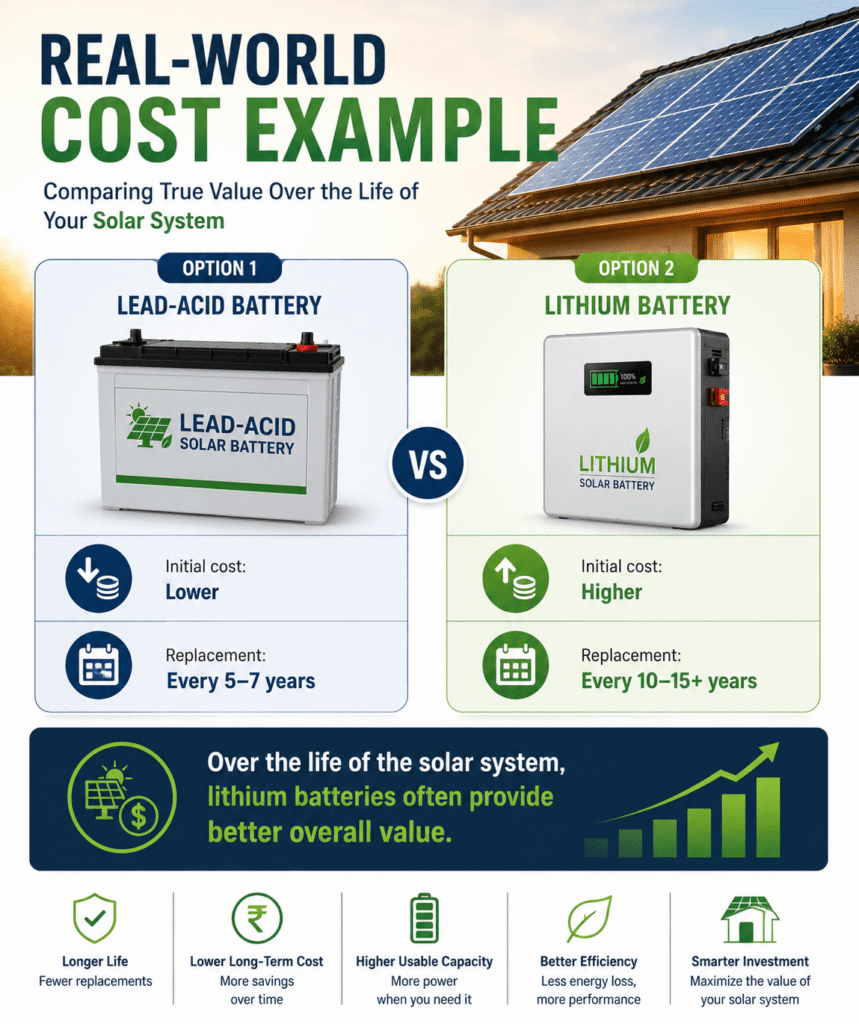
Option 1: Lead-acid battery
Initial cost: Lower
Replacement: Every 5–7 years
Option 2: Lithium battery
Initial cost: Higher
Replacement: Every 10–15+ years
Over the life of the solar system, lithium batteries often provide better overall value.
When Lead-Acid May Still Be a Good Choice
Lead-acid batteries can still make sense if:
- Budget is limited
- Backup requirements are minimal
- Battery cycling is infrequent
- Off-grid systems require low-cost storage
Which Battery Should You Choose?
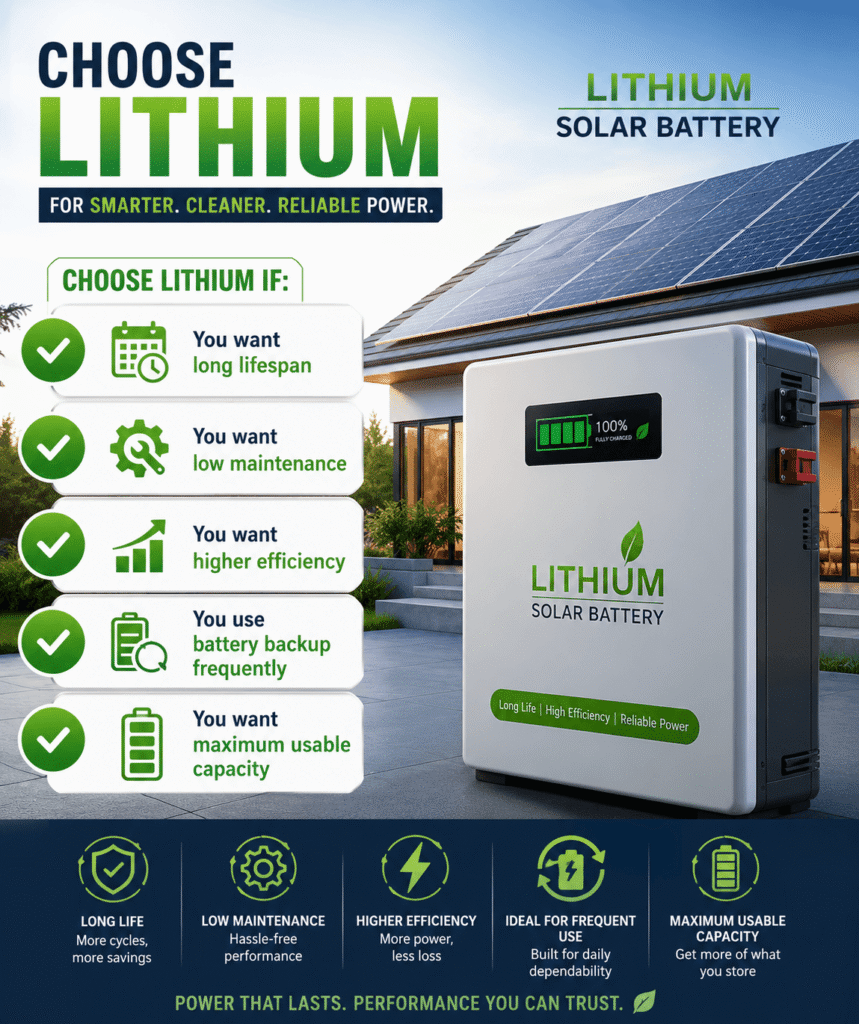
Choose Lithium If:
✅ You want long lifespan
✅ You want low maintenance
✅ You want higher efficiency
✅ You use battery backup frequently
✅ You want maximum usable capacity
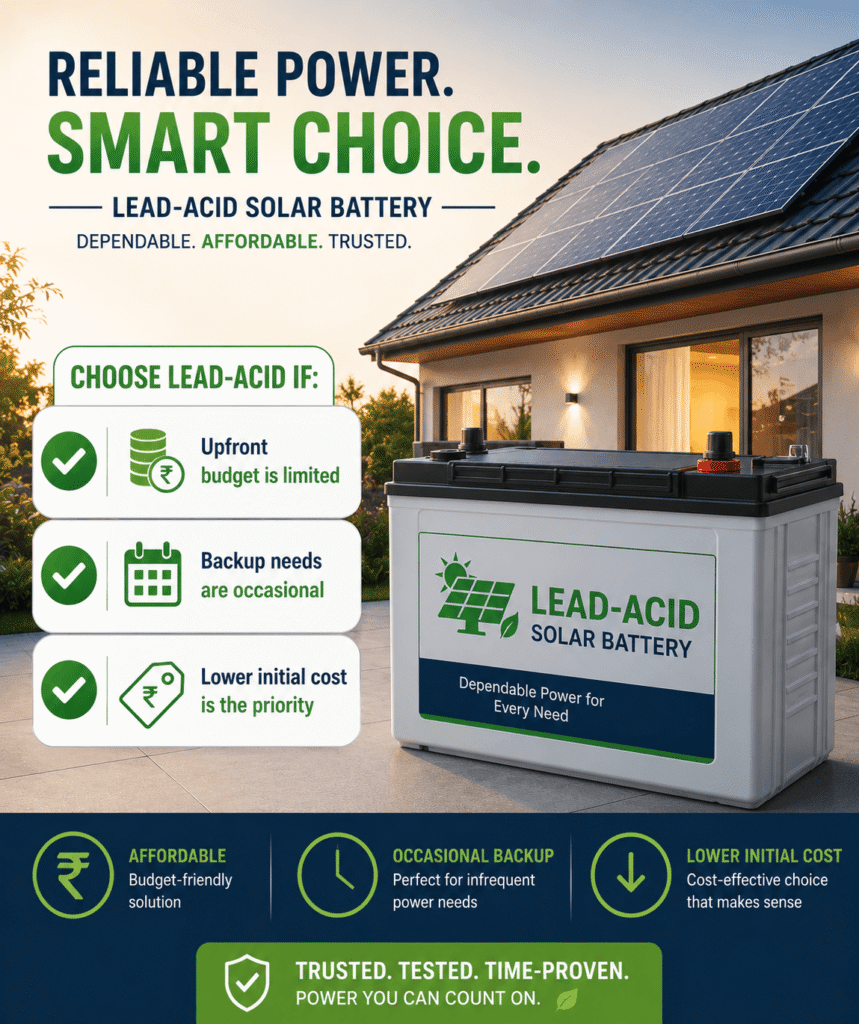
Choose Lead-Acid If:
✅ Upfront budget is limited
✅ Backup needs are occasional
✅ Lower initial cost is the priority
Real Homeowner Scenarios
Scenario 1: Frequent Power Outages
Best Choice:
👉 Lithium Battery
Reason: Better cycle life and deeper discharge capability.
Scenario 2: Budget-Conscious Installation
Best Choice:
👉 Lead-Acid Battery
Reason: Lower initial investment.
Scenario 3: Long-Term Ownership
Best Choice:
👉 Lithium Battery
Reason: Fewer replacements and lower maintenance.
FAQs
Are lithium batteries better than lead-acid batteries for solar?
For most residential applications, yes. Lithium batteries generally offer longer lifespan, higher efficiency, and lower maintenance.
How much longer do lithium batteries last?
Lithium batteries often last two to three times longer than traditional lead-acid batteries.
Why are lithium batteries more expensive?
Lithium batteries use advanced technology and provide longer service life, higher efficiency, and more usable capacity.
Can I replace my lead-acid battery with a lithium battery?
In many cases, yes. However, inverter and charging settings may need adjustment.
Which battery is best for frequent power outages?
Lithium batteries are usually the preferred option because of their durability and deep discharge capability.
Is LiFePO4 better than lead-acid?
For most solar applications, LiFePO4 batteries offer better lifespan, efficiency, and long-term value.
Final Thoughts
Both lithium and lead-acid batteries can store solar energy effectively, but they serve different needs.
Lead-acid batteries remain attractive because of their lower upfront cost, while lithium batteries provide longer lifespan, better efficiency, and greater usable capacity.
For homeowners planning a long-term solar investment, lithium batteries are often the preferred choice due to their superior performance and lower lifetime ownership costs.
Before choosing a battery system, use our Solar Battery Sizing Calculator to determine the capacity required for your home’s energy needs.
