
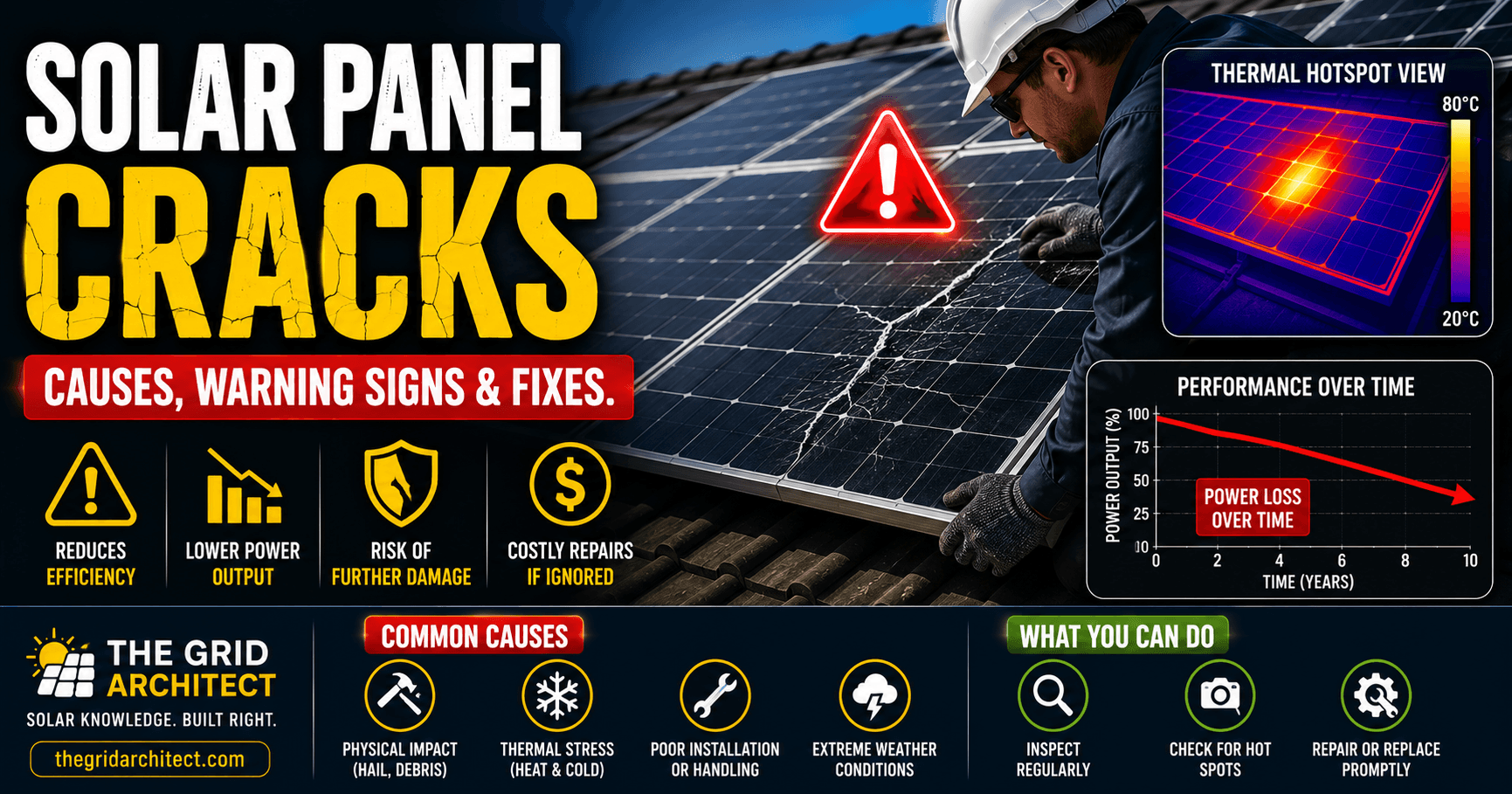

Solar panels are built to withstand harsh weather conditions, including rain, wind, hail, and extreme temperatures. However, they are not indestructible. Over time, solar panel cracks can affect performance, reduce efficiency, and potentially shorten the lifespan of the system.
The good news? Not every crack means immediate panel failure.
Some cracked panels continue producing electricity, while others require repair or replacement.
In this guide, you’ll learn:
- What causes solar panel cracks
- Different types of cracks
- Warning signs to watch for
- How cracks affect solar production
- Repair vs replacement decisions
- Warranty considerations
- Prevention methods
Quick Answer
Solar panel cracks are commonly caused by:
- Hailstorms
- Falling objects
- Thermal stress
- Installation damage
- Transportation damage
- Extreme weather
- Roof maintenance accidents
Small cracks may have little immediate impact, but larger cracks can reduce power production, allow moisture intrusion, and accelerate panel degradation.
What Is a Solar Panel Crack?
A solar panel crack refers to physical damage affecting:
- The glass surface
- Solar cells
- Internal components
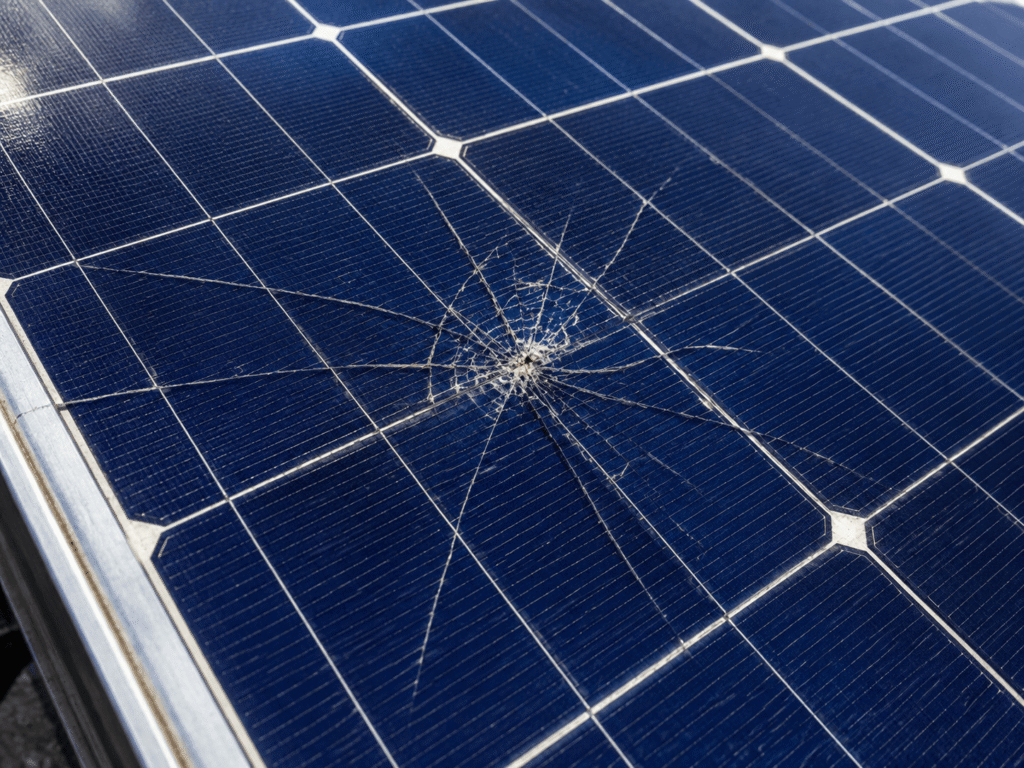
Cracks can range from tiny hairline fractures to severe damage across multiple cells.
Some cracks are visible, while others remain hidden beneath the glass.
Types of Solar Panel Cracks
Understanding the type of crack helps determine the severity of the problem.
1. Glass Surface Cracks
These cracks affect the protective glass covering the solar cells.
Common Causes
- Hail impact
- Falling branches
- Tools dropped during maintenance
- Storm damage
Potential Risks
- Moisture intrusion
- Reduced protection
- Further cracking over time
2. Cell Cracks
Cell cracks occur within the solar cells themselves.
These cracks may not always be visible.
Common Causes
- Transportation damage
- Improper installation
- Thermal expansion and contraction
Potential Effects
- Reduced power production
- Hot spots
- Accelerated degradation
3. Microcracks
Microcracks are tiny fractures inside solar cells.
Often invisible to the naked eye.
Causes
- Manufacturing defects
- Mechanical stress
- Thermal cycling
- Improper handling
Risks
- Long-term performance loss
- Hot spot formation
- Increased degradation
Warning Signs of a Cracked Solar Panel
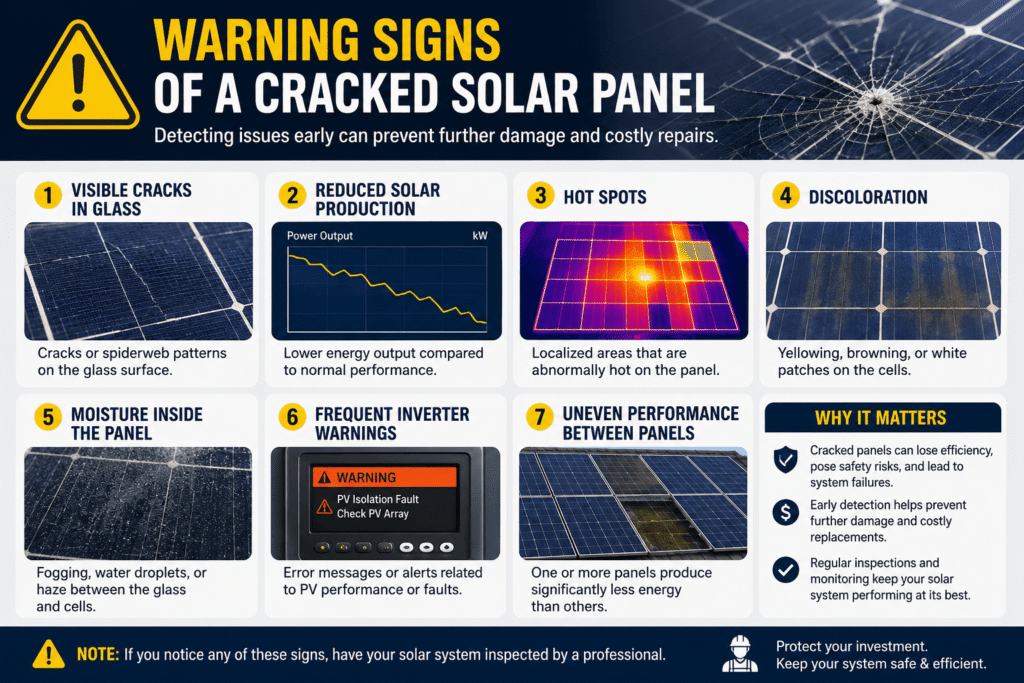
Common indicators include:
- Visible cracks in glass
- Reduced solar production
- Hot spots
- Discoloration
- Moisture inside the panel
- Frequent inverter warnings
- Uneven performance between panels
Can a Cracked Solar Panel Still Work?
Yes. Many cracked solar panels continue generating electricity.
However, output may be reduced depending on the location and severity of the damage.
Example
Small corner crack:
- Minimal performance loss
Large crack across multiple cells:
- Significant power reduction
- Increased risk of long-term damage
How Cracks Affect Solar Panel Performance
Cracks can impact:
Energy Production
Damaged cells generate less electricity.
Reliability
Cracks increase the risk of future failures.
Lifespan
Moisture and thermal stress may accelerate degradation.
Safety
Severe cracks can expose internal components to environmental damage.
Can Water Enter Through a Cracked Solar Panel?
Yes. One of the biggest concerns is moisture intrusion.
Water entering a damaged panel may cause:
- Corrosion
- Electrical faults
- Ground faults
- Cell degradation
Real Example
Problem: Panel continued working after storm damage.
Six months later: Production dropped significantly.
Cause: Moisture intrusion through cracked glass.
Result: Panel replacement required.
Can Hail Damage Solar Panels?
Modern solar panels are tested for hail resistance.
However, large hailstones can still cause damage.
Factors That Increase Risk
- Older panels
- Severe storms
- Existing panel defects
- Extreme hail sizes
Real Example
Storm: Large hail event
Result: Several panels developed visible cracks.
Solution: Insurance claim and panel replacement.
Cracks and Solar Panel Hot Spots
Cracks often contribute to hot spot formation.
When electrical current cannot flow normally through damaged cells:
- Heat builds up.
- Localized overheating occurs.
- Panel degradation accelerates.
Related Guide: Solar Panel Hot Spots
How to Inspect a Cracked Solar Panel
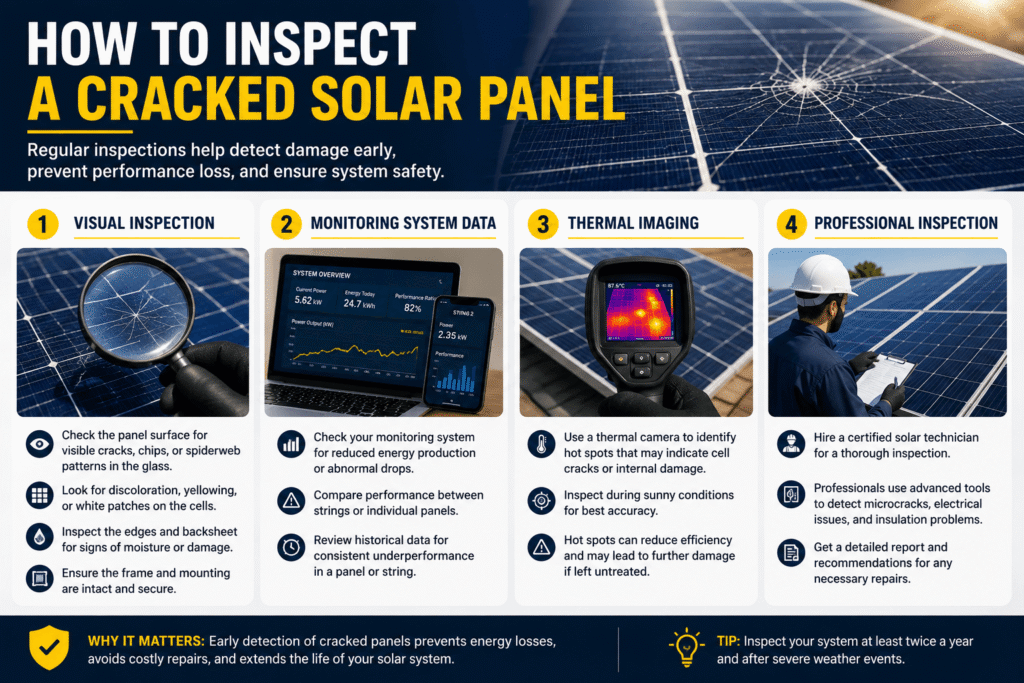
Visual Inspection
Look for:
- Broken glass
- Hairline fractures
- Discoloration
Monitoring System Data
Watch for:
- Reduced production
- Underperforming strings
- Sudden output drops
Thermal Imaging
Thermal cameras can reveal:
- Hot spots
- Damaged cells
- Hidden defects
Professional Inspection
Recommended for:
- Large systems
- Severe damage
- Insurance claims
Can a Cracked Solar Panel Be Repaired?
In most cases: Solar panels are replaced rather than repaired.
Why?
The internal structure of a solar panel is laminated and sealed.
Repairing damaged glass rarely restores full protection.
Minor Surface Damage
May continue operating safely with monitoring.
Severe Damage
Typically requires replacement.
Repair vs Replacement
| Situation | Recommended Action |
|---|---|
| Small cosmetic crack | Monitor |
| Minor glass damage | Professional assessment |
| Moisture intrusion | Replace |
| Significant power loss | Replace |
| Hot spots detected | Replace |
| Multiple damaged cells | Replace |
Does Solar Panel Warranty Cover Cracks?
It depends on the cause.
Typically Covered
- Manufacturing defects
- Material failures
- Workmanship issues
Usually Not Covered
- Storm damage
- Falling objects
- Improper handling
- Accidental impacts
Real Example
Manufacturing-related crack: Potentially covered.
Tree branch impact: Usually not covered.
Related Guide: Solar Panel Warranty
Hairline Crack vs Severe Crack
Are All Solar Panel Cracks Serious? No. Some cracks are cosmetic, while others can significantly affect performance.
| Crack Type | Risk Level | Recommended Action |
|---|---|---|
| Hairline Glass Crack | Low to Moderate | Monitor |
| Small Corner Crack | Moderate | Inspect Regularly |
| Crack Across Multiple Cells | High | Professional Inspection |
| Cracked Glass with Moisture | Very High | Replace Panel |
Real Example
Problem: Small hairline crack after maintenance work.
Result: No measurable power loss after one year.
Action: Continue monitoring through the solar monitoring app.
Microcracks vs Visible Cracks
What’s the Difference? Visible cracks are easy to spot.
Microcracks are tiny fractures inside solar cells that are often invisible without specialized testing.
Common Causes of Microcracks
- Transportation stress
- Installation damage
- Thermal expansion
- Hail impacts
- Manufacturing defects
Microcracks can reduce power output, create hot spots, and accelerate panel degradation over time.
Solar Panel Cracked but Still Producing Power
Should You Worry? Many homeowners are surprised that a cracked solar panel can continue generating electricity.
However, the real concern is often long-term damage rather than immediate production loss.
Potential future issues include:
- Moisture intrusion
- Corrosion
- Cell degradation
- Hot spots
A panel may appear normal today but deteriorate over the following months or years.
How Much Power Loss Can a Crack Cause?
Does a Cracked Solar Panel Always Lose Power? Not necessarily.
The amount of power loss depends on:
- Crack location
- Crack size
- Number of affected cells
- Moisture exposure
Example
Small edge crack: Often negligible production loss
Crack across multiple cells: Noticeable reduction in power generation
Microcracks and cell fractures can interfere with current flow and reduce module output.
Real Homeowner Scenarios
Scenario 1: Small Corner Crack
Cause: Tool dropped during maintenance.
Result: No measurable production loss.
Action: Monitor panel condition.
Scenario 2: Hail Damage
Cause: Severe hailstorm.
Result: Multiple visible cracks.
Action: Insurance claim and replacement.
Scenario 3: Hidden Cell Crack
Cause: Transportation damage.
Result: Gradual production decline.
Action: Thermal inspection identified damaged panel.
How to Prevent Solar Panel Cracks
Use Qualified Installers
Proper handling reduces installation damage.
Avoid Walking on Panels
Panels are not designed to support foot traffic.
Schedule Regular Inspections
Detect damage early.
Trim Overhanging Branches
Reduce impact risks.
Inspect Panels After Severe Weather
Especially after hailstorms.
When Should You Replace a Cracked Solar Panel?
Replacement is recommended if:
- Production drops significantly
- Moisture enters the panel
- Hot spots develop
- Cracks spread
- Safety concerns arise
Can Solar Panel Cracks Cause Fires?
Are Cracked Solar Panels Dangerous? Most cracked panels do not immediately create a fire risk.
However, severe cracks can contribute to:
- Hot spots
- Electrical arcing
- Moisture-related failures
Industry experts consider hot spots one of the long-term risks associated with damaged solar cells.
Warning Signs
- Burn marks
- Strong odors
- Discoloration
- Persistent hot spots
These situations should be inspected immediately.
Insurance vs Warranty
Who Pays for a Cracked Solar Panel? This is a common source of confusion.
Warranty May Cover
- Manufacturing defects
- Material failures
- Factory-related issues
Insurance May Cover
- Hail damage
- Storm damage
- Falling trees
- Accidental impacts
Real Example
Tree branch damages panel: Usually insurance claim.
Factory defect causes crack: Potential warranty claim.
What Happens If You Ignore a Cracked Panel?
Risks of Delaying Repairs
Ignoring a cracked panel can lead to:
- Lower energy production
- Moisture intrusion
- Corrosion
- Hot spots
- Faster degradation
Industry observations show that cracks and quality-related degradation can contribute to premature panel replacement and performance decline
FAQs
Can a cracked solar panel still produce electricity?
Yes. Many cracked panels continue generating power, although performance may decline depending on the severity of the damage.
Can a cracked solar panel still charge a battery?
Yes. If the panel is still producing power, battery charging may continue, although efficiency could be reduced.
Are cracked solar panels dangerous?
Minor cracks may not pose an immediate safety risk. Severe cracks can allow moisture intrusion and create electrical problems.
Can hail crack solar panels?
Yes. Although solar panels are designed to withstand hail, large hailstones can cause damage.
Should I repair or replace a cracked solar panel?
Minor cosmetic damage may only require monitoring. Panels with significant damage or performance loss often require replacement.
Does insurance cover cracked solar panels?
In many cases, storm-related damage may be covered under homeowner insurance policies.
Can cracks cause solar panel hot spots?
Yes. Damaged cells can create resistance and localized overheating.
How do I know if a crack is affecting performance?
Compare current production to historical production and inspect monitoring data for underperforming panels.
Will a crack spread over time?
It can. Thermal cycling, weather exposure, and mechanical stress may cause cracks to worsen.
Can microcracks be repaired?
Generally no. Microcracks are internal cell defects and are usually managed through monitoring or panel replacement if performance drops significantly.
Final Thoughts
Solar panel cracks are a common issue that can range from minor cosmetic damage to serious performance and safety concerns.
While some cracked panels continue operating normally, severe cracks can lead to moisture intrusion, hot spots, reduced energy production, and accelerated degradation.
Regular inspections, performance monitoring, and prompt action after storms can help identify damage early and protect the long-term performance of your solar energy system.
