
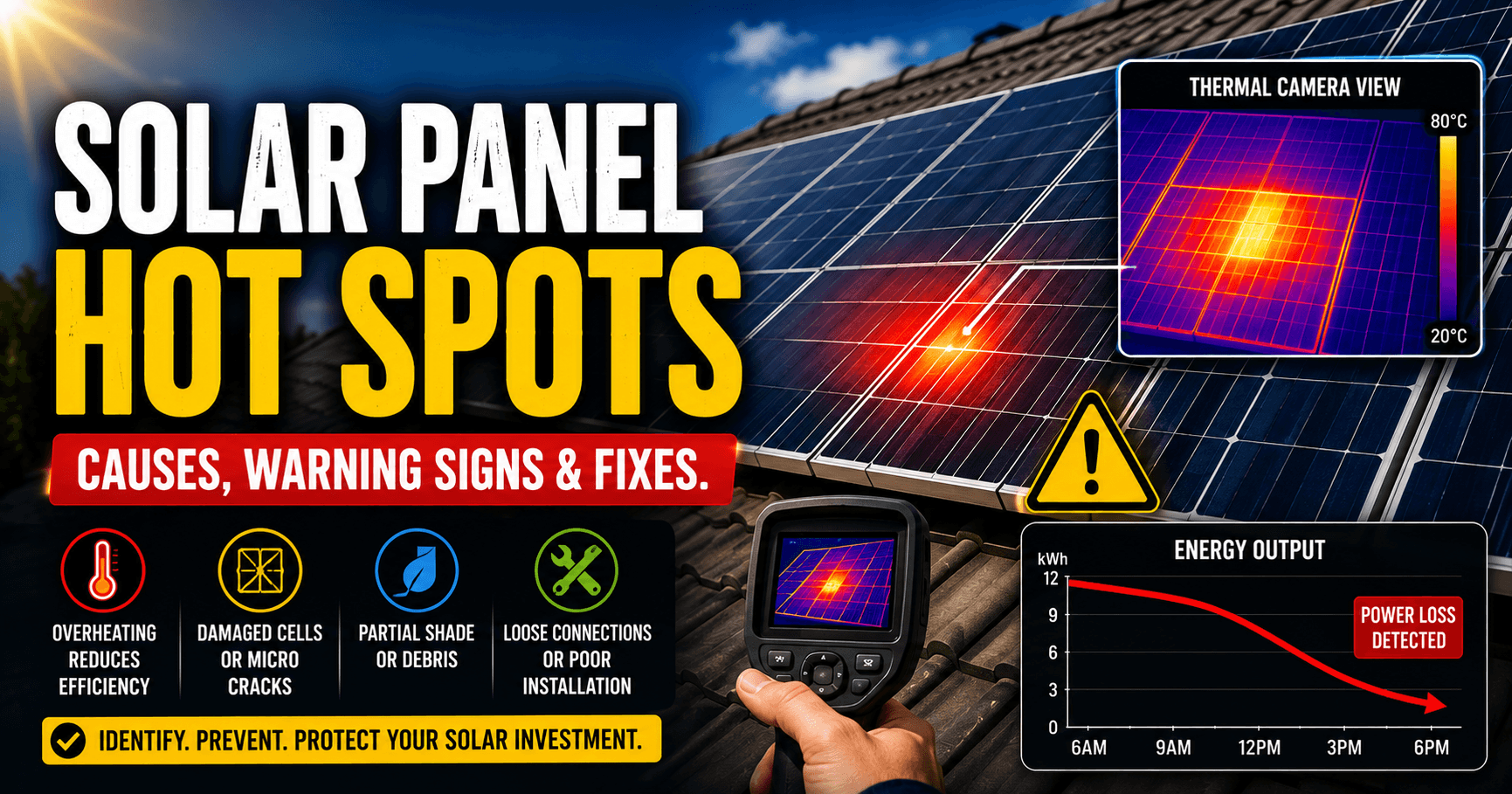

Solar panels are designed to convert sunlight into electricity efficiently for decades. However, certain defects and operating conditions can create localized overheating known as solar panel hot spots. Hot spots are one of the most common hidden problems affecting solar panel performance.
If left unresolved, they can:
- Reduce energy production
- Accelerate panel degradation
- Damage solar cells
- Shorten panel lifespan
- Create safety concerns
The good news?
Most hot spots can be identified early through inspections and proper system monitoring.
In this guide, you’ll learn:
- What solar panel hot spots are
- Common causes
- Warning signs
- Real-world examples
- How to identify them
- Practical fixes and prevention methods
Quick Answer
A solar panel hot spot occurs when one area of a solar panel becomes significantly hotter than surrounding cells.
Common causes include:
- Partial shading
- Dirt buildup
- Bird droppings
- Cell damage
- Microcracks
- Manufacturing defects
- Faulty bypass diodes
Hot spots reduce panel efficiency and may cause long-term damage if ignored.
What are Solar Panel Hot Spots?
A hot spot is a localized area of excessive heat on a solar panel.
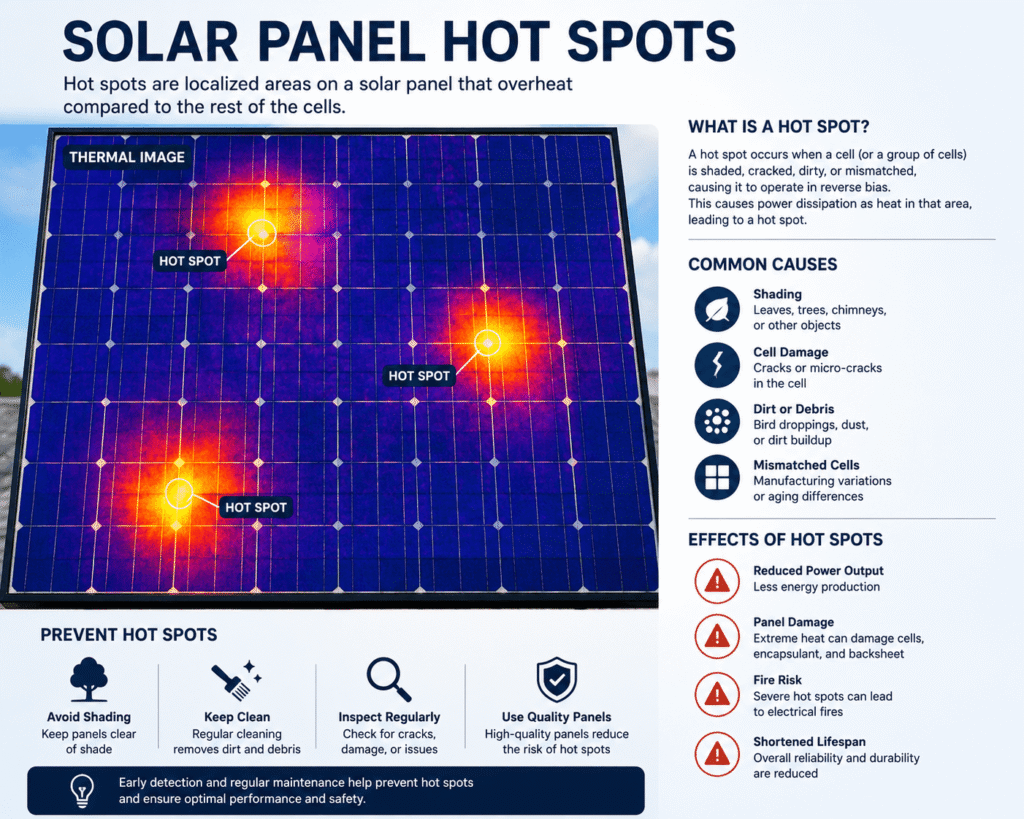
Instead of generating electricity normally, the affected solar cell begins dissipating energy as heat.
As temperatures rise:
- Cell performance decreases
- Degradation accelerates
- Physical damage may occur
Why Solar Panel Hot Spots Are a Problem
Solar panels are designed to operate at relatively uniform temperatures.
When one section becomes significantly hotter:
- Energy production decreases.
- Panel lifespan may shorten.
- Internal components may deteriorate faster.
Warning Signs of Solar Panel Hot Spots
Hot spots are often difficult to detect without inspection.
Common warning signs include:
- Reduced solar output
- Unexplained performance loss
- Discoloration on the panel surface
- Burn marks
- Visible cell damage
- Localized overheating
- Frequent inverter performance drops
Causes for Solar Panel Hot Spots
1. Partial Shading (Most Common Cause)
Even small amounts of shading can create hot spots.
Common sources include:
- Tree branches
- Antennas
- Chimneys
- Utility poles
- Nearby buildings
Real Example
Problem: Solar production dropped during afternoon hours.
Cause: A tree branch shaded a small portion of one panel.
Result: Hot spot formation and reduced performance.
Solution: Tree trimming.
2. Bird Droppings and Debris
Bird droppings may seem harmless, but they can create concentrated shading.
Common causes:
- Bird droppings
- Leaves
- Dirt accumulation
- Dust buildup
Real Example
Problem: One panel consistently underperformed.
Cause: Heavy bird droppings covering multiple cells.
Solution: Panel cleaning.
Result: Performance improved immediately.
3. Microcracks in Solar Cells
Tiny cracks inside solar cells can interrupt current flow.
These cracks are often invisible to the naked eye.
Causes
- Transportation damage
- Improper handling
- Severe weather
- Thermal stress
Symptoms
- Reduced output
- Hot spots
- Uneven cell temperatures
4. Manufacturing Defects
Although uncommon, manufacturing defects can create hot spots.
Examples include:
- Poor solder connections
- Cell defects
- Material flaws
These issues may appear years after installation.
5. Faulty Bypass Diodes
Bypass diodes help reduce the impact of shading.
When a diode fails:
- Current flow may become uneven
- Localized heating may occur
- Panel output may decrease
Real Example
Problem: One panel consistently ran hotter than others.
Cause: Failed bypass diode.
Solution: Panel replacement.
6. High Operating Temperatures
Solar panels naturally become warm.
However, excessive heat combined with existing defects can worsen hot spot formation.
Common Conditions
- Extremely hot climates
- Poor ventilation
- Dark roof surfaces
- Limited airflow
How Hot Spots Affect Solar Panel Performance
Hot spots impact:
Energy Production
Reduced electrical output.
Panel Lifespan
Accelerated aging.
Reliability
Higher likelihood of future failures.
Warranty Claims
In some cases, severe hot spot damage may qualify for Solar panel warranty coverage.
How to Identify Solar Panel Hot Spots
Several methods can be used.
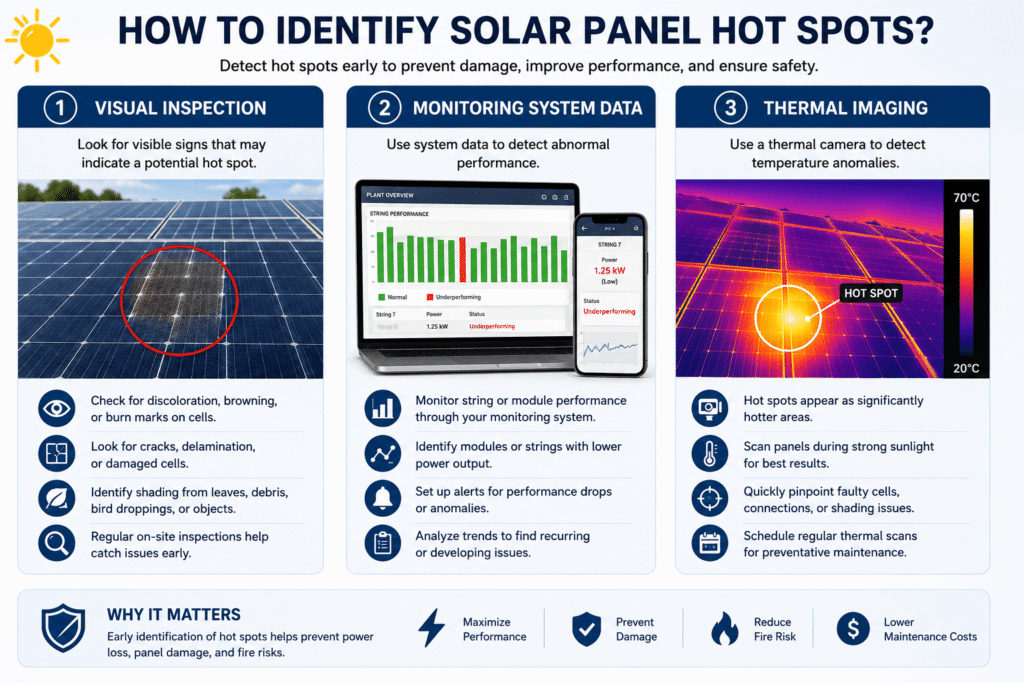
Visual Inspection
Look for:
- Discoloration
- Burn marks
- Cell damage
Monitoring System Data
Watch for:
- Unexpected production drops
- Underperforming strings
- Panel-level abnormalities
Thermal Imaging
The most reliable detection method.
Thermal cameras reveal:
- Temperature variations
- Hidden hot spots
- Cell-level defects
Real Example
Problem: System producing 15% less energy than expected.
Inspection: Thermal imaging revealed two panels with significant hot spots.
Solution: Panel replacement.
Result: Production returned to expected levels.
Real Homeowner Scenarios
Scenario 1: Tree Shade
Cause: Partial shading from growing branches.
Result: Localized overheating.
Fix: Tree trimming.
Scenario 2: Bird Droppings
Cause: Heavy debris accumulation.
Result: Hot spot development.
Fix: Panel cleaning.
Scenario 3: Internal Cell Damage
Cause: Microcracks after severe hailstorm.
Result: Reduced output and overheating.
Fix: Panel replacement.
How to Fix Solar Panel Hot Spots
Remove Shading
Trim trees and remove obstructions.
Clean Solar Panels
Remove dirt and bird droppings.
Inspect Electrical Components
Check bypass diodes and wiring.
Replace Damaged Panels
Severely damaged panels often require replacement.
Schedule Professional Inspection
Thermal imaging can identify hidden issues.
How to Prevent Hot Spots
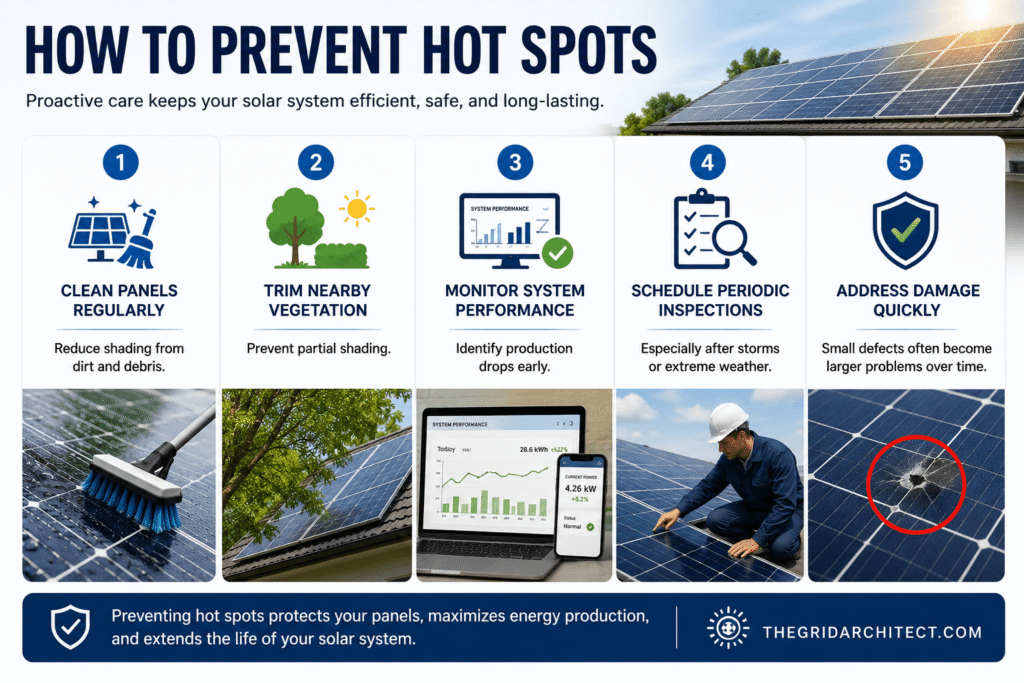
Clean Panels Regularly
Reduce shading from dirt and debris.
Trim Nearby Vegetation
Prevent partial shading.
Monitor System Performance
Identify production drops early.
Schedule Periodic Inspections
Especially after storms or extreme weather.
Address Damage Quickly
Small defects often become larger problems over time.
When Should You Call a Professional?
Contact a solar technician if:
- Production drops significantly
- Burn marks appear
- Thermal imaging identifies hot spots
- Warranty claims may be required
FAQs
Are solar panel hot spots dangerous?
They can be. While many hot spots simply reduce efficiency, severe hot spots may damage cells and create safety concerns.
What causes hot spots on solar panels?
The most common causes are shading, dirt buildup, microcracks, manufacturing defects, and bypass diode failures.
Can hot spots reduce solar output?
Yes. Hot spots often reduce panel efficiency and overall energy production.
How are hot spots detected?
Thermal imaging is the most effective detection method.
Can a hot spot be repaired?
Minor causes such as dirt or shading can be corrected. Internal cell damage often requires panel replacement.
Does a solar panel warranty cover hot spots?
Coverage depends on the cause. Manufacturing defects may be covered, while external damage often is not.
Final Thoughts
Solar panel hot spots are a common but often overlooked cause of reduced solar performance. They typically develop because of shading, dirt buildup, cell damage, or electrical faults and can lead to lower energy production and faster panel degradation.
Regular cleaning, monitoring, inspections, and prompt repairs are the best ways to prevent hot spots from damaging your solar investment and reducing long-term system performance.
