
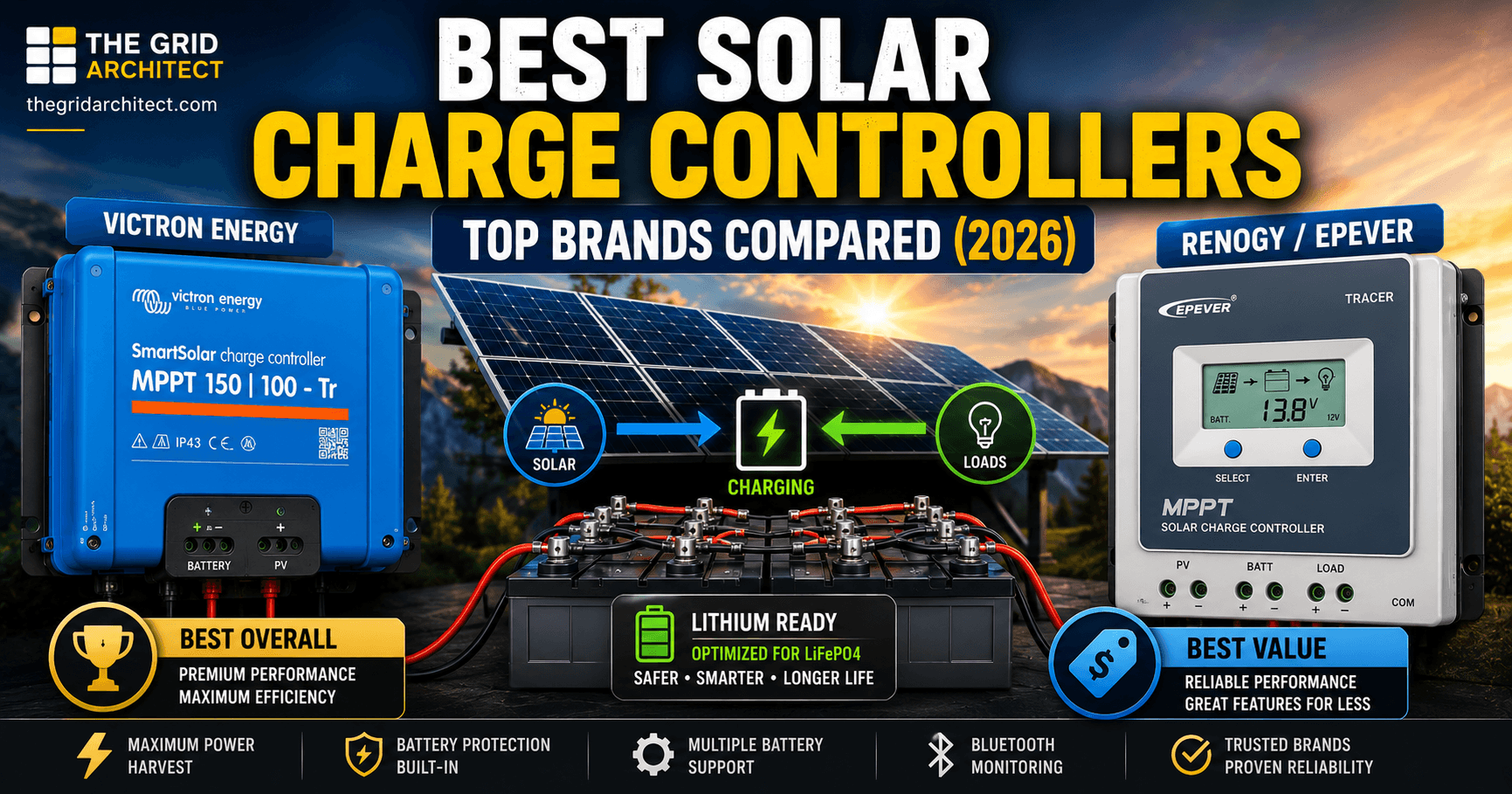

A solar charge controller is one of the most important components in any solar power system. Its primary role is to regulate the flow of electricity from solar panels to batteries, ensuring safe and efficient charging while protecting batteries from overcharging and excessive discharge. Whether you’re building an off-grid cabin, installing solar backup for your home, or setting up an RV solar system, comparing the best solar charge controllers and choosing the right one can significantly impact battery life, charging efficiency, and overall system performance.
In this guide, we’ll cover:
- What a solar charge controller does
- MPPT vs PWM controllers
- The best solar charge controller brands
- How to choose the right controller
- Common mistakes to avoid
- Real-world recommendations
By the end, you’ll know exactly which charge controller is best for your solar setup.
Quick Answer
For most modern solar systems:
👉 MPPT (Maximum Power Point Tracking) charge controllers are generally the best choice.
They provide:
- Higher efficiency
- Faster battery charging
- Better solar energy harvest
- Improved performance in varying weather conditions
PWM (Pulse Width Modulation) controllers remain a good choice for small and budget-friendly solar systems.
What Does a Solar Charge Controller Do?
A charge controller sits between:
- Solar panels
- Battery bank
Its job is to:
- Regulate charging voltage
- Prevent battery overcharging
- Prevent excessive battery discharge
- Improve charging efficiency
- Protect battery lifespan
Without a properly functioning charge controller, batteries can degrade much faster.
MPPT vs PWM Charge Controllers
There are two primary types of solar charge controllers.
MPPT Controllers
MPPT controllers continuously track the maximum power point of solar panels and convert excess voltage into additional charging current.
Advantages
- Higher efficiency
- Faster charging
- Better performance in cloudy weather
- Better cold-weather performance
- Ideal for larger solar systems
Disadvantages
- Higher upfront cost
PWM Controllers
PWM controllers directly connect solar panels to the battery using pulse-width modulation technology.
Advantages
- Lower cost
- Simpler design
- Reliable operation
Disadvantages
- Lower efficiency
- Slower charging
- Less suitable for larger systems
To read the complete comparison, check our MPPT vs PWM Charge controller article.
MPPT vs PWM Comparison
| Feature | MPPT | PWM |
|---|---|---|
| Efficiency | 95–99% | 70–85% |
| Cost | Higher | Lower |
| Charging Speed | Faster | Slower |
| Large Systems | Excellent | Limited |
| Lithium Batteries | Excellent | Good |
| Future Expansion | Better | Limited |
For most residential solar systems, MPPT controllers are generally worth the extra investment.
Best Solar Charge Controllers
While many manufacturers offer charge controllers, a few brands consistently stand out for quality, reliability, and customer support. The below are the best solar charge controllers:
Victron Energy
Widely considered one of the best premium solar charge controller brands.
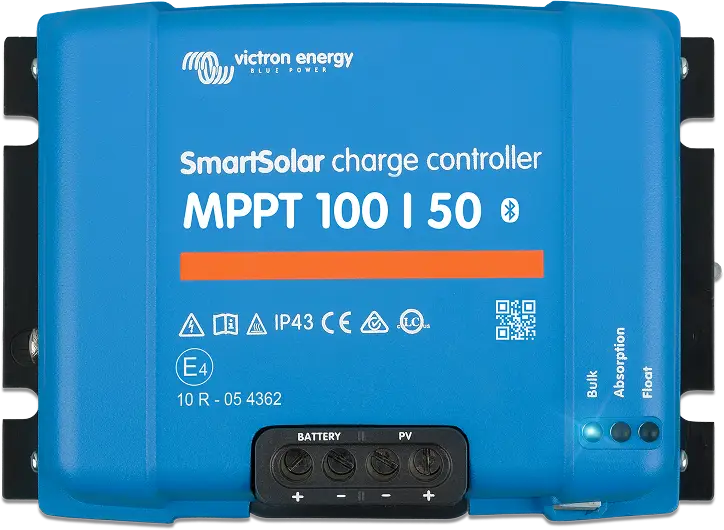
Known For
- High-quality MPPT controllers
- Bluetooth monitoring
- Excellent reliability
- Advanced solar management
Best For
- Home solar systems
- Lithium battery systems
- RV solar setups
- Off-grid installations
Pros
- Industry-leading efficiency
- Excellent mobile app
- Long product lifespan
Cons
- Higher price
Renogy
One of the most popular brands among DIY solar users.
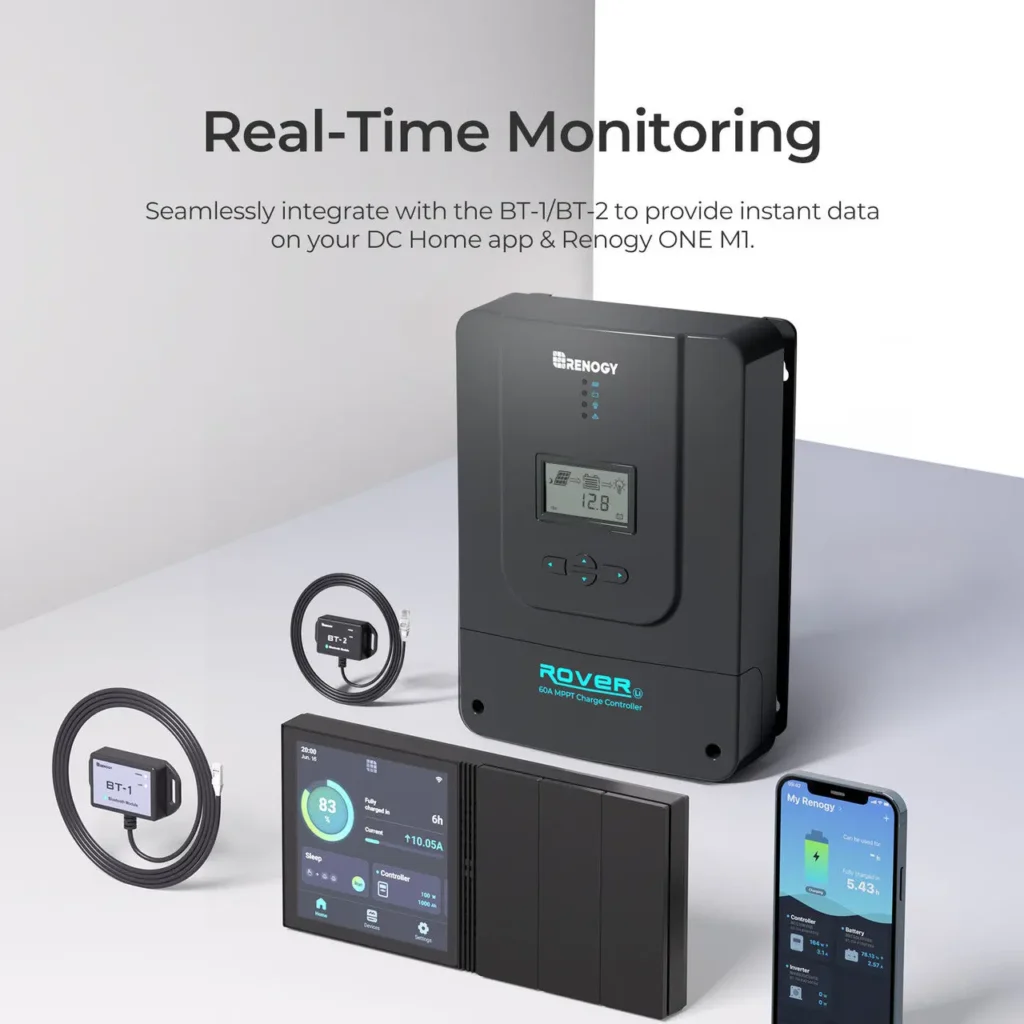
Known For
- Affordable MPPT controllers
- Beginner-friendly products
- Strong RV solar ecosystem
Best For
- RV owners
- Small home solar systems
- DIY installations
Pros
- Good value
- Easy installation
- Wide availability
Cons
- Fewer advanced features than premium brands
EPEVER
A well-known brand offering a balance between affordability and performance.
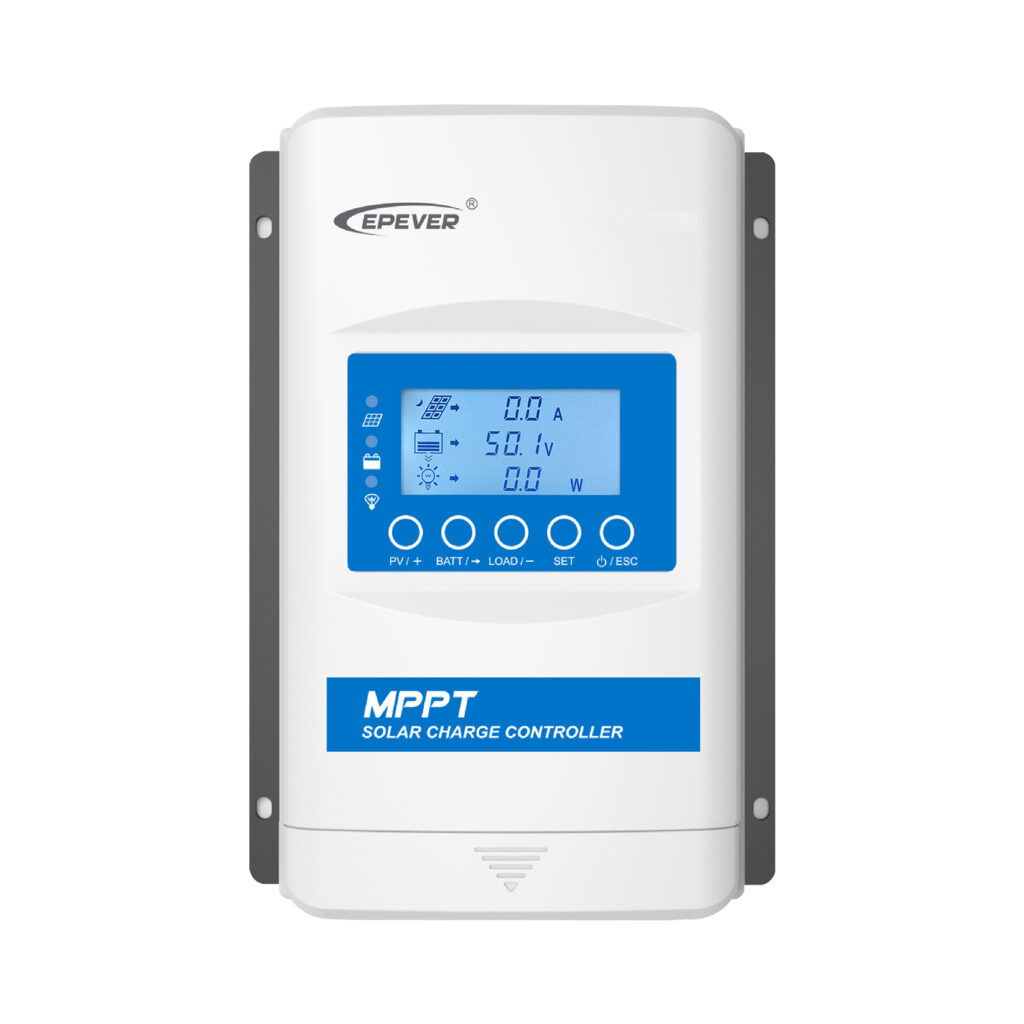
Known For
- Competitive pricing
- Reliable MPPT controllers
- Residential solar compatibility
Best For
- Budget-conscious homeowners
- Off-grid users
- Small-to-medium systems
Pros
- Good performance per dollar
- Large product range
Cons
- Mobile monitoring not as polished as premium brands
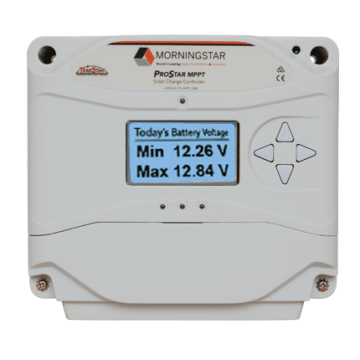
Morningstar
A long-established manufacturer known for reliability.
Known For
- Industrial-grade durability
- Long operational lifespan
- Proven off-grid performance
Best For
- Remote installations
- Critical backup systems
- Telecom applications
Pros
- Exceptional reliability
- Low failure rates
Cons
- Premium pricing
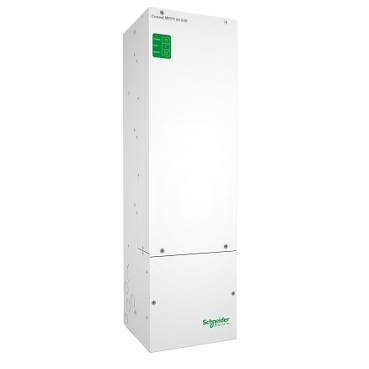
Schneider Electric
A major global energy management company.
Known For
- Large-system support
- Commercial installations
- Advanced monitoring solutions
Best For
- Large residential systems
- Commercial projects
Pros
- Enterprise-grade products
- Strong support ecosystem
Cons
- Higher cost
Brand Comparison Table
| Brand | Best For | MPPT Available | Budget Level |
|---|---|---|---|
| Victron Energy | Premium & Off-Grid | Yes | High |
| Renogy | RV & DIY Systems | Yes | Medium |
| EPEVER | Value for Money | Yes | Medium |
| Morningstar | Reliability | Yes | High |
| Schneider Electric | Large Systems | Yes | High |
Best Solar Charge Controllers for Lithium Batteries
Lithium batteries require precise charging control.
The best options typically include:
- MPPT technology
- Adjustable charging profiles
- Battery monitoring
- Lithium compatibility
Recommended Brands
- Victron Energy
- Renogy
- EPEVER
Best Charge Controller for Home Solar Backup
For residential backup systems:
Recommended Type
👉 MPPT
Recommended Brands
- Victron Energy
- Schneider Electric
- EPEVER
Why?
Home battery systems often cycle daily and benefit from maximum charging efficiency.
Best Solar Charge Controllers for Off-Grid Solar
Off-grid systems rely heavily on battery performance.
Recommended Features
- MPPT technology
- Temperature compensation
- Data logging
- High current capacity
Recommended Brands
- Victron Energy
- Morningstar
- Schneider Electric
Best Solar Charge Controllers for RVs and Vans
Mobile solar systems require:
- Compact design
- Efficient charging
- Easy monitoring
Recommended Brands
- Renogy
- Victron Energy
Example Setup
Solar Panels: 200–400W
Battery: 12V LiFePO4
Controller: Compact MPPT
How to Choose the Right Charge Controller
1. Solar Array Size
Larger solar arrays require larger controllers.
Example
Solar Panels: 1000W
Battery: 24V
Current: 1000 ÷ 24 = 41.7A
Recommended Controller: 60A MPPT
2. Battery Voltage
Common battery voltages:
- 12V
- 24V
- 48V
Ensure controller compatibility.
3. Battery Chemistry
Choose a controller compatible with:
- Lithium
- LiFePO4
- AGM
- Gel
- Flooded Lead-Acid
4. Future Expansion
If you plan to add more panels later, choose a larger controller now.
Common Mistakes When Buying a Charge Controller
Buying a Controller That Is Too Small
May overheat and reduce charging performance.
Choosing PWM for a Large System
Can reduce energy harvest significantly.
Ignoring Battery Compatibility
Incorrect charging profiles may damage batteries.
Buying Based Only on Price
The cheapest controller is rarely the most economical long-term solution.
Real-World Scenarios
Scenario 1: Small Weekend Cabin
Solar Array: 200W
Battery: 12V AGM
Best Choice: PWM Controller
Scenario 2: Home Backup System
Solar Array: 5kW
Battery: 10kWh Lithium
Best Choice: MPPT Controller
Scenario 3: Off-Grid Home
Solar Array: 8kW
Battery Bank: 48V Lithium
Best Choice: Premium MPPT Controller
Scenario 4: RV Installation
Solar Array: 300W
Battery: 12V LiFePO4
Best Choice: Compact MPPT Controller
Signs Your Charge Controller Needs Replacement
Watch for:
- Battery not charging
- Battery overcharging
- Random shutdowns
- Controller overheating
- Blank display
- Frequent fault codes
A failing controller can shorten battery lifespan and reduce solar system performance.
FAQs
Which is the best solar charge controller brand?
Victron Energy is often considered one of the top premium brands, while Renogy and EPEVER offer excellent value for many homeowners.
Is MPPT better than PWM?
For most residential solar systems, yes. MPPT controllers generally provide better efficiency and faster battery charging.
Which controller is best for lithium batteries?
MPPT controllers from reputable brands such as Victron Energy, Renogy, and EPEVER are commonly recommended.
How long does a solar charge controller last?
Quality charge controllers often last 10 years or more when properly installed and maintained.
Is an expensive charge controller worth it?
For larger solar systems, a higher-quality MPPT controller can improve charging efficiency and battery lifespan, often justifying the higher cost.
Final Thoughts
The best solar charge controller depends on your system size, battery type, budget, and long-term goals.
For most homeowners, a quality MPPT charge controller from a trusted brand such as Victron Energy, Renogy, EPEVER, Morningstar, or Schneider Electric provides the best combination of efficiency, battery protection, and long-term reliability.
While PWM controllers remain suitable for smaller budget-friendly systems, MPPT technology is generally the preferred choice for modern residential solar installations.
Choosing the right charge controller today can improve battery performance, increase energy harvest, and help protect your solar investment for years to come.
