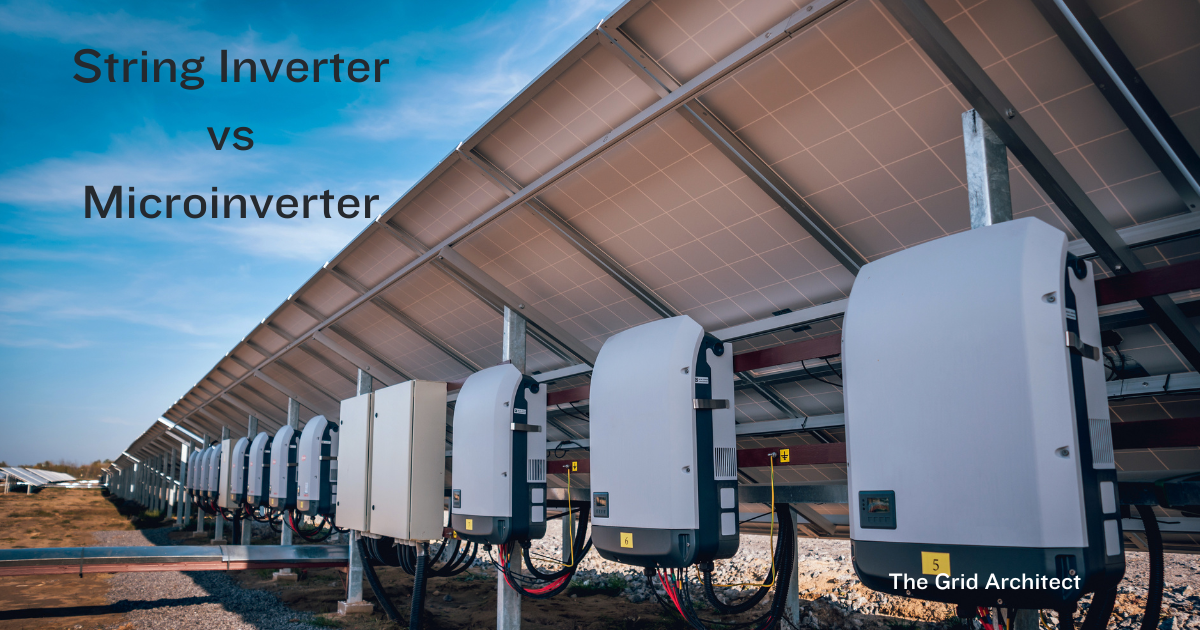

One of the biggest decisions when designing a solar system is choosing the right inverter type. String Inverter vs Microinverter: Both options convert solar energy into usable electricity, but they work very differently. They affect
- Efficiency
- Cost
- Monitoring
- System performance
- Long-term reliability
In this complete 2026 guide, we’ll compare string inverters vs microinverters with real-world examples, pros and cons, and help you decide which is best for your home.
Quick Answer
👉 String inverters are:
- More affordable
- Simpler systems
- Best for roofs with full sunlight
👉 Microinverters are:
- More efficient in shaded conditions
- Better for complex roofs
- Easier to monitor panel-by-panel
👉 In most modern residential installations, microinverters are becoming increasingly popular despite higher upfront cost.
String Inverter vs Microinverter
What Is a String Inverter?
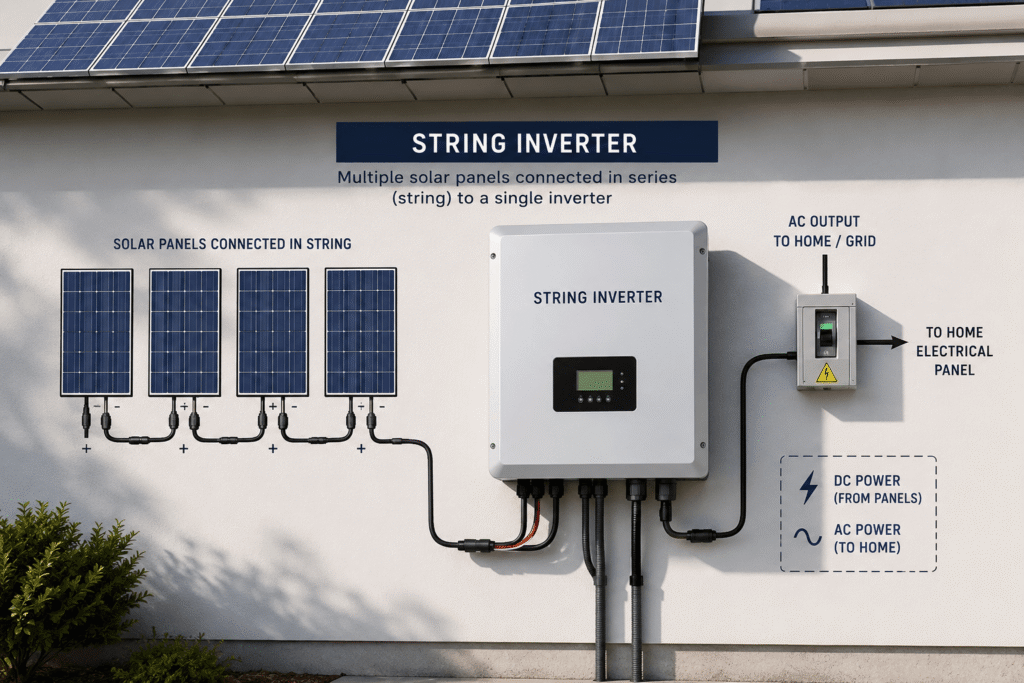
A string inverter connects multiple solar panels into a single “string.”
👉 All panels send DC electricity to one central inverter.
How It Works
- Panels are connected together
- One inverter converts DC → AC electricity
👉 Common in traditional residential systems.
What Is a Microinverter?
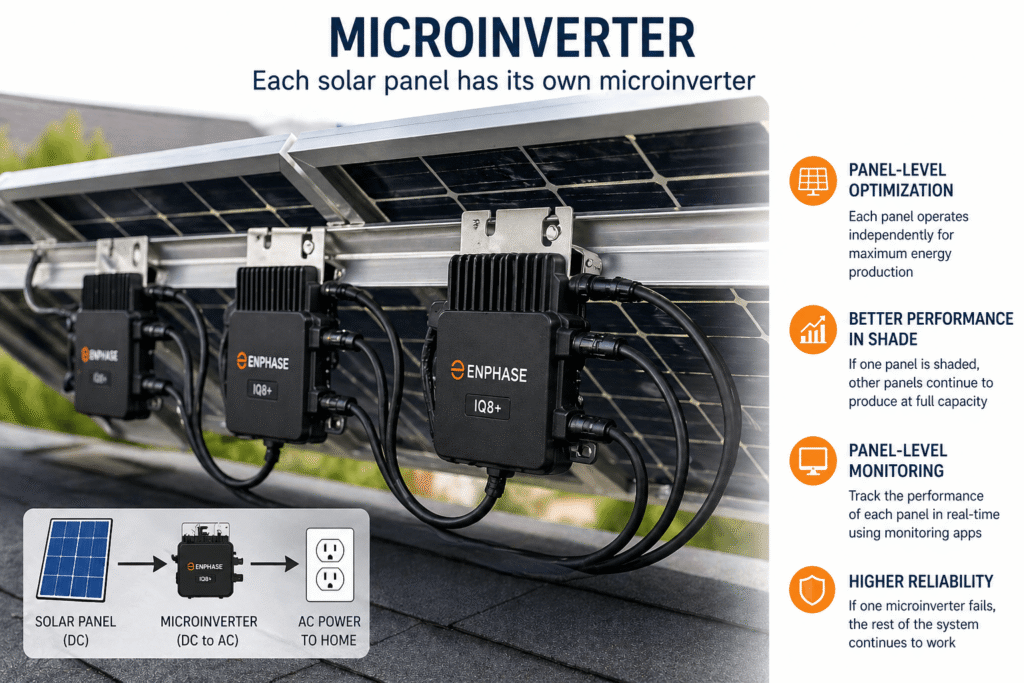
A microinverter is installed behind each individual solar panel.
👉 Each panel operates independently.
How It Works
- Every panel has its own inverter
- DC → AC conversion happens at panel level
👉 Allows independent panel optimization.
String Inverter vs Microinverter (Quick Comparison)
| Feature | String Inverter | Microinverter |
|---|---|---|
| Cost | Lower | Higher |
| Efficiency in Shade | Lower | Higher |
| Monitoring | System-level | Panel-level |
| Installation | Simpler | More complex |
| Scalability | Moderate | Excellent |
| Reliability | Single failure point | Distributed system |
| Roof Compatibility | Simple roofs | Complex roofs |
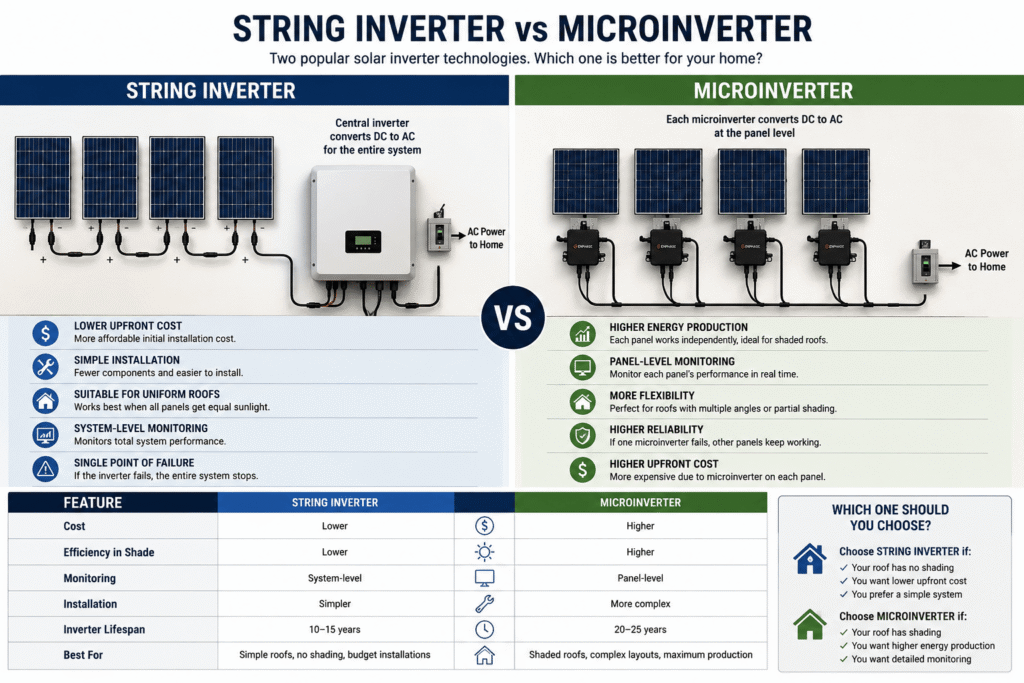
Real-World Performance Difference: String Inverter vs Microinverter
The biggest practical difference is shading.
Example: Partial Shading
String Inverter
If one panel is shaded: Entire string output drops.
Microinverter
If one panel is shaded: Only that panel is affected.
👉 This is why microinverters perform better on roofs with:
- Trees
- Chimneys
- Multiple roof angles
Cost Comparison
String Inverter Cost
👉 Lower upfront cost
Typical residential systems:
- More budget-friendly
Microinverter Cost
👉 Higher upfront cost
Reasons:
- One inverter per panel
- More components
👉 However: Higher production may offset cost over time.
Efficiency Comparison
String Inverter Efficiency
Works best when:
- All panels receive equal sunlight
Microinverter Efficiency
Better in:
- Partial shading
- Complex roofs
- Different panel orientations
👉 Learn more: Solar Panel Efficiency
Monitoring & Smart Features
String Inverter Monitoring
Usually provides:
- Overall system performance
Microinverter Monitoring
Provides:
- Panel-level monitoring
- Easier fault detection
👉 Helps identify underperforming panels quickly.
Reliability & Maintenance
String Inverter
👉 One inverter handles entire system.
Problem:
- If inverter fails → whole system stops.
Microinverter
👉 Distributed design.
Problem:
- One panel issue does not stop entire system.
Lifespan Comparison: String Inverter vs Microinverter
| Component | Average Lifespan |
|---|---|
| String inverter | 8–12 years |
| Microinverter | 20–25 years |
👉 Microinverters usually last longer.
Which Is Better for Different Homes?
Small Homes
👉 String inverter may be enough.
Homes With Shade
👉 Microinverter is usually better.
Large Systems
👉 String inverter often more economical.
Complex Roof Design
👉 Microinverter preferred.
Real-World Use Cases: String Inverter vs Microinverter
Case 1: Simple South-Facing Roof
- No shading
- Same panel orientation
👉 Best choice: String inverter
Case 2: Roof With Tree Shade
- Partial afternoon shading
👉 Best choice: Microinverter
Case 3: Multi-Direction Roof
- Panels facing east + west
👉 Best choice: Microinverter
ROI & Long-Term Savings
String Inverter
- Lower upfront cost
- Faster initial payback
Microinverter
- Higher production
- Better long-term efficiency
- Potentially better lifetime ROI
👉 Learn more: Solar Panel ROI
Common Mistakes to Avoid
Choosing based only on price
Cheaper isn’t always better long-term.
Ignoring shading
Shade drastically impacts string systems.
Oversizing or undersizing inverter
Proper sizing is critical.
👉 Related guide: Choose the best solar inverter
Expert Insight
From real installations:
- String inverters dominate budget installations
- Microinverters dominate premium residential systems
- Modern homes increasingly prefer microinverters for flexibility and monitoring
When String Inverters Make More Sense
Choose string inverter if:
- Roof is simple
- No shading
- Budget is priority
- Large open installation area
When Microinverters Make More Sense
Choose microinverter if:
- Roof has shading
- Panels face different directions
- You want detailed monitoring
- Long-term optimization matters
FAQs
Which is better: string inverter or microinverter?
Depends on roof design, shading, and budget.
Are microinverters worth the extra cost?
Yes, especially for shaded or complex roofs.
Do string inverters fail more often?
They have a single point of failure.
Which inverter lasts longer?
Microinverters generally last longer.
Are microinverters more efficient?
Yes, particularly in shaded conditions.
Final Thoughts
Both inverter types are excellent options when chosen correctly.
👉 String inverters:
- Affordable
- Simple
- Great for unshaded roofs
👉 Microinverters:
- More efficient
- Better monitoring
- Ideal for complex roofs
👉 The best choice depends on your roof, shading, budget, and long-term goals.
Before choosing an inverter:
👉 Use our solar calculator to estimate your system size, savings, and performance.
