
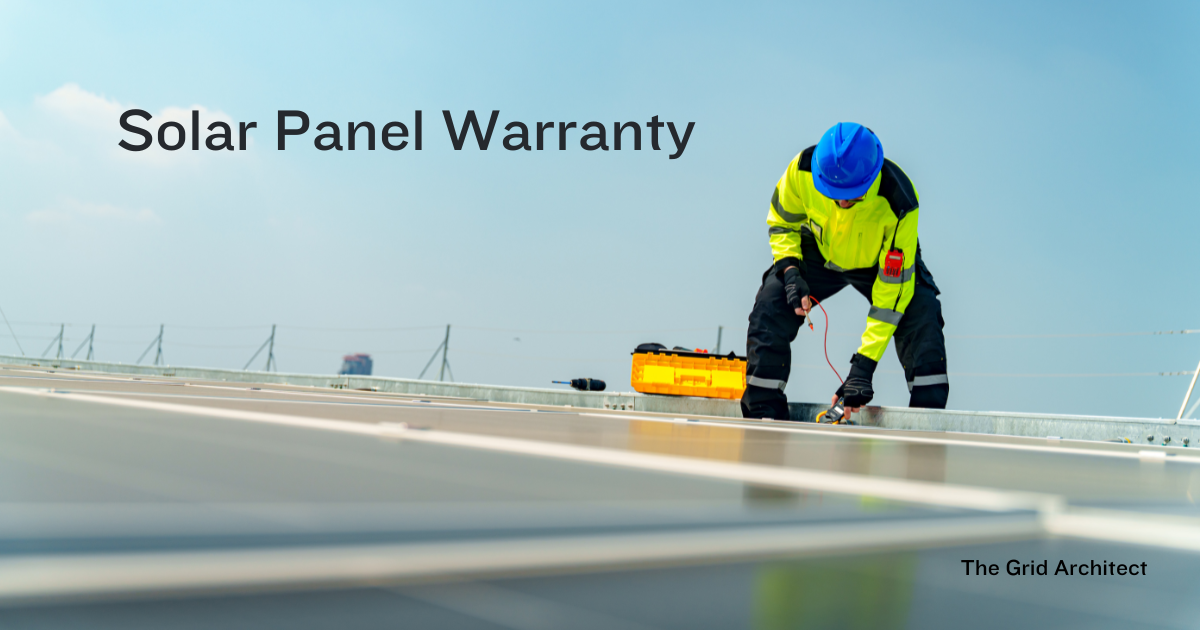

When investing in solar panels, one of the most important — yet often overlooked — factors is the warranty. Solar systems are designed to last 20–25 years or more, so understanding warranty terms is essential to protect your investment and ensure long-term savings. In this complete solar panel warranty guide, you’ll learn everything about solar panel warranties, including types, coverage, real-world insights, and how to choose the best warranty for your system.
Most solar panels come with a 25-year performance warranty and a 10–25 year product warranty, ensuring long-term reliability and consistent energy output.
Quick Answer
Most solar panels come with:
- Product warranty: 10–25 years
- Performance warranty: 25 years
A good solar panel should guarantee at least 85% output after 25 years.
Solar Warranty Cheat Sheet (Quick Summary)
- Product warranty: 10–25 years
- Performance warranty: 25 years
- Output after 25 years: 80–90%
- Degradation rate: ~0.5% per year
These are industry-standard benchmarks for a good solar panel warranty.
Solar Warranty Quick Comparison
| Warranty Feature | Good Standard |
|---|---|
| Product Warranty | 15–25 years |
| Performance Warranty | 25 years |
| Output After 25 Years | 85%+ |
| Degradation Rate | ≤0.5% per year |
| Workmanship Warranty | 5–10 years |
Why Solar Panel Warranty Matters
A solar system is a long-term investment — not a short-term purchase.
Warranty protects you from:
- Manufacturing defects
- Unexpected failures
- Performance loss
Without a strong warranty, your return on investment (ROI) can be affected.

How Solar Warranty Works (Real Numbers)
Let’s take a real example:
A panel rated at 400W may guarantee:
- Year 1 → ~98% output
- Year 10 → ~90% output
- Year 25 → ~85% output
This means your panel will still generate most of its power even after decades.
Types of Solar Panel Warranties
1. Product Warranty (Equipment Warranty)
This covers physical defects in the panel.
Includes:
- Manufacturing defects
- Material failure
- Panel malfunction
Typical duration:
- 10 to 25 years
Premium brands offer longer warranties because of higher build quality.
2. Performance Warranty
This guarantees how much electricity the panel will produce over time.
Example:
- Year 1 → 100% output
- Year 10 → ~90% output
- Year 25 → ~85% output
Typical degradation:
- Around 0.4%–0.5% per year
3. Workmanship Warranty (Installer Warranty)
This is provided by the installer.
Covers:
- Installation errors
- Wiring faults
- Mounting issues
Typical duration:
- 1 to 10 years
This is often ignored — but extremely important.
Typical Solar Panel Warranty Comparison
| Warranty Type | Duration | Coverage |
|---|---|---|
| Product Warranty | 10–25 years | Defects, materials |
| Performance Warranty | 25 years | Power output |
| Workmanship Warranty | 1–10 years | Installation |
What Is Usually Covered Under a Solar Panel Warranty?
Product warranties often cover:
- Manufacturing defects
- Cell defects
- Junction box failures
- Backsheet defects
- Delamination
- Internal electrical faults
Coverage varies by manufacturer, so always review warranty documentation.
What Is Usually NOT Covered?
Most solar warranties do not cover:
- Physical damage from accidents
- Unauthorized repairs
- Improper installation
- Flood damage
- Fire damage
- Lack of maintenance
- Modifications to the system
Improper maintenance and unauthorized modifications can void warranty coverage.
Product vs Performance Warranty: Which Matters More?
- Product warranty protects you from defects
- Performance warranty protects your long-term savings
In reality: Performance warranty matters more because it directly affects your electricity generation over time.
The best panels offer BOTH strong product and performance warranties.
Product Warranty vs Performance Warranty
Understanding the Difference
Many homeowners confuse these two warranties.
| Feature | Product Warranty | Performance Warranty |
|---|---|---|
| Covers | Manufacturing defects | Power output degradation |
| Typical Duration | 10–15 Years | 25–30 Years |
| Main Purpose | Physical protection | Efficiency guarantee |
| Examples | Cracked cells, junction box failure, delamination | Output below guaranteed levels |
| Responsible Party | Manufacturer | Manufacturer |
Most solar panels include both types of warranty coverage.
Linear vs Step Warranty (IMPORTANT)
There are two types of performance warranties:
Step Warranty (Older Model)
- Output drops sharply after initial years
- Example:
- 90% at 10 years
- 80% at 25 years
Less favorable for long-term performance
Linear Warranty (Modern Standard)
- Gradual performance decline
- Example:
- ~0.5% degradation per year
More predictable and reliable. Most modern panels use linear warranties
What Is a Linear Performance Warranty?
A linear performance warranty guarantees that a solar panel’s output will decline gradually at a specified rate over time.
Instead of a large drop after a certain number of years, manufacturers specify a maximum annual degradation rate. Most modern panels offer 25–30 year performance warranties with annual degradation limits around 0.4–0.7%.
Example
Solar Panel Rating: 400W
Annual Degradation: 0.5%
Expected Output After 25 Years: Approximately 350–360W
This type of warranty provides a clearer long-term performance guarantee than older step-based warranties.
Why Cheap Solar Panels Often Have Shorter Warranties
Budget panels usually use:
- Lower-grade materials
- Less strict manufacturing processes
As a result: Manufacturers may offer shorter product warranties and higher degradation rates.
Longer warranties often indicate better manufacturing confidence.
What a 25-Year Warranty Does NOT Mean
A 25-year warranty does not mean:
- The panel stops working after 25 years
In reality: Most solar panels continue producing electricity even after warranty expiration, although at lower efficiency.
Real Warranty Example (How It Works)
Let’s understand with a real example:
A typical panel warranty may guarantee:
- Year 1 → 98% output
- Every year → ~0.5% decline
- Year 25 → ~85–87% output
This means even after 25 years, your panels still produce most of their original power.
In fact, most panels continue working beyond 25 years with reduced efficiency.
Biggest Mistake Buyers Make
Most people focus only on warranty duration.
But what really matters is:
- Degradation rate
- Brand reliability
- Warranty claim support
A 25-year warranty from a weak brand is less valuable than a strong warranty from a trusted manufacturer.
Warranty Claim Reality (Important Insight)
Solar panel failures are rare. Most issues occur in the first 2–3 years.
After that: Panels are extremely reliable and continue working for decades.
Warranty is mainly for: Peace of mind, not frequent claims.
How to File a Solar Panel Warranty Claim
Typical process includes:
- Contact installer or manufacturer
- Provide invoice and warranty documents
- Submit performance data or photos
- Technical inspection may be required
Keeping installation documents safe is extremely important.
Which Solar Brands Offer the Best Warranty?
Top brands known for strong warranties:
- SunPower (Maxeon) → up to 40 years
- REC Solar → 25 years
- Panasonic → 25 years
- Q CELLS → 25 years
These brands combine strong warranty + low degradation
Explore detailed comparison: Best Solar Panels

Installer vs Manufacturer Warranty (Important Difference)
Manufacturer warranty: Covers panel defects
Installer warranty: Covers installation issues
Both are equally important. Even the best panel can fail if installed incorrectly.
What Is Solar Panel Degradation?
Solar panels lose efficiency over time.
Typical degradation rate:
- 0.5% per year
After 25 years:
- Panels still produce ~85% of original output
Better panels degrade slower → better long-term savings
Does Solar Panel Cleaning Affect Warranty?
Improper cleaning methods may void warranty.
Avoid:
- Pressure washing
- Harsh chemicals
- Abrasive tools
Safe solar panel cleaning helps maintain both efficiency and warranty coverage.
How Often Do Solar Panels Actually Fail?
Modern solar panels are extremely reliable.
Industry studies show failure rates are very low, especially for premium brands.
Most issues occur because of:
- Poor installation
- Inverter problems
- Wiring faults
—not the panels themselves.
Premium vs Budget Solar Panel Warranties
Premium panels often provide:
- 25-year product warranty
- 30-year performance warranty
- Lower degradation rates
Budget panels may provide:
- 10–12 year product warranty
- Higher annual degradation
Warranty vs Cost: Is It Worth Paying More?
Yes — in many cases.
Premium panels:
- Higher upfront cost
- Longer warranty
- Lower degradation
Budget panels:
- Lower cost
- Shorter warranty
- Slightly higher risk
Learn more about pricing: How much does a Solar costs?
Which Warranty Should You Choose?
Choose premium warranty if:
- You want long-term reliability
- You plan to stay in the home long-term
Choose standard warranty if:
- Budget is a concern
- You have enough roof space
In most cases: A strong 25-year performance warranty + reliable brand is the best choice.
Best Warranty Based on Your Needs
- Long-term homeowners: Choose premium 25-year product + performance warranty
- Budget-focused buyers: Standard warranty may be sufficient
- Commercial systems: Focus heavily on degradation rate and performance guarantee
What Most Homeowners Misunderstand About Solar Panel Warranties
Many people think: “Solar panels stop working after 25 years.”
That is NOT true.
A 25-year performance warranty usually means: Panels are guaranteed to still produce around 80–90% of their original output after 25 years.
Solar panels continue generating electricity even after the warranty period — just at slightly lower efficiency.
How to Compare Solar Panel Warranties
When comparing panels, check:
- Product warranty length (minimum 15–25 years)
- Performance guarantee (at least 85% after 25 years)
- Degradation rate (<0.5% per year)
- Brand reliability
A longer warranty usually indicates better panel quality.
What Is NOT Covered in Warranty?
Most warranties do NOT cover:
- Physical damage (storms, fire, accidents)
- Poor installation
- Lack of maintenance
- Unauthorized modifications
Always read warranty terms carefully.
Is Solar Panel Warranty Transferable?
Some warranties can be transferred to a new homeowner.
This increases property value.
Check:
- Transfer conditions
- Documentation requirements
How to Claim a Solar Panel Warranty
If something goes wrong, here’s what to do:
Step 1: Identify the issue
Check inverter or monitoring system
Step 2: Contact installer
Installer handles most claims
Step 3: Provide documentation
- Invoice
- Serial numbers
- Installation details
Step 4: Manufacturer evaluation
Panel is inspected or tested
Good brands make this process smooth
Red Flags to Avoid
Very short product warranty
Less than 10 years = risky
High degradation rate
More than 0.6% per year
Unknown brands
May not honor warranty claims
Weak installer support
Workmanship warranty is critical
What Can Void Your Solar Panel Warranty?
Your warranty can become invalid if:
- Improper installation
- Unauthorized modifications
- Lack of maintenance
- Using non-certified installers
Even small changes like altering wiring or mounting can void your warranty.
What Happens After Solar Warranty Ends?
Most solar panels continue working even after warranty expiration.
Many systems still produce useful electricity after 30 years, although at reduced efficiency.
Best Solar Warranty Features to Look For
Before buying solar panels, check:
- Product warranty length
- Performance warranty duration
- Annual degradation rate
- Labor coverage
- Local service support
Do Solar Panels Last Beyond Warranty?
Yes. Many solar panels continue producing electricity well beyond:
- 25 years
- 30 years
Output gradually declines over time, but panels usually remain functional for decades.
Does Warranty Cover Labor Costs?
Not always.
Most manufacturer warranties cover:
- Panel replacement
- Defective components
But may NOT cover:
- Labor charges
- Reinstallation costs
Always check if your installer provides labor warranty.
Use Case: Real Solar Panel Warranty Example
Example:
Solar panel: 400W
Annual degradation: 0.5%
After 25 years: Expected output: Approximately 350W+
This means the panel still produces useful electricity decades later.
Real-World Installer Insights
From actual installations:
- Most panel failures happen in first 2–3 years
- After that, systems are highly stable
- Good brands rarely fail
Warranty is more about peace of mind than frequent claims
Real Warranty Claim Examples
Example 1: Delamination
Problem: Backsheet separating from panel surface.
Coverage: Typically covered under product warranty if caused by manufacturing defects.
Example 2: Output Below Warranty Guarantee
Problem: Panel output drops below guaranteed performance level.
Coverage: May qualify under performance warranty if verified through testing.
Example 3: Storm Damage
Problem: Hail or falling tree branch damages panel.
Coverage: Usually handled by insurance rather than manufacturer warranty.
FAQs
How long is a solar panel warranty?
Typically 25 years for performance and 10–25 years for product.
What is a good solar warranty?
At least 25-year performance and 15–25-year product warranty.
Do solar panels fail often?
No — failure rates are very low.
Is warranty transferable?
Yes, in many cases — depends on manufacturer.
What happens after warranty ends?
Panels continue to work but may produce less electricity.
Does solar panel warranty cover weather damage?
Usually no — storm, fire, and accidental damage are typically excluded.
Can solar panel warranty be transferred?
Many brands allow warranty transfer to new homeowners.
Can solar panels last longer than the warranty period?
Yes. Many systems continue operating beyond their warranty period with gradual performance decline.
Is a 25-year solar panel warranty worth it?
Yes. A longer warranty provides additional protection against defects and performance loss over the life of the system
Final Thoughts
Solar panel warranty is a key factor in choosing the right system.
- Longer warranty = better protection
- Lower degradation = better performance
- Strong brands = reliable investment
👉 Always compare warranty terms before buying.
And before installing:
👉 Use our solar calculator to estimate your system size, savings, and ROI.
