
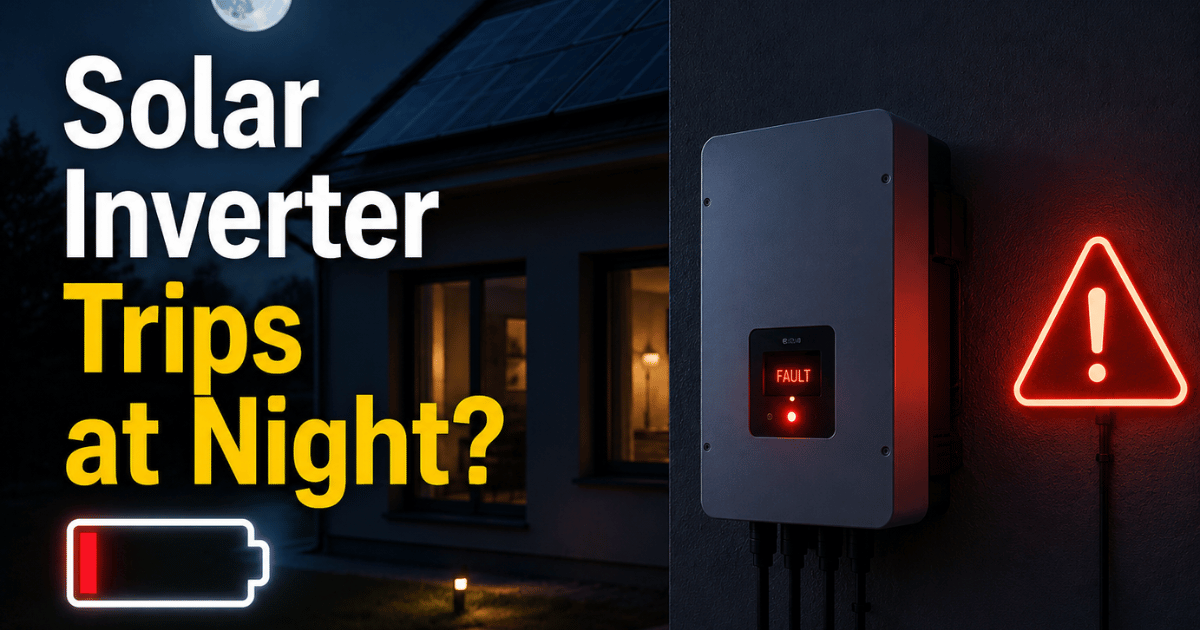

Does your solar inverter trips at night? This is a surprisingly common issue in residential solar systems. Many homeowners notice:
- Inverter turning OFF after sunset
- System restarting repeatedly at night
- Battery backup failing
- Power cuts during nighttime
- Warning lights or fault codes appearing after dark
The good news? In many cases, the issue is fixable without replacing the inverter.
In this complete guide, you’ll learn:
- Why solar inverters trip at night
- All possible causes
- Real-world examples
- Step-by-step fixes
- How to prevent nighttime inverter problems
Quick Answer
Solar inverters usually trip at night because of:
- Battery problems
- Overload conditions
- Wiring faults
- Incorrect inverter settings
- Weak battery backup
- Grid fluctuations
- Faulty inverter components
In battery-based systems, nighttime issues are often related to battery discharge and backup loads.
Why Solar Inverter Trips at Night?
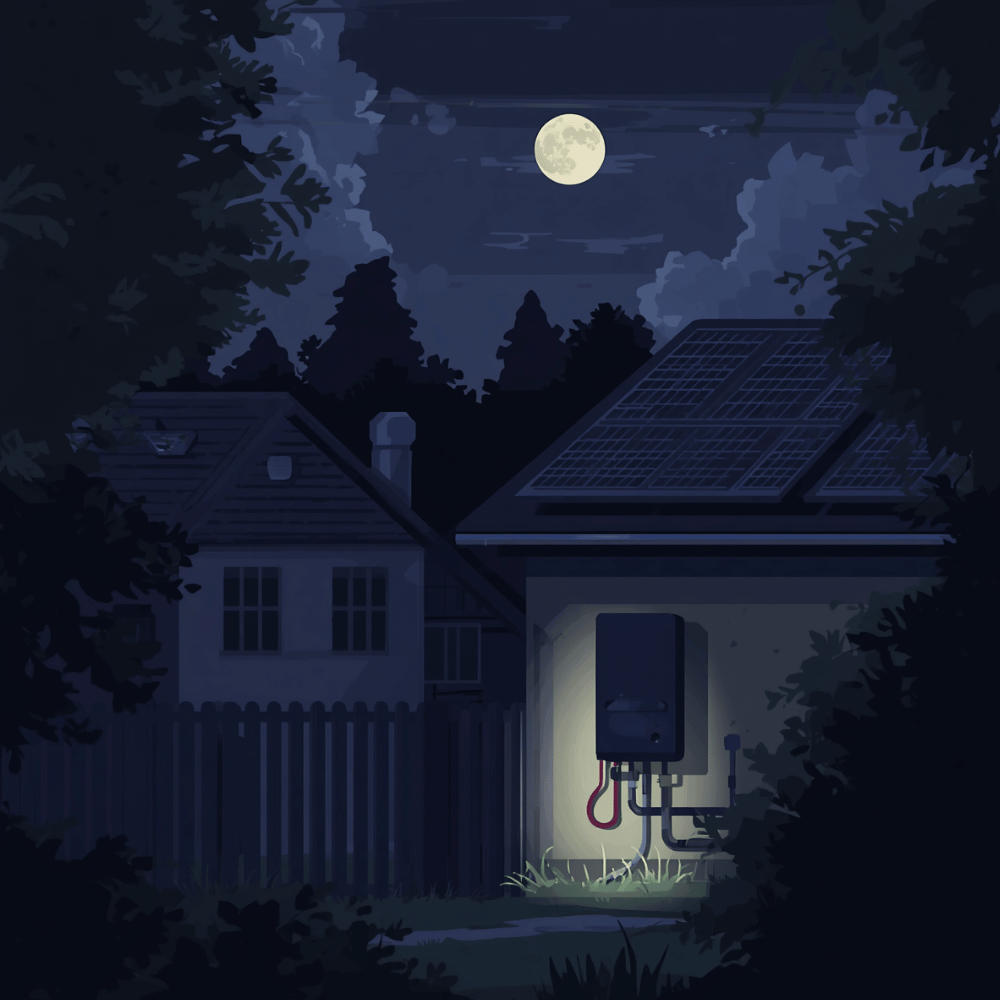
During daytime: Solar panels actively generate electricity.
At night: Solar production stops.
The inverter must then rely on:
- Battery backup
- Grid electricity
- Hybrid switching systems
This transition can expose hidden system problems.
Solar Inverter Trips at Night: Common Symptoms
If your solar inverter trips at night, you should watch for:
- Inverter shutting OFF after sunset
- System restarting repeatedly
- Red warning light appearing at night
- Battery backup failing
- Inverter overload warning
- Clicking sounds from inverter
- House losing backup power overnight
ALL Possible Reasons Solar Inverter Trips at Night
1. Weak or Drained Battery (Most Common Cause)
At night, battery-powered systems rely heavily on stored energy.
If the battery is weak: Inverter may shut down or trip.
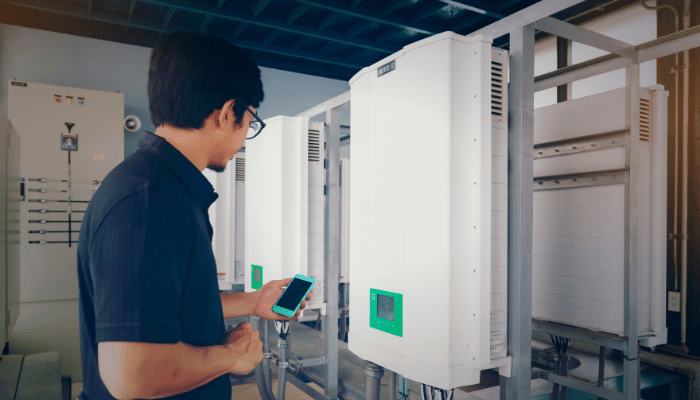
Real Example
Battery capacity:
- Originally 10 kWh
After years:
- Actual usable capacity reduced to ~5 kWh
Result: Battery voltage drops quickly at night.
Inverter trips to protect the system.
Signs of Weak Battery
- Short backup time
- Rapid battery drain
- Battery heating
- Swelling
- Slow charging
How Low Battery Voltage Causes Inverter Trips
As batteries discharge overnight: Voltage gradually decreases.
If voltage falls below the inverter’s protection threshold: The inverter automatically shuts down.
This protects:
- Battery health
- Internal inverter components
2. Overload Condition at Night
Many homes consume more electricity during nighttime.
Common Nighttime Loads
- Air conditioners
- Water heaters
- Refrigerators
- TVs
- Wi-Fi systems
- Charging devices
Example
Battery backup capacity:
- 5 kWh
Night load:
- AC + refrigerator + lights
Total load exceeds inverter capacity.
Result: Inverter trips due to overload.
Real-World Use Case
A homeowner noticed: Inverter tripped every night around 11 PM.
Cause: Water heater timer activated automatically.
Solution: Shifted water heater schedule.
Result: No more nighttime tripping.
3. Loose Wiring or Poor Connections
Loose electrical connections become more noticeable during battery operation.
Common Issues
- Loose battery terminals
- Corroded cables
- Damaged wiring
- Burnt connectors
Result: Voltage instability causes inverter shutdown.
4. Inverter Overheating During Daytime
Some inverters overheat during daytime and become unstable later at night.
Possible Causes
- Poor ventilation
- Dust accumulation
- High ambient temperature
Example
Inverter overheated during hot afternoon.
Internal protection system triggered at night.
5. Incorrect Inverter Settings
Improper settings can cause:
- Faulty battery switching
- Wrong voltage thresholds
- Unexpected shutdowns
Common Configuration Problems
- Incorrect battery profile
- Wrong low-voltage cutoff
- Improper grid settings
Real Example
Lithium battery configured as lead-acid.
Result: Incorrect nighttime discharge behavior.
6. Grid Voltage Fluctuation
Hybrid and grid-tied systems continuously monitor grid conditions.
Problem
Nighttime voltage fluctuation may trigger:
- Protective shutdown
- Reconnection attempts
- Repeated tripping
Common Symptoms
- Clicking sounds
- Repeated restart cycles
- Grid fault warning
7. Battery Voltage Drops Too Low at Night
As the battery discharges: Voltage gradually decreases.
If voltage drops below inverter threshold: Inverter shuts down automatically.
Example
Battery:
- 48V system
Voltage drops below safe limit overnight.
👉 Inverter trips to protect battery.
8. Battery Communication Failure
Modern lithium batteries communicate directly with hybrid inverters.
Communication errors may occur more frequently during:
- Heavy discharge
- Low voltage conditions
Symptoms
- Battery offline warning
- Random inverter shutdown
- Communication error codes
9. Poor Battery Charging During Daytime
Sometimes the real issue begins during daytime.
If battery never fully charges: Night backup becomes unstable.
Causes
- Dirty solar panels
- Cloudy weather
- Shading
- Low solar production
10. Faulty Internal Inverter Components
Older inverters may develop:
- Capacitor failure
- Cooling fan problems
- Relay issues
- Internal overheating
Common Signs
- Clicking noises
- Burning smell
- Random shutdowns
- Error codes
11. Temperature Problems at Night
Cold weather may affect:
- Battery performance
- Inverter efficiency
Example
Battery capacity reduced significantly during winter nights.
Inverter shut down earlier than expected.
12. Deep Battery Discharge Protection
Most modern inverters protect batteries from excessive discharge.
If battery reaches critical low level: Inverter shuts down automatically.
COMPLETE Step-by-Step Fix Guide
Step 1: Check Battery Health
Inspect:
- Backup duration
- Battery voltage
- Battery temperature
Step 2: Reduce Nighttime Loads
Avoid running:
- AC
- Water heaters
- Heavy appliances simultaneously
Step 3: Check Inverter Error Codes
Monitor:
- Warning lights
- Fault messages
- Battery communication alerts
Step 4: Clean and Tighten Connections
Inspect:
- Battery terminals
- Wiring
- Connectors
Step 5: Verify Inverter Settings
Ensure:
- Correct battery type
- Proper voltage settings
- Correct discharge limits
Stp 6: Improve Ventilation
Keep inverter area:
- Cool
- Dust-free
- Well ventilated
Step 7: Monitor Battery Charging During Day
Poor daytime charging causes nighttime instability.
Real-World Use Cases
Case 1: Weak Battery Causing Night Shutdown
Problem: Inverter shut down around 2 AM daily.
Cause: Battery aging reduced backup capacity.
Solution: Battery replacement.
👉 Result: Stable overnight backup restored.
Case 2: Nighttime Overload
Problem: Inverter tripped every evening.
Cause: AC + water heater exceeded inverter capacity.
Solution: Reduced simultaneous appliance usage.
👉 Result: Nighttime tripping stopped.
Case 3: Dirty Panels Causing Poor Charging
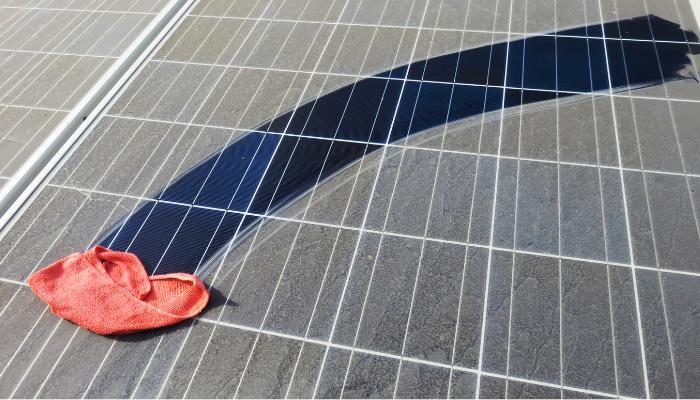
Problem: Battery backup became unreliable.
Cause: Panels produced insufficient daytime charging.
Solution: Solar panel cleaning restored charging performance.
👉 Result: Nighttime inverter operation stabilized.
Case 4: Loose Battery Connection
Problem: Random nighttime shutdowns.
Cause: Loose battery terminal causing voltage drop.
Solution: Terminal tightening and cable replacement.
👉 Result: System operated normally.
Battery Backup vs Load Example
| Night Load | Estimated Backup |
|---|---|
| Lights + fans | Long backup |
| Refrigerator + TV | Moderate backup |
| AC + heater | Short backup |
| Heavy appliances | High trip risk |
Why Does My Solar Inverter Trip Right After Sunset?
Many homeowners notice the inverter trips shortly after solar production stops.
This usually happens when the system switches from:
- Solar power
to - Battery or grid power
Possible causes include:
- Weak battery
- Incorrect inverter settings
- Battery voltage drop
- Faulty switching relay
Why Inverter Keeps Restarting at Night
Repeated nighttime restarting often indicates:
- Low battery voltage
- Overload protection triggering
- Grid fluctuation
- Loose battery connection
Common Symptoms
- Clicking sounds
- Display turning ON/OFF repeatedly
- Backup cycling continuously
High Startup Surge Can Trip Inverter at Night
Some appliances require extra startup power.
Examples:
- Refrigerators
- Air conditioners
- Water pumps
👉 Even if the normal load seems small, startup surge can briefly exceed inverter capacity.
Result: Inverter trips instantly.
Why Inverter Trips Only During Power Outage
Some systems work normally while grid power is available but trip during outages.
Possible causes:
- Weak battery
- Undersized inverter
- Excess backup load
- Faulty battery switching
Can Dirty Solar Panels Cause Nighttime Inverter Trips?
Indirectly, yes.
Dirty panels reduce daytime charging.
👉 Result: Battery enters nighttime with lower charge level.
This increases the chance of:
- Low-voltage shutdown
- Weak backup
- Nighttime inverter tripping
Real Nighttime Backup Example
Battery: 5 kWh lithium battery
Nighttime loads:
- Refrigerator → 200W
- Fans → 300W
- Lights → 150W
👉 Total load: 650W
👉 Estimated backup: Around 7–8 hours
How to Prevent Nighttime Inverter Tripping
1. Maintain Battery Health
Weak batteries cause many nighttime issues.
2. Avoid Overloading
Balance nighttime appliance usage.
3. Clean Solar Panels Regularly
Improves daytime charging.
4. Monitor Battery Voltage
Track low-voltage conditions.
5. Keep Inverter Ventilated
Heat affects long-term reliability.
Small Battery Capacity Can Cause Nighttime Shutdown
If battery size is too small: Backup may fail during heavy nighttime usage.
Example:
Battery:
3 kWh
Night load:
- AC
- Refrigerator
- Lighting
👉 Battery drains rapidly and inverter trips.
Common Mistakes to Avoid
1. Ignoring Weak Battery Symptoms
Minor issues worsen over time.
2. Running Heavy Loads on Small Backup Systems
Very common cause of tripping.
3. Ignoring Error Codes
Inverter warnings often identify the real problem.
4. Poor Maintenance
Dust and loose wiring reduce reliability.
5. Incorrect Battery Configuration
Wrong settings affect nighttime performance heavily.
When Should You Replace the Battery?
Consider replacement if:
- Backup time reduced significantly
- Battery drains rapidly
- Inverter trips frequently
- Battery age exceeds expected lifespan
👉 Old batteries are one of the biggest causes of nighttime inverter shutdown.
How to Check Nighttime Power Usage
Monitor:
- AC usage
- Refrigerator cycling
- Water heater timers
- Hidden standby loads
Common Hidden Loads
- Wi-Fi routers
- Chargers
- Security systems
- TV standby mode
Grid Voltage Fluctuation at Night
Some areas experience unstable voltage during nighttime.
Hybrid inverters may:
- Disconnect temporarily
- Restart repeatedly
- Trigger protection mode
👉 Voltage fluctuation is especially common in weak grid areas.
Expert Insights From Real Installations
From actual solar systems:
- Most nighttime inverter trips are related to battery or load issues
- Dirty panels often indirectly cause nighttime instability
- Hybrid systems require proper battery sizing
- Lithium batteries usually provide more stable nighttime performance
When Should You Call a Solar Technician?
Professional inspection may be necessary if:
- Burning smell appears
- Inverter trips repeatedly
- Battery overheats
- Wiring damage is visible
- Error codes continue repeatedly
FAQs
Why does my solar inverter trip only at night?
Usually due to battery problems, overload, or low-voltage conditions.
Can a weak battery cause inverter shutdown?
Yes — weak batteries are one of the most common causes.
Can nighttime appliance usage trip inverter?
Absolutely. Heavy loads may exceed inverter capacity.
Can dirty solar panels cause nighttime inverter issues?
Indirectly yes — poor daytime charging weakens nighttime backup.
Why does inverter restart repeatedly at night?
Possible causes include voltage fluctuation, overload, or communication issues.
Final Thoughts
If your solar inverter trips at night, the issue is usually related to:
- Weak batteries
- Overload conditions
- Poor charging
- Wiring problems
- Incorrect settings
👉 Proper battery maintenance, correct sizing, and monitoring can prevent most nighttime inverter problems.
Before upgrading your solar backup system:
👉 Use our solar calculator to estimate your backup requirements, battery size, and inverter capacity accurately.
