
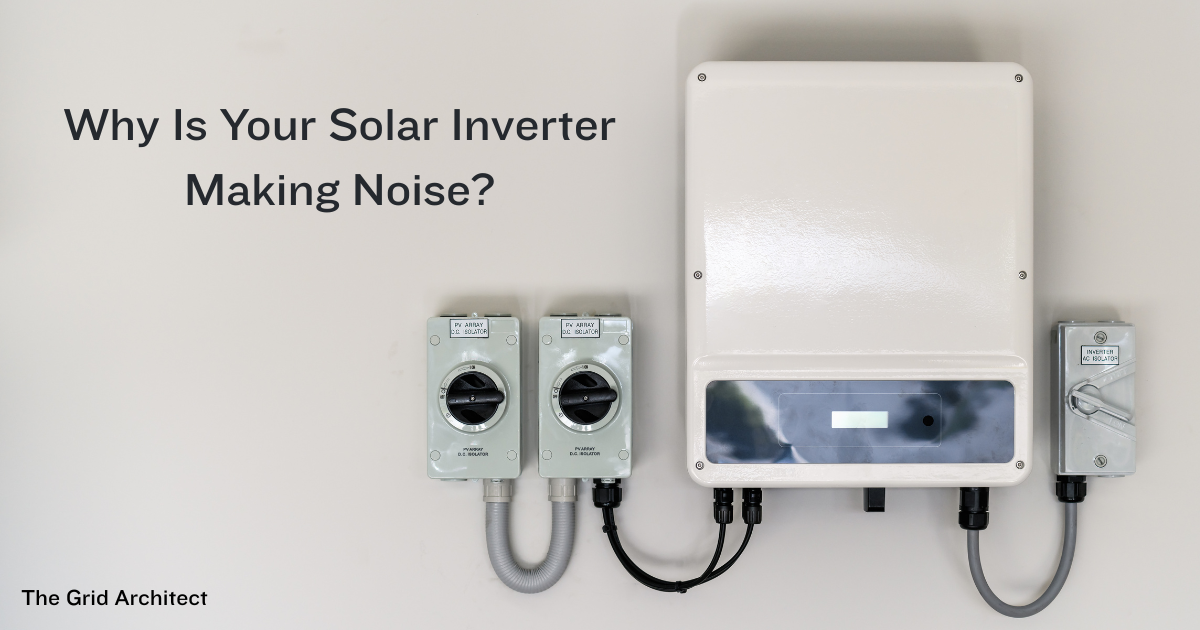

If your solar inverter is making a humming, buzzing, or clicking noise, you’re not alone. Many homeowners notice unusual sounds after installing a solar system — and it can be confusing or even concerning. The good news is: not all inverter noise is a problem. In fact, some level of sound is completely normal. However, certain types of noise can indicate inefficiencies, installation issues, or even potential damage. In this guide, we’ll break down exactly why is your solar inverter making noise — and what you can do about it.
Common Types of Solar Inverter Noise
Not all inverter noises are the same. Identifying the type of sound is the first step toward understanding the issue:
- Humming: A low, steady sound — usually from internal electromagnetic components
- Buzzing: Often caused by electrical vibrations or waveform distortion
- Clicking: Typically from relays switching during normal operation
- High-pitched noise: Due to high-frequency switching inside the inverter
Each of these sounds can have different causes — and not all require action.
Is It Normal for a Solar Inverter to Make Noise?
Yes — some inverter noise is completely normal.
Most solar inverters produce:
- Light humming
- Soft buzzing
- Cooling fan noise
These sounds are usually caused by:
- Internal electrical switching
- Cooling fans
- Transformer vibration
👉 A faint humming sound during high solar production is often normal. However, loud buzzing, grinding, clicking, or sudden changes in noise may indicate a problem requiring inspection.
Why Is Your Solar Inverter Making Noise
Here are the common reasons if your solar inverter making noise:
1. Normal Operation (Nothing to Worry About)
Most inverters naturally produce a low humming sound. This comes from components like transformers and inductors operating under electrical load.
👉 If the sound is mild and consistent, it’s usually completely normal.
2. Cooling Fans
Many inverters have built-in cooling fans that activate during high load or high temperatures.
- Louder during peak sunlight hours
- May turn on and off intermittently
👉 This is expected behavior, especially in warmer climates.
In many installations, inverter noise is simply due to fan operation during peak sunlight — which is completely normal.
3. Loose Mounting or Installation Issues
If your inverter isn’t mounted securely, vibrations can get amplified. In many home installations, I’ve seen inverter noise caused simply by poor mounting.
- Wall-mounted units can transfer vibration
- Poor installation can create rattling or buzzing
👉 Tightening mounts or adding damping can often fix this.
4. Electrical Harmonics (THD)
One of the less discussed causes is Total Harmonic Distortion (THD).
From an electrical engineering perspective, poor waveform quality can cause components to vibrate at non-standard frequencies — leading to audible buzzing.
👉 This is more common in lower-quality or improperly designed inverters.
5. High Load Conditions
When your system is handling heavy loads:
- Internal components work harder
- Noise levels may increase
👉 This is usually temporary and load-dependent.
You can calculate the load of your house with the help of our solar calculator.
6. Grounding or Wiring Issues
Improper grounding can cause:
- Unusual electrical noise
- Safety risks
- Interference with other devices
👉 This should be checked by a qualified technician.
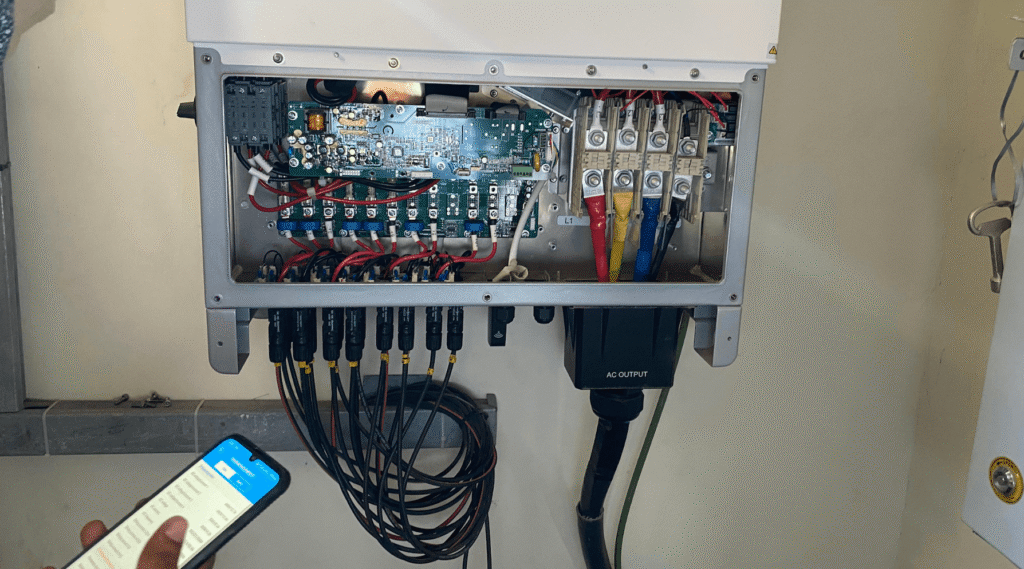
Different Types of Solar Inverter Noise
Understanding the type of sound can help identify the problem faster.
| Noise Type | Possible Cause |
|---|---|
| Light humming | Normal transformer vibration |
| Soft buzzing | Electrical switching |
| Fan noise | Cooling system operation |
| Clicking | Relay switching |
| Grinding | Fan damage |
| Loud buzzing | Overload or loose components |
| High-pitched whine | Coil whine or switching frequency |
👉 Different inverter components naturally generate different sounds during operation.
Does Solar Inverter Noise Affect Performance?
One common concern homeowners have is whether inverter noise impacts system performance.
In most cases, normal operational noise does not affect efficiency. A properly functioning inverter can produce mild humming or fan noise without any performance issues.
However, excessive or unusual noise may indicate:
- Electrical inefficiencies
- Poor waveform quality
- Internal component stress
👉 Over time, these factors can reduce efficiency or lifespan if not addressed.
From an engineering standpoint, noise is often a symptom, not the actual problem.
Why Does My Solar Inverter Make More Noise at Night?

Some homeowners notice increased noise after sunset.
Possible reasons include:
- Battery charging or discharging
- Backup mode operation
- Grid switching
- Cooling fan activity
Hybrid inverters often change operating modes at night, which can make certain sounds more noticeable.
👉 Related guide: If your inverter also shuts down or trips after sunset, read: Solar Inverter Trips at Night
Where Should You Install Your Solar Inverter to Minimize Noise?
Installation location plays a huge role in how noticeable inverter noise is.
Best practices:
- Install in a well-ventilated area
- Avoid placing it inside living spaces (like bedrooms or halls)
- Use solid walls instead of hollow surfaces
- Keep it away from echo-prone corners
👉 Garages, utility areas, or outdoor shaded walls are ideal.
Cheap vs Premium Inverters: Does Quality Affect Noise?
Yes — significantly.
Lower-cost inverters often:
- Use cheaper internal components
- Have higher harmonic distortion
- Lack proper vibration isolation
👉 Result: more noticeable buzzing or humming
Premium inverters, on the other hand:
- Maintain cleaner output waveforms
- Use better insulation and damping
- Operate more quietly and efficiently
👉 If noise is a major concern, inverter quality matters more than most people realize.
Can Solar Inverter Noise Affect Other Appliances?
In some cases, yes. If the noise is caused by electrical harmonics or grounding issues, it may also lead to:
- Flickering lights
- Audio interference (buzzing speakers)
- Reduced lifespan of sensitive electronics
👉 This is especially important in homes with:
- Home theaters
- Computers
- Smart appliances
How to Identify the Real Problem
To understand whether the noise is normal or not, ask:
- Does the noise increase during peak sunlight hours?
- Is the inverter mounted on a solid surface?
- Is the sound constant or irregular?
- Do you hear noise in nearby appliances as well?
These clues can help you narrow down the root cause.
Can Battery Problems Cause Inverter Noise?
Yes. Weak batteries can force the inverter to work harder, which may result in:
- Continuous fan operation
- Warning beeps
- Electrical buzzing
- Frequent relay clicking
Common battery-related causes include:
- Low battery voltage
- Battery aging
- Charging problems (Example: Solar panels working but battery not charging)
- Battery communication errors
- Battery draining quickly
Weak batteries and low-voltage conditions commonly trigger inverter alarms and unusual sounds.
How to Fix Solar Inverter Making Noise Issue
Here are practical steps you can take:
- Ensure the inverter is securely mounted
- Improve ventilation around the unit
- Check grounding and wiring connections
- Avoid overloading the system
- Replace low-quality inverters if noise is excessive
👉 In many cases, small adjustments can significantly reduce noise.
Real-World Scenario: What Homeowners Often Experience
In many real installations, inverter noise is not caused by a single issue — but a combination of factors.
For example:
- Slightly loose mounting
- Moderate harmonic distortion
- High daytime load
👉 Together, these create noticeable buzzing that wasn’t expected.
In such cases, fixing just one factor (like tightening mounts or improving grounding) can significantly reduce noise.
Real Example: Loud Buzzing During Air Conditioner Startup
A homeowner noticed loud inverter buzzing every evening.
Cause: Air conditioner startup surge exceeded inverter comfort range
Result:
- Brief buzzing
- Fan speed increase
- Occasional overload warning
Solution: Reduced simultaneous appliance usage
Noise disappeared and inverter operated normally. Motor startup surge is a common cause of inverter stress and temporary noise increases.
Excess appliance load can sometimes cause unusual inverter sounds and even trigger overload protection. If your inverter is also showing overload warnings, read our guide on solar inverter overload problems.
Can Overheating Cause Inverter Noise?
Yes. When inverter temperature rises:
- Cooling fans run faster
- Fan noise becomes louder
- Internal components experience more stress
Common causes:
- Poor ventilation
- Dust buildup
- Direct sunlight exposure
Keeping the inverter cool improves both performance and lifespan.
Related Guide: Hybrid Solar Inverter
Fan noise commonly increases when inverters operate at higher temperatures or power levels.
When Should You Be Concerned?
While some noise is normal, you should take action if:
- The noise suddenly becomes louder
- You hear crackling or sparking sounds
- The inverter performance drops
- The unit overheats
👉 These may indicate serious issues and should not be ignored.
Preventing Solar Inverter Making Noise issue in New Installations
If you’re planning a solar system, prevention is easier than fixing later.
Key tips:
- Choose a high-quality inverter brand
- Ensure proper system design and load calculation
- Use experienced installers
- Plan installation location carefully
👉 A well-designed system is not only efficient — but also quieter.
Final Thoughts
A small amount of noise from your solar inverter is completely normal. However, understanding the difference between normal and problematic noise is crucial.
In many cases, simple adjustments can resolve the issue. But when noise is linked to deeper electrical problems, early action can prevent bigger failures.
👉 A well-installed and properly designed solar system should operate quietly, efficiently, and reliably for years.
