
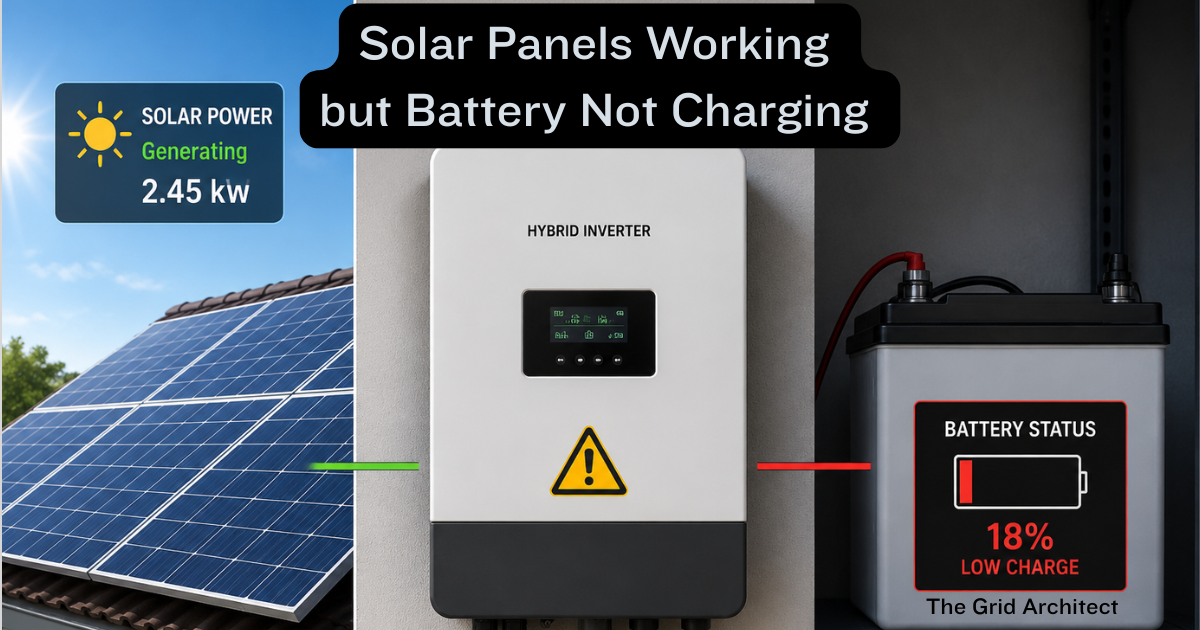

Is your solar panels working but battery not charging? This is one of the most frustrating solar system problems homeowners face. The confusing part? The solar panels appear to work normally, the inverter may even show solar production, but:
- Battery percentage stays low
- Backup time decreases
- Battery charges very slowly
- Battery never reaches full charge
The good news? In most cases, this issue can be fixed without replacing the entire solar system.
In this complete 2026 guide, you’ll learn:
- Every possible reason why batteries fail to charge
- Real-world use cases
- Step-by-step troubleshooting
- How solar charging actually works
- How to prevent future battery charging problems
Quick Answer
👉 If solar panels are working but the battery is not charging, the issue is usually caused by:
- Low solar production
- Incorrect inverter settings
- Faulty charge controller
- Weak or aging battery
- Loose wiring
- High daytime electricity usage
- Battery protection mode
👉 Most charging problems are related to the charging system — not the solar panels themselves.
How Solar Battery Charging Normally Works
A solar battery charging system works in several stages:
- Solar panels generate DC electricity
- Inverter or charge controller regulates power
- Battery stores excess electricity
- Home uses stored energy later
👉 If any stage fails: Battery charging problems occur.
Why Is My Solar Battery Charging Very Slowly?
Sometimes the battery charges, but extremely slowly.
👉 Common causes include:
- Cloudy weather
- Dirty solar panels
- High daytime appliance usage
- Incorrect charging settings
- Aging battery
Real Example
Solar production:
- 18 kWh/day
Daytime appliance usage:
- 15 kWh/day
👉 Only small excess energy remains for battery charging.
Result: Battery percentage increases very slowly throughout the day.
Important Thing Most Homeowners Don’t Realize
Even if solar panels are producing electricity: The battery may still not charge if all solar energy is being consumed directly by the home.
This is extremely common.
Signs Your Solar Battery Not Charging
If you see the solar panels working but battery not charging, watch for these symptoms:
- Battery percentage remains low
- Battery charges very slowly
- Battery never reaches 100%
- Inverter shows battery error
- Backup time becomes shorter
- System switches to grid frequently
- Battery drains quickly overnight
- Charging stops randomly
👉 Related guide: Solar Battery Draining Fast
ALL Possible Reasons Solar Panels Working but Battery Not Charging
1. Low Solar Production (Most Common Cause)
If solar panels produce insufficient electricity: Battery cannot charge properly.
Common Causes of Low Production
- Dirty panels
- Cloudy weather
- Tree shading
- Wrong panel angle
- Damaged solar panels
- Hot weather reducing efficiency
Real Example
Normal solar production:
- 25 kWh/day
Current production:
- 12–15 kWh/day
Cause:
- Dust accumulation + cloudy weather
👉 Result: Battery only partially charges.
2. Tree Shade or Partial Shading
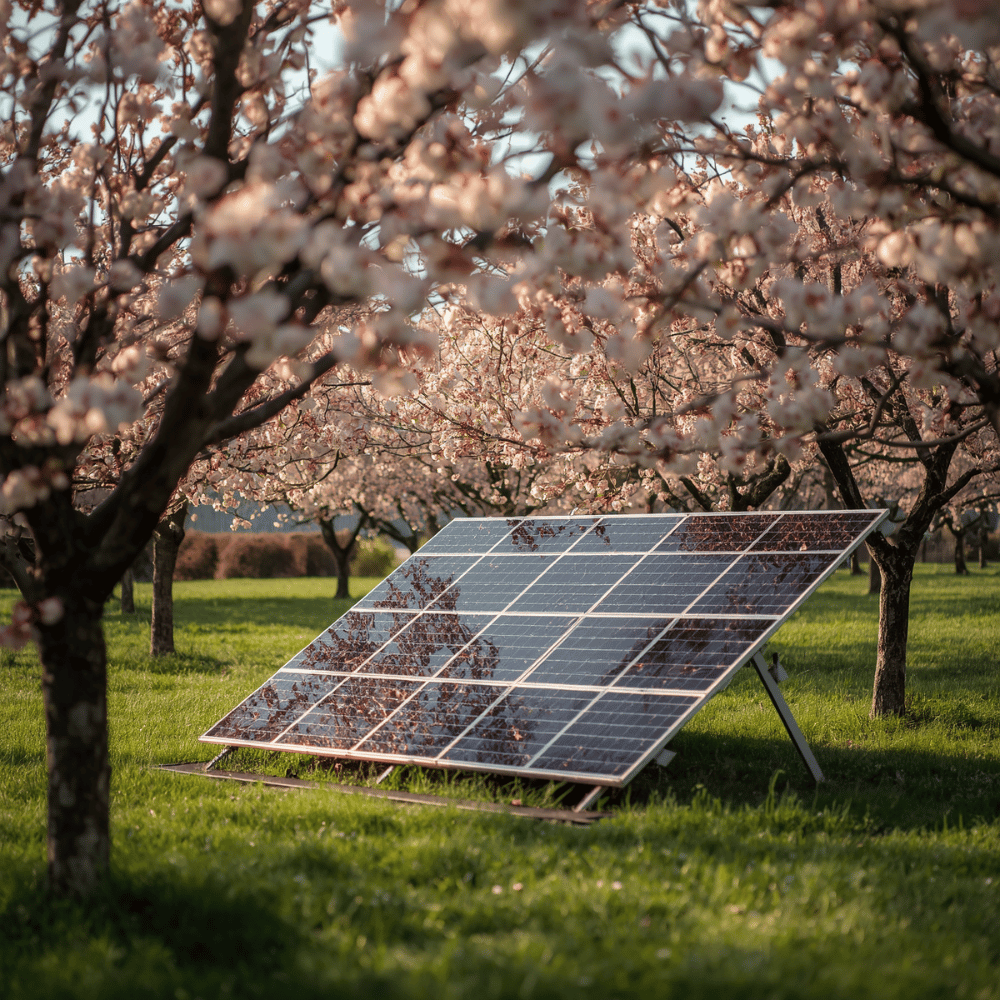
Even small shading can significantly reduce charging performance.
Why?
In string systems: One shaded panel can reduce output from the entire string.
Common Shade Sources
- Trees
- Water tanks
- Buildings
- Chimneys
- Bird droppings
Real-World Scenario
A homeowner noticed:
- Battery charging dropped every afternoon
Cause:
- Tree shade after 2 PM
Solution:
- Tree trimming
👉 Result: Battery charging improved immediately.
3. Faulty Charge Controller
The charge controller regulates:
- Charging voltage
- Charging current
- Battery protection
If faulty: Battery may:
- Undercharge
- Overcharge
- Stop charging entirely
Common Symptoms
- Battery voltage fluctuating
- Charging icon disappearing
- Inverter errors
- Battery charging randomly stopping
4. Inverter Problems
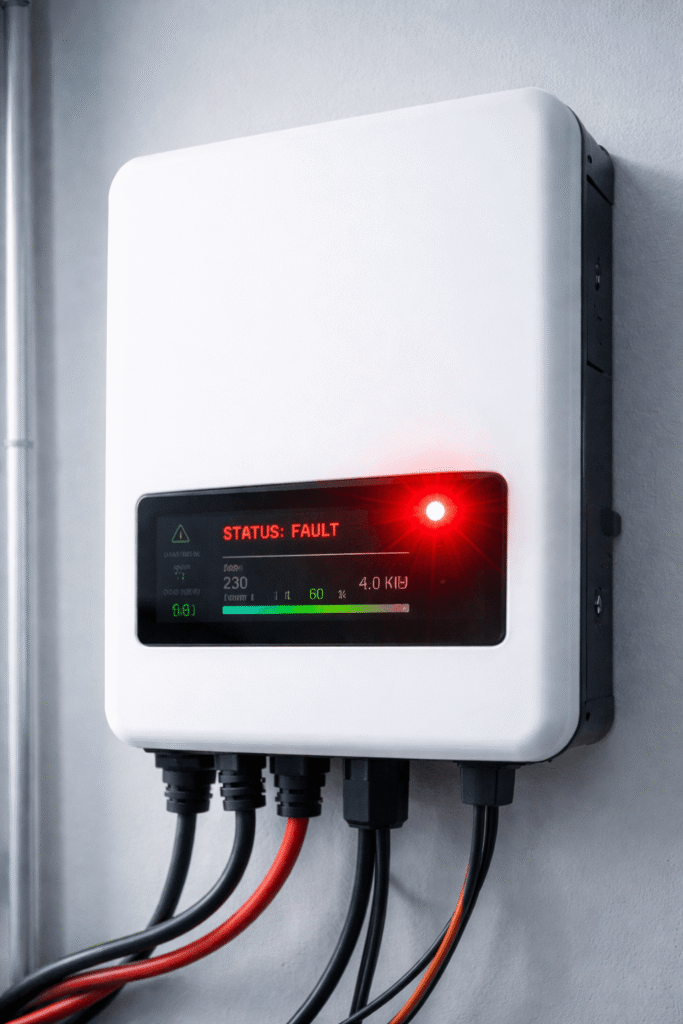
Modern solar systems rely heavily on inverter intelligence. Incorrect inverter operation can stop battery charging.
Common Inverter Problems
- Incorrect charging profile
- Firmware bugs
- Battery communication failure
- Overload conditions
- Temperature shutdown
5. Aging or Weak Battery
Batteries naturally lose charging capacity over time.
Example
Original battery capacity:
- 10 kWh
After years:
- Actual usable capacity becomes ~6–7 kWh
👉 Result: Battery charges slowly and drains quickly.
Signs of Battery Aging
- Reduced backup time
- Heating
- Swelling
- Voltage drop
- Slow charging
6. Incorrect Battery Settings
This is extremely common after:
- New installation
- Inverter replacement
- Firmware update
Common Configuration Mistakes
- Wrong battery type selected
- Incorrect charging voltage
- Incorrect discharge settings
- Wrong battery profile
Example
Lithium battery configured as lead-acid.
👉 Result: Improper charging behavior.
7. High Daytime Electricity Usage
Sometimes the system is functioning normally.
But: The home consumes all solar power directly.
Example
During daytime:
- AC running continuously
- Water heater active
- Washing machine running
👉 Result: Very little excess solar energy remains to charge the battery.
Real-World Use Case
A homeowner believed battery charging was faulty.
Actual issue:
- Daytime AC usage consumed nearly all solar production.
Solution:
- Shifted heavy appliance usage to evening.
👉 Result: Battery charging improved significantly.
8. Battery Protection Mode
Modern lithium batteries include safety protection systems.
Charging may stop temporarily due to:
- High temperature
- Low temperature
- Overvoltage
- Deep discharge
Real Example
During summer:
- Battery temperature exceeded safe limit
👉 Battery management system stopped charging temporarily.
9. Cloudy Weather or Winter Conditions
Reduced sunlight means: Lower charging current.
Example
Sunny day production:
- 30 kWh
Cloudy day production:
- 12–15 kWh
👉 Battery may never fully charge.
10. Loose Wiring or Corroded Connections
Loose or damaged wiring causes:
- Voltage drop
- Charging inefficiency
- Energy loss
Common Problems
- Loose terminals
- Corrosion
- Burnt connectors
- Damaged cables
👉 Panels may appear normal while battery charging remains weak.
11. Deeply Discharged Battery
A deeply discharged battery may:
- Enter protection mode
- Charge extremely slowly
- Fail to recover normally
👉 Common in lead-acid batteries.
12. Battery Communication Failure
Modern lithium batteries communicate directly with hybrid inverters.
Communication failure may stop charging completely.
Symptoms
- Battery offline warning
- Error codes
- Battery not detected by inverter
13. Battery Is Already Full
Sometimes homeowners think charging failed.
But: Battery already reached maximum capacity.
Signs
- Charging current becomes very low
- System uses solar power directly
- Battery remains stable at high percentage
14. Wrong System Sizing
Undersized solar systems struggle to:
- Run daytime loads
- Charge batteries simultaneously
Example
Solar production:
- 15 kWh/day
Daily home usage:
- 18 kWh/day
👉 Result: Battery rarely charges fully.
15. Faulty Battery Cell
One damaged cell can affect the entire battery pack.
Common Symptoms
- Battery charges inconsistently
- Sudden percentage drops
- Heating
- Fast discharge
👉 Common in older or low-quality batteries.
COMPLETE Step-by-Step Fix Guide
Step 1: Check Solar Production
Monitor:
- Daily generation
- Weather conditions
- Panel cleanliness
Step 2: Clean Solar Panels
Dirty panels reduce charging efficiency dramatically.
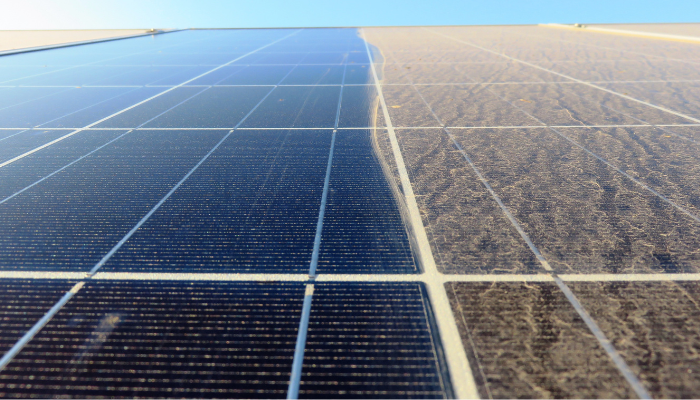
👉 Learn more: Solar Panel cleaning
Step 3: Reduce Daytime Loads
Allow excess solar power to charge battery.
Step 4: Check Battery Voltage
Inspect:
- Voltage
- Charging current
- Temperature
Step 5: Inspect Inverter Display
Look for:
- Error codes
- Warning lights
- Charging indicators
Step 6: Verify Battery Settings
Ensure:
- Correct battery profile
- Proper charging voltage
- Correct inverter configuration
Step 7: Inspect Wiring
Check for:
- Loose cables
- Corrosion
- Damaged connectors
Step 8: Restart System
Restart:
- Inverter
- Battery system
- Charge controller
Real-World Use Cases
Case 1: Dirty Panels Causing Weak Charging
Problem: Battery never reached full charge.
Cause: Heavy dust buildup reduced solar production.
Solution: Panel cleaning.
👉 Result: Battery charged normally again.
Case 2: Afternoon Tree Shade
Problem: Battery charging slowed every afternoon.
Cause: Tree shade reducing solar production.
Solution: Tree trimming.
👉 Result: Charging improved significantly.
Case 3: Wrong Battery Settings
Problem: New lithium battery charging slowly.
Cause: Inverter configured incorrectly.
Solution: Updated battery profile.
👉 Result: Charging normalized immediately.
Case 4: Aging Battery
Problem: Battery charged slowly and drained quickly.
Cause: Reduced battery capacity after years of usage.
Solution: Battery replacement.
👉 Result: Normal backup restored.
Case 5: Cloudy Weather Confusion
Problem: Battery stopped reaching full charge during monsoon.
Cause: Low solar generation due to cloudy weather.
👉 System was functioning normally.
Solar Production vs Battery Charging
| Solar Production | Battery Charging |
|---|---|
| High production | Fast charging |
| Moderate production | Partial charging |
| Low production | Slow charging |
| Poor weather | Weak charging |
How to Prevent Battery Charging Problems
Clean Solar Panels Regularly
Improves charging efficiency.
Monitor Daily Production
Track:
- Solar generation
- Battery charging
- Backup performance
Avoid Excess Daytime Consumption
Heavy daytime loads reduce battery charging.
Maintain Proper Ventilation
Heat affects charging performance.
Use Proper System Sizing
Correct sizing prevents charging issues.
Common Mistakes to Avoid
Ignoring Small Charging Problems
Minor issues become larger failures later.
Running Heavy Loads During Peak Solar Hours
Consumes charging energy.
Ignoring Inverter Warnings
Charging issues often begin with small alerts.
Not Monitoring Battery Health
Battery degradation is gradual.
Using Wrong Battery Settings
Very common after installation.
Can Overheating Stop Solar Battery Charging?
Yes. Modern lithium batteries include temperature protection systems.
If battery temperature becomes too high:
👉 Charging may temporarily stop automatically.
Common Causes
- Poor ventilation
- Direct sunlight exposure
- Hot weather
- Overloaded system
Why Battery Percentage Gets Stuck
Sometimes the battery percentage may:
- Stay at one number for long periods
- Jump suddenly
- Display incorrect values
👉 Possible reasons:
- Battery calibration issue
- Communication error
- Weak battery cells
- Faulty battery monitoring system
Why Battery Charges Only During Midday
Some systems charge batteries properly only during strong sunlight hours.
👉 Causes may include:
- Undersized solar system
- Heavy morning/evening loads
- Seasonal sunlight reduction
- Panel shading
Example
Morning production:
- Low sunlight
- Most power consumed directly by home
Midday:
- Excess solar available for charging
👉 Battery begins charging only around noon.
Can a Fully Charged Battery Stop Charging?
Yes. Once the battery reaches full capacity: Charging current naturally decreases or stops.
This is normal behavior and helps protect battery lifespan.
Why Battery Charges During Day but Empties Quickly at Night
If the battery charges normally during daytime but drains rapidly overnight, possible causes include:
- High nighttime power usage
- Aging battery
- Hidden standby loads
- Small battery capacity
Common Hidden Loads
- Wi-Fi routers
- Security cameras
- TV standby mode
- Chargers
👉 These small loads can gradually drain batteries overnight.
Battery Not Charging After a Power Cut
Sometimes batteries stop charging after grid failure or blackout.
👉 Possible causes:
- Inverter protection mode
- Battery communication reset
- Overload shutdown
- Firmware issue
Solution
- Restart inverter
- Restart battery system
- Check warning codes
- Verify charging settings
How to Check If Solar Panels Are Charging the Battery
You can verify charging using:
- Inverter display
- Mobile monitoring app
- Battery voltage reading
- Charging current indicator
Signs Battery Is Charging Properly
- Battery percentage increasing
- Positive charging current
- Stable battery voltage
- No charging error codes
When Should You Call a Solar Technician?
Professional inspection may be necessary if:
- Battery does not charge at all
- Error codes continue repeatedly
- Battery overheats
- Burning smell appears
- Wiring damage is visible
👉 Avoid opening lithium battery systems without proper expertise.
Expert Insights From Real Installations
From actual solar systems:
- Most charging issues are caused by low solar production or inverter settings
- Dirty panels are a surprisingly common cause
- Lithium batteries generally charge more efficiently than lead-acid systems
- Proper system sizing dramatically improves charging performance
FAQs
Why are my solar panels working but battery not charging?
Usually due to inverter settings, low solar production, or battery issues.
Can dirty panels stop battery charging?
Yes — reduced production may prevent proper charging.
Can inverter problems affect battery charging?
Absolutely. Incorrect settings or faults often stop charging.
Why does battery charge slowly during cloudy weather?
Solar production drops significantly during low sunlight conditions.
Can old batteries stop charging properly?
Yes — aging batteries lose charging efficiency.
Can daytime appliance usage prevent battery charging?
Yes — if the home consumes all solar production directly.
Final Thoughts
If your solar panels are working but the battery is not charging, the issue is usually fixable.
Most causes include:
- Low solar production
- Incorrect inverter settings
- Battery aging
- High daytime power consumption
- Faulty wiring or charge controller
👉 Proper maintenance, monitoring, and system sizing can prevent most charging problems.
Before upgrading your solar system:
👉 Use our solar calculator to estimate solar production, battery size, and backup requirements accurately.
