

A solar inverter that won’t turn on can be one of the most frustrating issues in a home energy system. Without the inverter, your solar panels cannot convert DC electricity into usable AC power — meaning your entire system becomes ineffective.
Whether your inverter is completely dead or intermittently failing to start, there are several possible causes. The good news is that many of these issues are identifiable and fixable.
In this guide, we’ll walk through the most common reasons why a solar inverter not turning on — and how to troubleshoot them step by step.
Quick Answer
A solar inverter may not turn on due to issues like no DC input from panels, tripped circuit breakers, faulty wiring, inverter faults, or system protection mechanisms. Identifying whether the issue is on the DC side, AC side, or within the inverter itself is key to resolving it.
Quick Diagnosis
| Symptom | Likely Cause |
|---|---|
| No lights / display | No DC input or tripped breaker |
| Works only in sunlight | Low voltage or startup threshold |
| Turns off during power cut | Grid-tied safety shutdown |
| Random shutdowns | Overheating or internal fault |
How a Solar Inverter Works (Quick Overview)
Before troubleshooting, it’s important to understand the inverter’s role.
A solar inverter:
- Receives DC electricity from solar panels
- Converts it into AC electricity
- Supplies power to your home or grid
If the inverter does not receive sufficient DC input or detects unsafe conditions, it will not turn on.
10 Common Causes of Solar Inverter Not Turning On
The below are common causes that might cause the solar inverter not turning on issue:
1. No DC Input from Solar Panels
If your solar panels are not generating electricity, the inverter won’t start.
Possible reasons:
- Nighttime or very low sunlight
- Loose DC connections
- Faulty panels
👉 Most inverters require a minimum DC voltage window to start — if this threshold isn’t met, the system will remain off even if some power is being generated.
✅ Fix: Check if panels are producing voltage during the day.
2. Tripped AC or DC Circuit Breaker
Circuit breakers protect your system from overload or faults.
If a breaker trips:
- Power flow is interrupted
- Inverter cannot start
✅ Fix: Check and reset AC/DC breakers if safe.
3. Faulty or Loose Wiring
Poor connections can prevent proper power flow.
- Voltage drops
- Intermittent operation
- Complete shutdown
✅ Fix: Inspect wiring and tighten connections.
4. Inverter Internal Fault
Inverters have built-in protection systems. Sometimes, the solar inverter might make noise which indicates some issue as well.
Common issues:
- Component failure
- Overheating
- Software errors
👉 The inverter may refuse to start to prevent damage.
✅ Fix: Check error codes and consult manufacturer.
5. Low Solar Voltage (Startup Threshold Not Met)
Most inverters require a minimum DC voltage to turn on.
- Early morning or cloudy conditions
- Partial shading
👉 System may appear “dead” but is just below startup voltage.
✅ Fix: Check voltage levels during peak sunlight.
For example, if your inverter requires 150V to start but your panels are only producing 110V in low sunlight, the inverter will not turn on even though energy is being generated.
6. Grid Issues (For Grid-Tied Systems)
Grid-tied inverters depend on grid availability.
If grid fails:
- Inverter shuts down (anti-islanding protection)
👉 This is a safety feature.
✅ Fix: Wait for grid restoration or use hybrid/off-grid setup.
7. Incorrect Installation or Configuration
Improper setup can prevent inverter startup.
Examples:
- Wrong polarity
- Incorrect voltage settings
- Incompatible components
✅ Fix: Verify installation against system specifications.
8. Overtemperature Protection
Inverters shut down if temperature exceeds safe limits.
Causes:
- Poor ventilation
- High ambient temperature
- Dust buildup
👉 Common in hot climates.
✅ Fix: Improve airflow and clean surroundings.
9. Battery Issues (Hybrid Systems)
If your system includes batteries:
- Faulty battery
- BMS shutdown
- Low battery voltage
👉 Can prevent inverter startup.
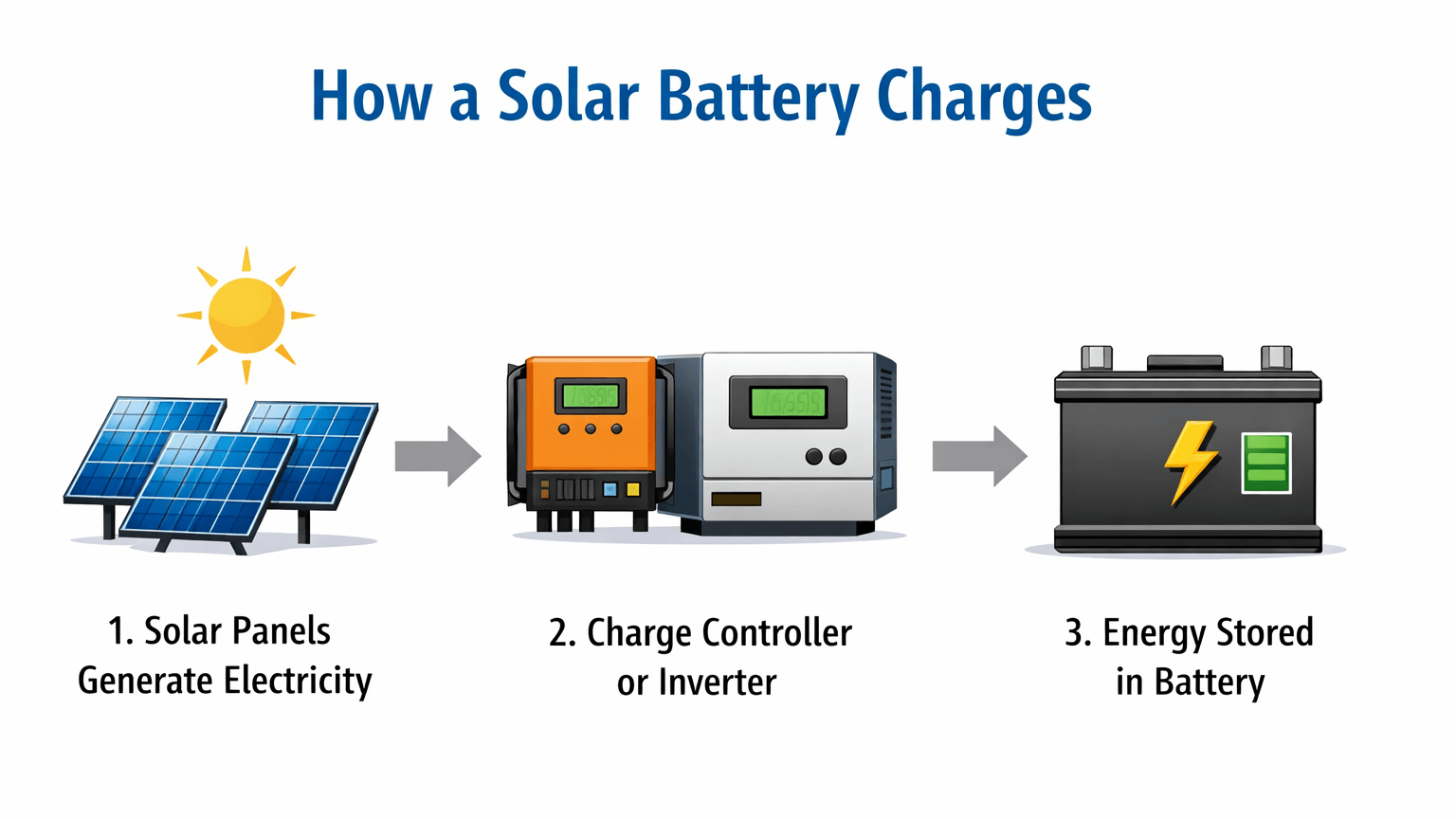
You can read more here: Solar Battery Not Charging Properly
10. Physical Damage or Aging
Older inverters or physically damaged units may fail.
- Wear and tear
- Environmental exposure
👉 Lifespan typically 8–12 years.
✅ Fix: Replace inverter if necessary.
How to Diagnose the Problem (Step-by-Step)
Follow this systematic approach:
Step 1: Check Time of Day
- Is it daytime with sufficient sunlight?
Step 2: Inspect Display or Indicators
- Any lights, error codes, or messages?
Step 3: Check DC Input
- Are panels producing voltage?
Step 4: Check AC Side
- Is grid power available?
- Any tripped breakers?
Step 5: Inspect Wiring
- Look for loose or damaged connections
Step 6: Review System Logs (if available)
- Identify fault history
👉 This structured approach helps isolate the issue quickly.
When the Problem Is NOT the Inverter
Sometimes the inverter is blamed incorrectly.
Check related issues:
- Solar panels underperforming
- System not producing enough power
- External electrical faults
Practical Fixes You Can Try
Here are safe actions you can take:
- Restart the inverter (if allowed)
- Reset circuit breakers
- Clean panels and surroundings
- Ensure proper ventilation
- Monitor system performance
👉 Avoid opening the inverter unless qualified.
If you’re unsure about your system size, use our solar calculator to estimate the right setup based on your home’s electricity usage.
When Should You Call a Professional?
Contact a technician if:
- Inverter shows error codes
- No response at all
- Burning smell or unusual sounds
- Repeated shutdowns
👉 Electrical systems can be dangerous — safety first.
Real-World Insight
In many home systems, inverter startup issues are not caused by a single failure.
Often, it’s a combination of:
- Low solar input
- Slight wiring losses
- Environmental conditions
👉 Together, these can prevent startup conditions from being met.
Understanding this helps avoid unnecessary replacements.
Preventing Inverter Startup Issues
To keep your system reliable:
- Ensure proper installation
- Maintain clean panels
- Provide adequate ventilation
- Monitor system regularly
- Use quality components
👉 Prevention reduces long-term issues significantly.
Final Thoughts
A solar inverter not turning on doesn’t always mean a major failure. In many cases, the issue lies in external factors like power input, wiring, or system conditions.
By understanding how your system works and following a structured troubleshooting approach, you can identify and resolve most issues effectively.
👉 A well-maintained system should operate reliably and start without issues under normal conditions.
FAQs
Why is my solar inverter not turning on during the day?
This may be due to low voltage, faulty wiring, or inverter issues.
Can a solar inverter fail completely?
Yes, due to internal faults or aging components.
Should I reset my inverter?
Only if recommended by the manufacturer.
