

A solar battery not charging properly can seriously affect your entire system’s performance. A battery is meant to store excess energy for later use — but when it fails to charge correctly, you lose efficiency, backup reliability, and overall system value.
The good news is that most battery charging issues are diagnosable — and often fixable.
In this guide, we’ll break down the real reasons why your solar battery may not be charging properly, along with practical solutions.
Quick Answer
A solar battery may not charge properly due to low solar input, faulty charge controllers, wiring issues, battery degradation, or system configuration problems. Identifying the root cause is essential for fixing the issue.
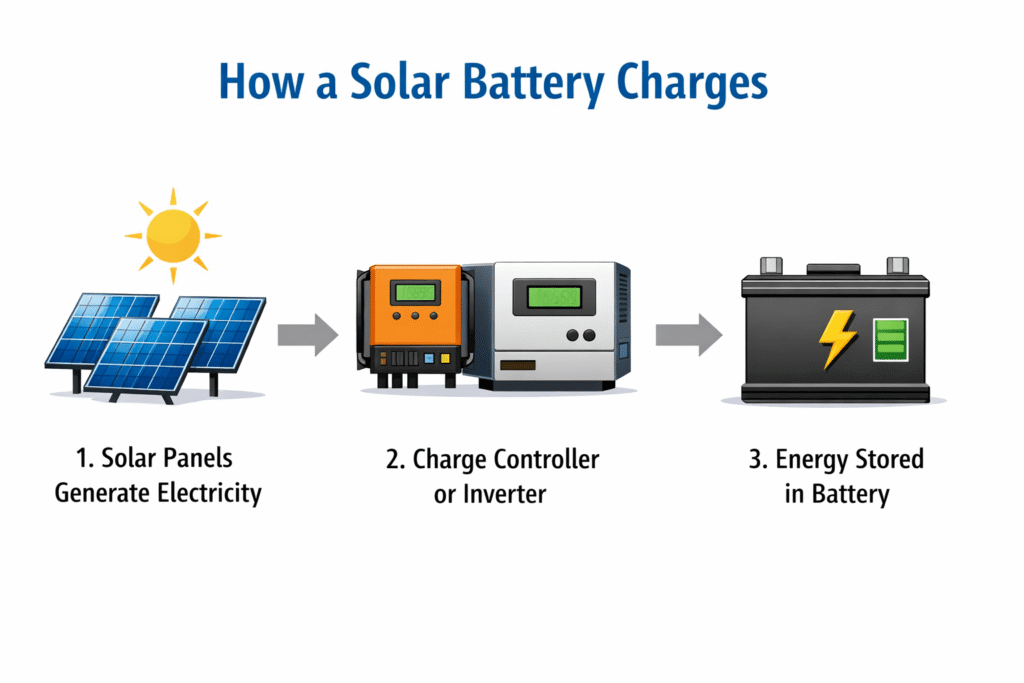
How Solar Battery Charging Works
Before diving into the problems, it’s important to understand the basics.
A solar battery charges when:
- Solar panels generate electricity
- Energy passes through a charge controller or inverter
- Excess energy is stored in the battery
If any part of this chain is disrupted, charging will be affected.
8 Common Causes of Solar Battery Not Charging Properly
Here are the common causes for solar battery not charging properly issue:
1. Low Solar Panel Output
If your panels are not generating enough energy:
- Battery won’t receive surplus power
- Charging becomes inconsistent or slow
👉 This is often linked to dirt, shading, or weather.
✅ Fix: Clean panels and check for obstructions. You can also use our solar calculator to estimate system size.
2. Faulty Charge Controller
The charge controller regulates energy flow into the battery.
If it malfunctions:
- Battery may not charge
- Overcharging or undercharging can occur
✅ Fix: Check controller status and replace if faulty.
3. Incorrect System Configuration
Improper setup can prevent proper charging.
Examples:
- Wrong voltage settings
- Incorrect battery type selection
- Misconfigured inverter
From an engineering perspective, configuration mismatches are a common but overlooked issue.
✅ Fix: Verify system settings with installer specifications.
4. Wiring or Connection Issues
Loose or damaged wiring can disrupt energy flow.
- Voltage drops
- Inconsistent charging
✅ Fix: Inspect all connections and tighten loose terminals.
5. Battery Reaching Full Capacity
Sometimes the battery is actually working fine.
- Charging stops when battery is full
- Appears like “not charging”
👉 Check battery state of charge (SOC) before assuming an issue.
6. Battery Degradation Over Time
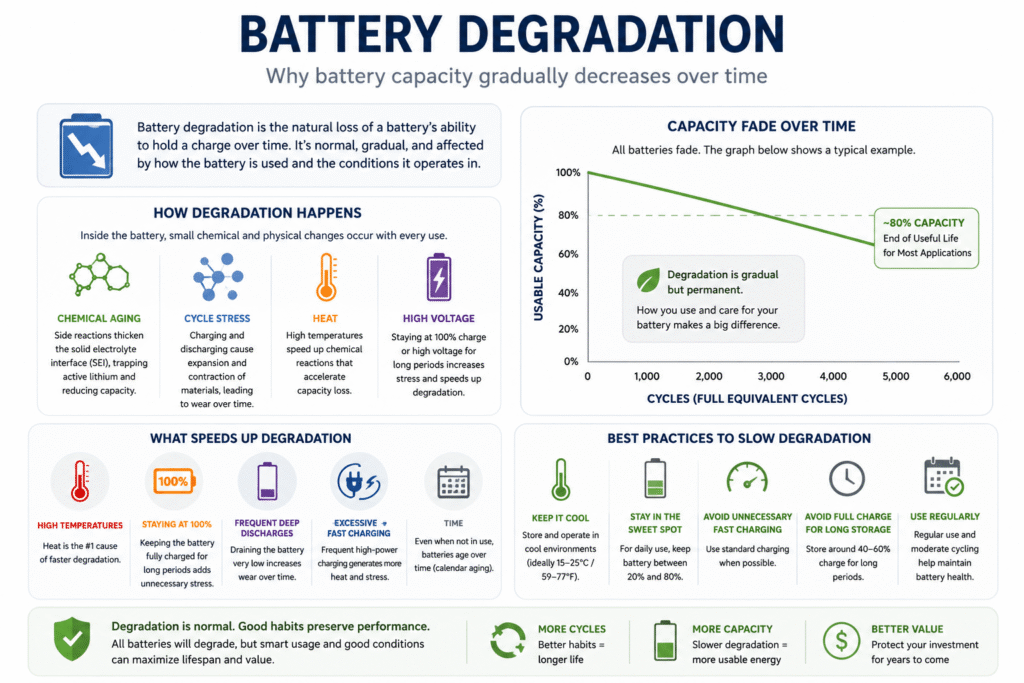
All batteries degrade over time.
- Reduced capacity
- Slower charging
- Lower efficiency
👉 Lithium batteries degrade slower than lead-acid.
✅ Fix: Replace battery if performance drops significantly.
7. Battery Management System (BMS) Issues
Modern batteries use a BMS to control charging.
If the BMS detects:
- Overvoltage
- Temperature issues
- Fault conditions
👉 It may stop charging to protect the battery.
✅ Fix: Check battery logs or consult manufacturer.
8. Inverter or System Faults
If the inverter is not functioning properly:
- Energy flow to battery is disrupted
- Charging may stop entirely
👉 Unusual inverter behavior can indicate deeper issues.
If your solar inverter is making Noise, it may be due to some issues.
How to Diagnose the Problem
To identify the cause, follow these steps:
- Check solar panel output during the day
- Monitor battery charge level
- Inspect inverter and charge controller status
- Look for error messages or warning lights
- Compare current performance with previous days
👉 A systematic approach helps pinpoint the issue quickly.
How to Fix Solar Battery not Charging Issues
Here are practical steps you can take:
- Clean solar panels regularly
- Ensure proper wiring connections
- Check system configuration
- Update or replace faulty components
- Monitor battery health over time
👉 In many cases, small fixes can restore proper charging.
When Should You Be Concerned
Take immediate action if:
- Battery never charges
- Charging stops suddenly
- System shows error codes
- Backup power is unavailable
👉 These may indicate serious system or battery issues.
Why Is My Solar Battery Charging So Slowly?
Sometimes the battery is charging, but much slower than expected.
Common causes include:
- Cloudy weather
- Dirty solar panels
- Battery aging
- High daytime energy usage
- Undersized solar array
Real Example
Battery: 10 kWh
Solar system: 3 kW
Weather: Several cloudy days
Result: Battery reached only 60–70% charge before sunset.
The charging system was functioning normally, but solar production was insufficient.
Can Dirty Solar Panels Prevent Battery Charging?
One of the most overlooked causes of charging problems.
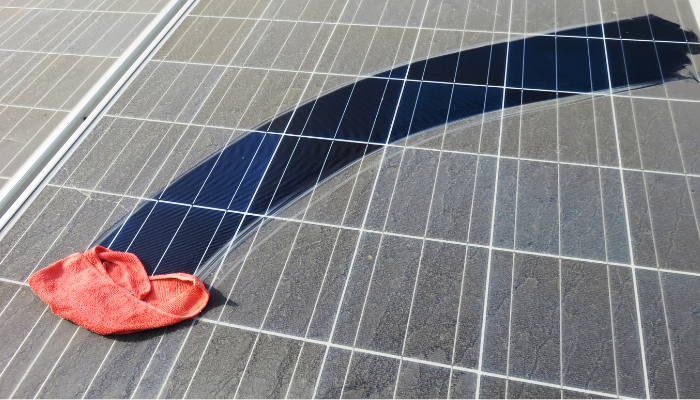
Dust, pollen, bird droppings, and debris can significantly reduce solar production.
Result: The battery receives less charging current throughout the day.
Real Example
Problem: Battery never reached full charge.
Cause: Heavy dust buildup on rooftop panels.
Solution: Solar Panel cleaning.
Result: Battery charging performance improved noticeably.
Why Does My Battery Never Reach 100%?
Possible causes:
- Limited solar production
- High daytime energy consumption
- Battery degradation
- Incorrect charge settings
Example
Solar energy produced: 15 kWh
Home consumed: 12 kWh
Remaining energy for battery: 3 kWh
Result: Battery never reached full capacity.
Battery Reaches 100% Then Drops Quickly
This is one of the most common homeowner complaints.
A battery may appear fully charged but still have reduced capacity.
Causes
- Aging battery
- Internal cell damage
- Capacity degradation
- Incorrect battery calibration
Real Example
Original capacity: 10 kWh
Current capacity: 6 kWh
The monitoring app still displays 100%, but the battery stores much less energy.
Related Link: Solar Battery Not Holding Charge
Extreme Temperatures Affect Charging
Hot Weather Problems
High temperatures may:
- Reduce charging efficiency
- Accelerate battery aging
Cold Weather Problems
Cold temperatures can:
- Slow charging
- Temporarily reduce capacity
Real Example
Battery charged normally during summer.
During winter: Charging became noticeably slower.
Cause: Low temperature reduced charging efficiency.
Incorrect Hybrid Inverter Settings
Modern hybrid solar inverter systems depend on proper configuration.
Incorrect settings may cause:
- Undercharging
- Charging interruptions
- Reduced battery performance
Common mistakes include:
- Wrong battery type selected
- Incorrect charging voltage
- Improper charging profile
Real-World Insight
In many home installations, battery charging issues are not caused by a single failure — but a combination of small inefficiencies.
For example:
- Slightly reduced solar output
- Minor wiring losses
- Battery aging
👉 Together, these can prevent proper charging.
Fixing even one factor can significantly improve performance.
Faulty Charge Controller
In off-grid and battery-based systems, the charge controller plays a critical role.
A faulty controller may:
- Stop charging early
- Limit charging current
- Prevent charging entirely
Symptoms
- Battery never reaches full charge
- Unstable charging behavior
- Inconsistent battery percentage readings
Battery Capacity May Be Too Large
Many people assume larger batteries are always better.
However: A battery bank that is too large for the solar array may never fully charge.
Example
Battery: 20 kWh
Solar system: 2 kW
Result: Insufficient daily energy production to fully recharge the battery.
Correct battery sizing is always important. You can use our solar battery sizing calculator to determine the system size.
Why Battery Charges Sometimes But Not Others
Intermittent Charging Problems
Possible causes include:
- Passing cloud cover
- Loose connections
- Battery communication errors
- Grid fluctuations
- Faulty sensors
Intermittent problems are often harder to diagnose because they do not occur consistently.
Preventing Battery Charging Issues
If you’re planning a system or upgrading:
- Choose high-quality batteries
- Ensure proper installation
- Monitor system performance regularly
- Avoid overloading your system
👉 Prevention is always easier than troubleshooting later.
Final Thoughts
A solar battery not charging properly can be frustrating — but most issues are fixable with the right approach.
Understanding how your system works, identifying the root cause, and taking timely action can ensure reliable performance and long-term efficiency.
👉 A well-maintained solar system should charge efficiently and provide dependable backup power when you need it most.
FAQs
Why is my solar battery charging slowly?
Common causes include poor weather, dirty panels, battery aging, or insufficient solar production.
Can a bad battery still charge?
Yes. A degraded battery may still charge but store much less energy than when it was new.
Why does my battery stop charging before reaching 100%?
Possible causes include battery degradation, inverter settings, charge controller issues, or limited solar generation.
Can dirty solar panels affect battery charging?
Absolutely. Reduced solar production means less energy is available to charge the battery.
Can a hybrid inverter prevent battery charging?
Incorrect inverter settings can affect charging behavior and battery performance.
How do I know if my battery is failing?
Common signs include:
- Reduced backup time
- Slow charging
- Rapid discharge
- Failure to hold charge
- Frequent battery warnings
